Best Mid Fade for a Heart-Shaped Face

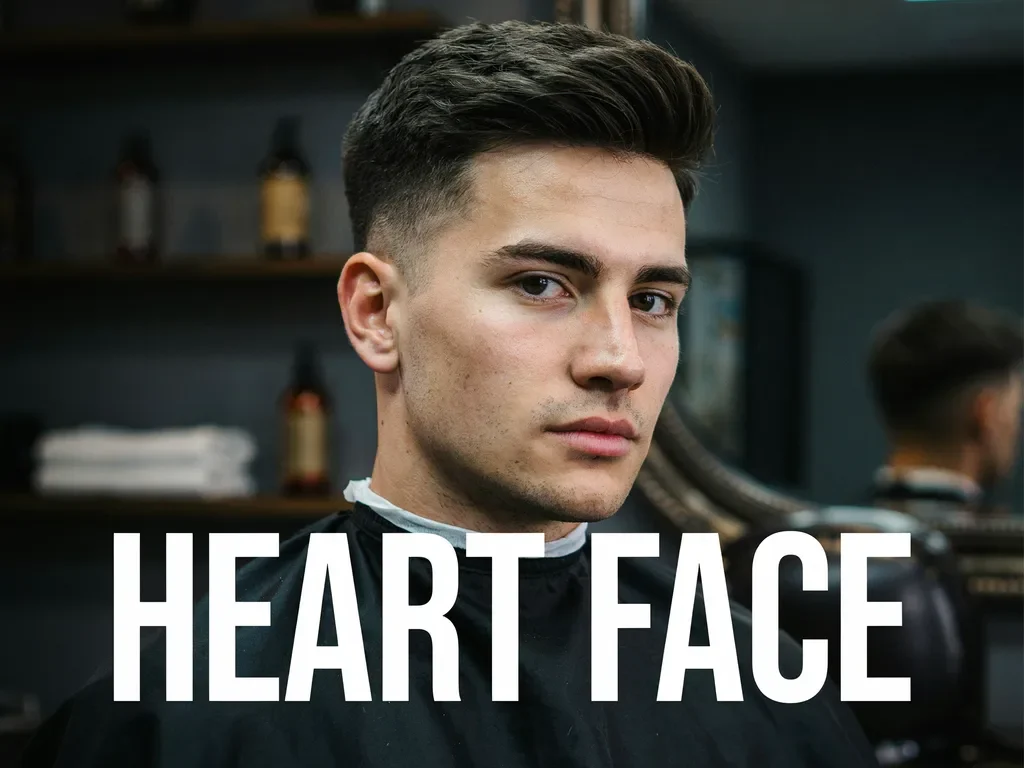
Quick answer: A heart-shaped face has a wider forehead and cheekbones that narrow down to a smaller, sometimes pointed chin. A mid fade works best here with a top style that doesn’t add extra width at the very top of the head, since the forehead is already the widest point, instead, keep some length and texture through the mid-length of the hair and consider a beard to add visual width back at the jaw.
The goal for a heart-shaped face isn’t to hide the forehead, but to avoid amplifying its width relative to the narrower jaw below it, while optionally adding some balance back at the chin through facial hair or a slightly fuller jawline silhouette.
What to avoid on top
Excessive height or volume directly at the crown and front. Because a heart-shaped face already has its widest point at the forehead, adding a lot of volume right above it, a tall quiff or a heavily voluminous front section, can exaggerate that width rather than balancing it.
A center part with lifted sides. This tends to draw the eye outward at exactly the point (the forehead/temple area) that’s already the widest part of the face, working against rather than for the shape.
What works better
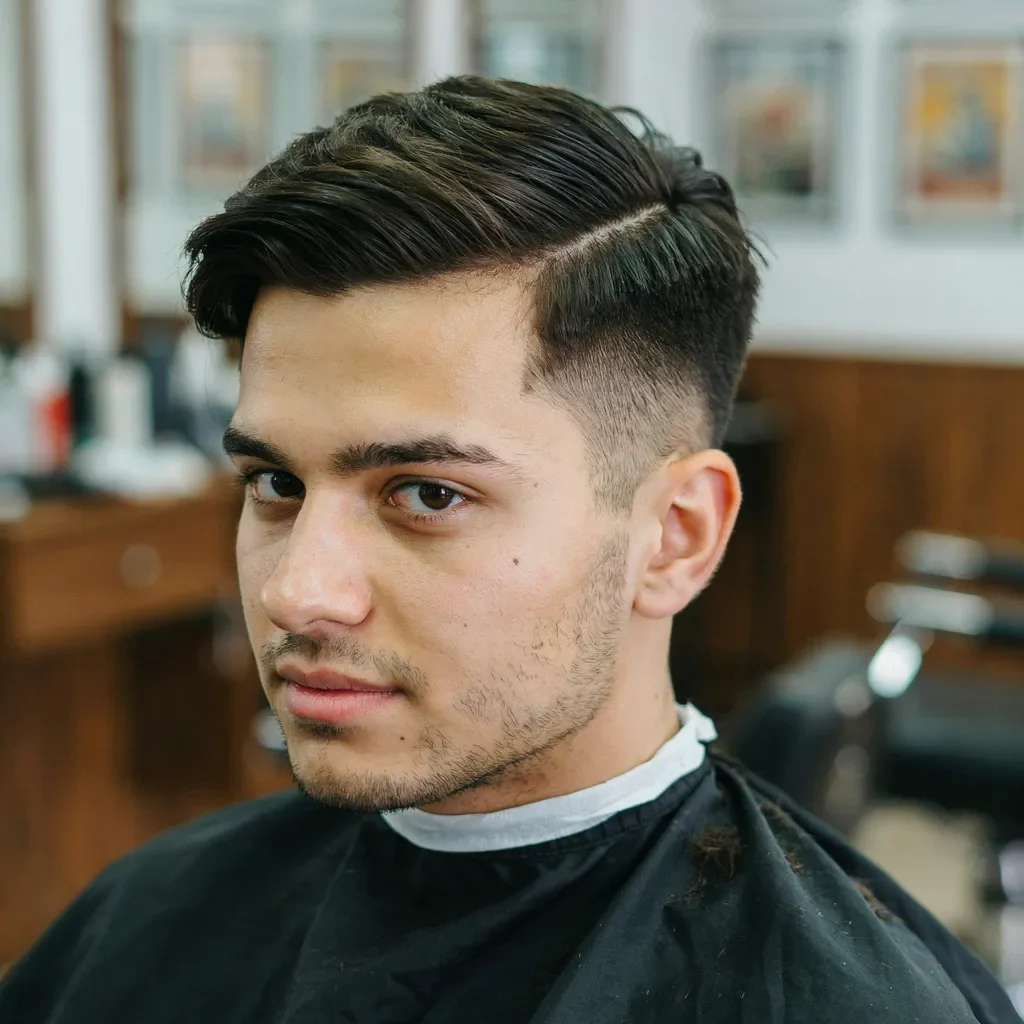
A side part with moderate volume, rather than height concentrated at the very front, distributes visual weight more evenly down the head rather than emphasizing the forehead further.
A textured crop with some fringe brought slightly forward can soften the forehead’s width without adding height that competes with it, the fringe adds a horizontal element at forehead level that breaks up rather than emphasizes the width.
Medium length on top with texture, rather than very short or very tall, gives you room to style the hair in a way that balances rather than draws attention to the forehead-to-chin taper.
The role of a beard
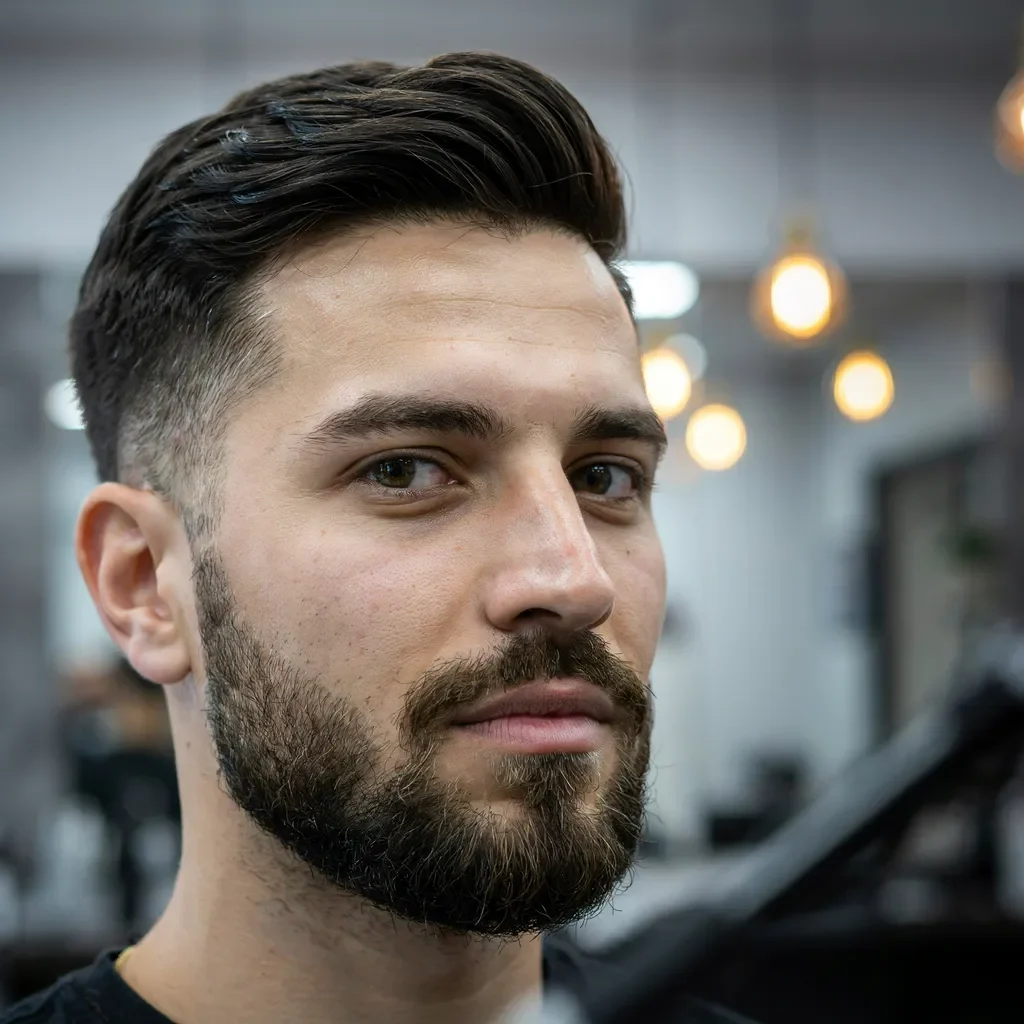
This is one of the more useful tools for a heart-shaped face specifically. Because the chin and jaw are naturally narrower than the forehead, a beard, even light-to-medium stubble, adds visual width and weight back to the lower part of the face, helping balance the overall proportions. A fuller beard along the jawline does this most effectively; a very light, patchy beard does less to correct the taper.
If you don’t grow facial hair easily or prefer to stay clean-shaven, this isn’t a dealbreaker, it just means the top styling choices carry a bit more of the balancing work on their own.
Where the mid fade placement helps
The fade’s temple-level starting point removes width specifically at the sides of the head, near where a heart-shaped face is already widest. This is generally a helpful effect, it doesn’t add extra bulk exactly where the face doesn’t need it, leaving more of the visual balancing work to the top styling and any facial hair.
A few style directions that work well
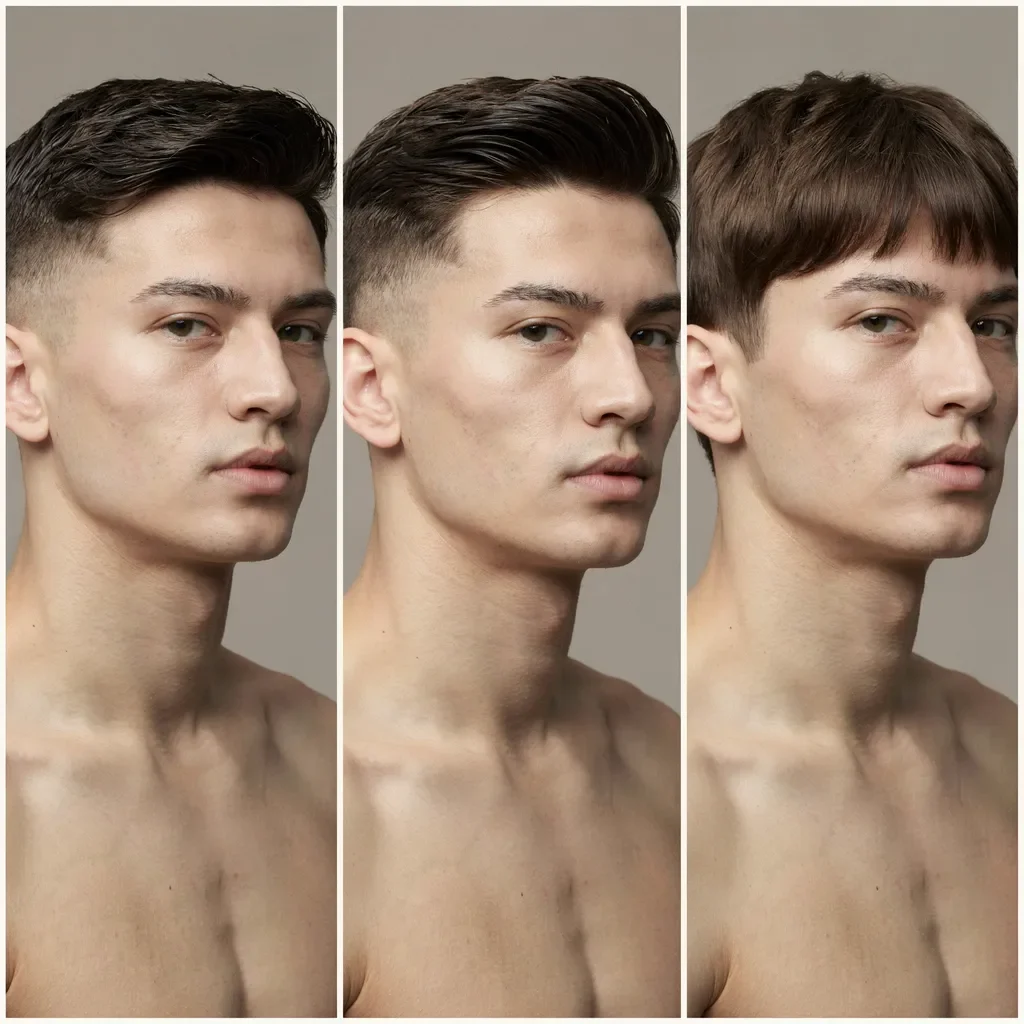
- Side-parted textured crop: moderate height, fringe brought slightly forward, avoids concentrating volume at the very top of the forehead.
- Medium-length brushed-back style with texture: keeps some weight through the mid-length rather than piling it all at the crown.
- Fringe or curtain-adjacent styles: a soft fringe across the forehead can visually soften its width without drawing more attention upward.
The bottom line
A heart-shaped face benefits from a mid fade paired with a top style that avoids adding extra height or volume directly above an already-wide forehead, favoring moderate, evenly distributed styling instead. A beard, if it’s an option for you, is one of the most effective tools available for visually balancing the narrower jaw against the wider forehead. The fade’s placement itself already helps by removing width at the sides.
Frequently asked questions
What top style works best with a mid fade for a heart-shaped face? A side part or textured crop with moderate volume, rather than height concentrated at the very front, tends to balance a heart-shaped face better than styles that add extra width at the forehead.
Does a beard help a heart-shaped face? Yes, often significantly. A beard adds visual width and weight to a naturally narrower jaw and chin, helping balance the proportions against a wider forehead.
Should a heart-shaped face avoid height on top? Not entirely, but height concentrated directly at the crown and front can exaggerate an already-wide forehead. Moderate volume distributed more evenly tends to work better.
Why does a mid fade suit a heart-shaped face? Because its temple-level placement removes width at the sides of the head, an area that’s already fairly wide on a heart-shaped face, without adding extra bulk there.
Can a fringe help balance a heart-shaped face? Yes. A soft fringe brought forward across the forehead can visually soften its width rather than emphasizing it further, which works well for this face shape.
About the Author
Daniel Reyes got his first mid fade almost by accident. He asked his barber for “just a fade” and got one that started right at temple level. It became the cut he kept going back to, so he built mid-fade.com to cover it properly instead of burying it in generic fade lists.