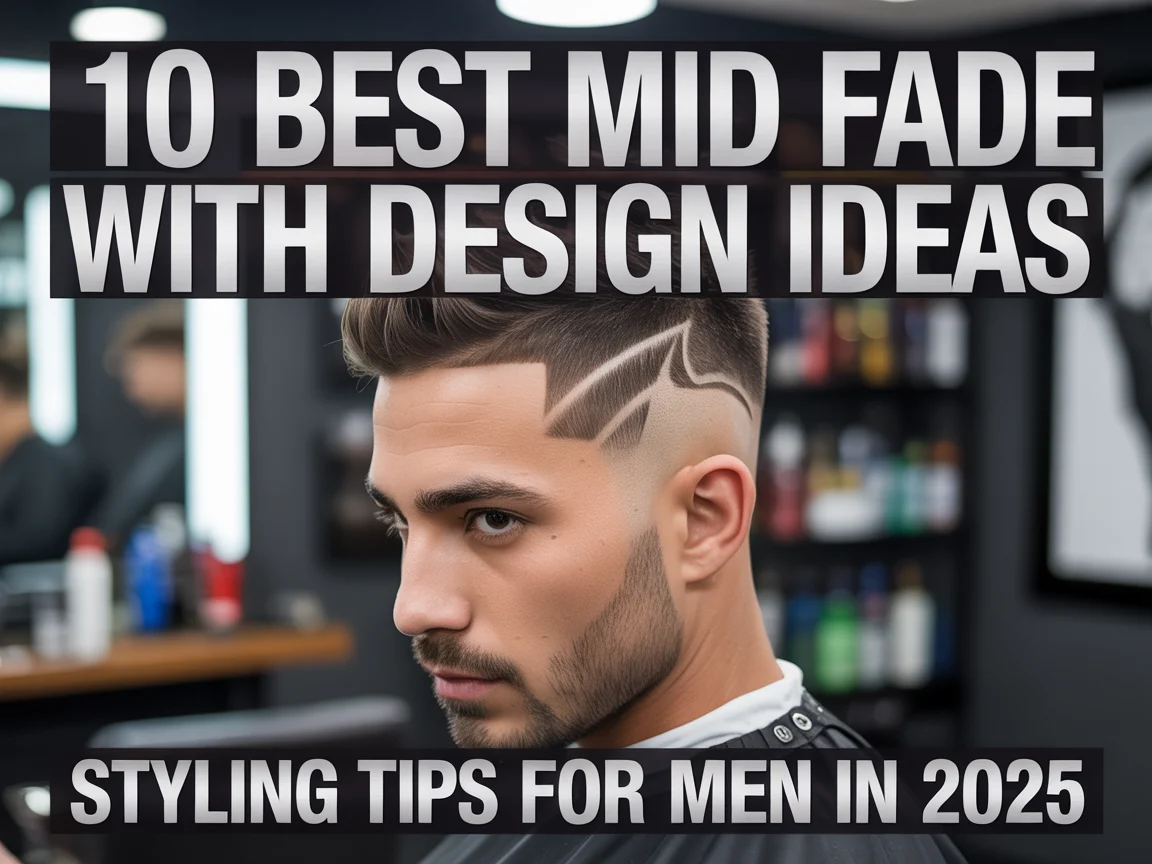
Mid Fade With Twists: A Textured, Defined Top

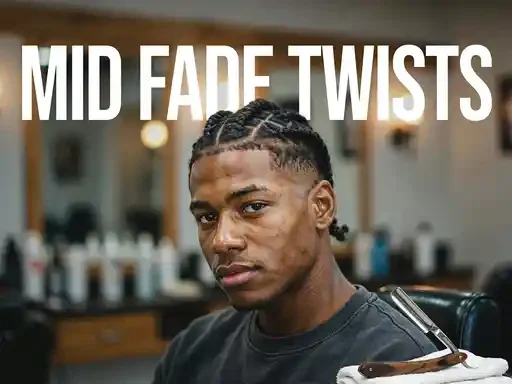
Quick answer: Twists — sections of hair twisted around each other, either two strands wound together or a single strand coiled — create a defined, textured top that pairs cleanly with a mid fade’s tight sides. Unlike locs, twists are typically a temporary style rather than a permanent hair structure, meaning they can be taken down, washed, and restyled regularly, which makes this combination more flexible for men who don’t want the long-term commitment locs require.
Twists occupy a middle ground in this guide between a fully natural, unstyled top and the permanent structure of locs — they offer defined texture and a deliberate look, without requiring the months-to-years commitment that starting locs does.
Two-strand versus single-strand (comb coil) twists
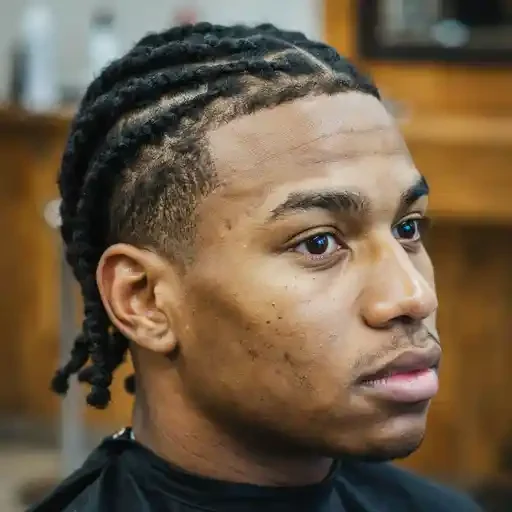
Two-strand twists involve taking a section of hair, dividing it into two pieces, and winding them around each other down the length. This is the more common style and generally holds a bit longer before needing to be redone.
Single-strand or comb coils twist one section of hair around itself using a comb, creating a tighter, more uniform coil pattern. These tend to look slightly different — more compact and defined — and are sometimes used specifically as a starting technique for men beginning to grow locs, though they’re also a complete style on their own without any intention of locking the hair.
Length needed for twists
You’ll generally need at least an inch and a half to two inches of hair to twist effectively — shorter than that, and the sections don’t have enough length to wind around each other securely, tending to unravel quickly. Longer hair allows for larger, more dramatic twists or the option to gather them up into other styles.
How twists interact with a mid fade
Because twists are done on top, gathered up from sections of hair rather than involving the fade area itself, the fade is cut in the standard way — tight sides starting at temple level, with the twisted sections left long enough on top to be twisted after the cut, or twisted separately as an ongoing styling routine independent of the actual haircut schedule.
Products for twisting
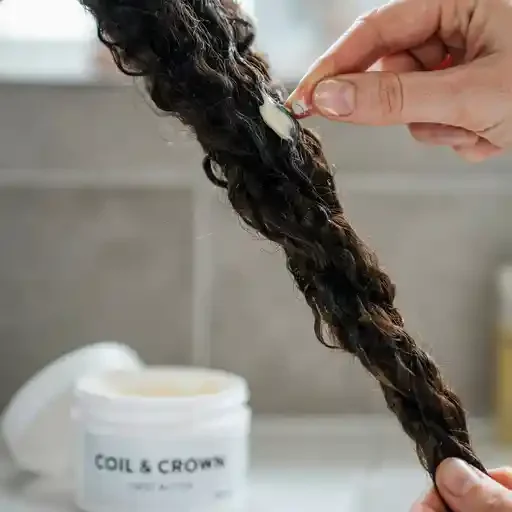
A twisting cream or gel, specifically formulated to add hold and definition while twisting, helps the sections stay wound and look sleek rather than frizzy or loose. Applying product to slightly damp hair, rather than fully dry, generally makes the twisting process easier and the result more defined.
How long do twists last before needing to be redone?
This varies by hair texture and how the twists were done, but generally anywhere from one to several weeks before they start to loosen, frizz, or need refreshing. Tighter, smaller twists using more product tend to hold their defined shape longer than larger, looser twists.
Styling variations with twists and a mid fade

- Twists left hanging loose shows the full texture and length against the fade’s clean sides.
- Twists gathered into a bun or ponytail keeps them controlled while showing off the fade prominently — a practical choice for active days or simply a different look.
- A twist-out, where twists are set and then unraveled once dry, creates a fuller, more voluminous curled look rather than keeping the defined twisted rope shape, offering yet another styling option from the same base twisting technique.
Maintenance
The fade needs the usual regular attention, every 2 to 4 weeks. Twists themselves need to be periodically taken down, the hair washed and cared for, and then re-twisted — how often depends on personal preference and how the twists are holding up, but many men incorporate this into their existing haircare routine on a schedule that suits them, independent of the fade cutting schedule.
The bottom line
Twists paired with a mid fade offer defined, textured styling without the permanent commitment locs require — they can be taken down, the hair cared for, and restyled as often as you like. Two-strand twists are the more common approach, needing at least an inch and a half of length, and hold well with a twisting-specific cream or gel applied to slightly damp hair.
Frequently asked questions
How is twists different from locs with a mid fade?
Twists are typically a temporary style that can be taken down, washed, and redone, while locs are a more permanent hair structure requiring months to years to establish and are not meant to be undone the same way.
How much hair length do you need for twists?
Generally at least an inch and a half to two inches, enough for sections to wind around each other securely without unraveling quickly.
What product works best for twisting hair?
A twisting cream or gel, specifically formulated for hold and definition, applied to slightly damp hair, generally makes the process easier and gives a more defined, less frizzy result.
How long do twists last before needing to be redone?
Generally one to several weeks, depending on hair texture and twist size, with smaller, tighter twists using more product typically holding their shape longer than larger, looser ones.
What’s a twist-out, and how does it differ from regular twists?
A twist-out is created by setting twists, letting them dry, and then unraveling them, resulting in a fuller, more voluminous curled look rather than keeping the defined roped shape of standard twists.
About the Author
Daniel Reyes got his first mid fade almost by accident. He asked his barber for “just a fade” and got one that started right at temple level. It became the cut he kept going back to, so he built mid-fade.com to cover it properly instead of burying it in generic fade lists.