Mid Fade With 360 Waves: How to Get the Spinning Pattern Right

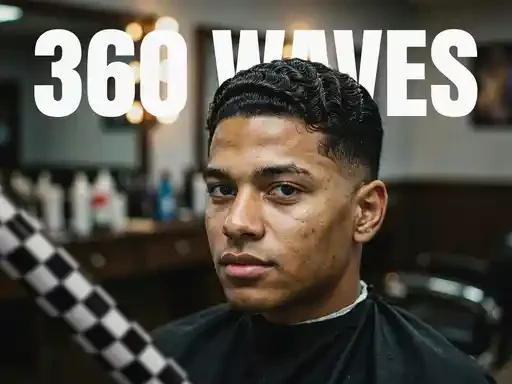
Quick answer: 360 waves are a distinct wave pattern that spirals outward from the crown across the whole top of the head, achieved primarily through consistent brushing over weeks to months rather than through cutting technique alone. Paired with a mid fade, the tight sides frame and highlight the wave pattern clearly. This is a hair type and commitment combination — waves develop most reliably on naturally coily or tightly curled hair with consistent daily brushing, a wave-specific product routine, and patience, since the pattern doesn’t appear overnight.
Unlike most styles in this guide, 360 waves are less about a single haircut and more about an ongoing routine that develops the pattern over time. Understanding this distinction matters before committing to the look.
What 360 waves actually are
The name refers to the wave pattern appearing to spiral, or “spin,” around the entire head — 360 degrees — radiating outward from a central point near the crown. This differs from looser, more random waves in that it’s a specific, cultivated pattern rather than simply naturally wavy hair left alone.
The hair type this works best on
360 waves are most achievable on naturally coily or tightly curled hair, since the hair’s own texture, combined with consistent brushing, is what trains the wave pattern to form and hold. Straighter or looser-curl hair types can develop some wave pattern with the same techniques, but the results are typically less defined and take longer to establish, if they develop into a clear spiraling pattern at all.
The basic process
- Length matters first. Hair generally needs to be at least half an inch to an inch long — cut too short, there isn’t enough length for the brushing process to train a visible wave pattern.
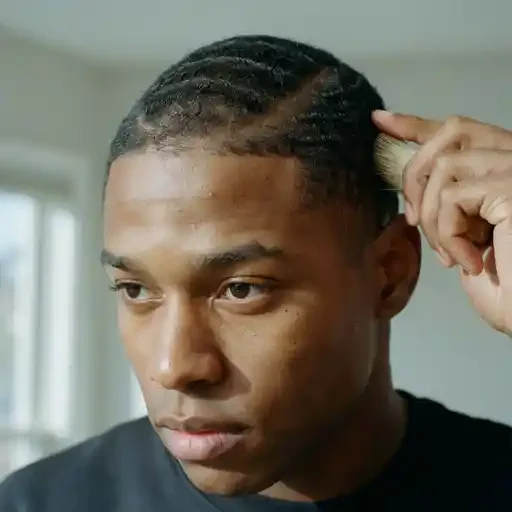
- Consistent brushing is the core technique. Using a medium or hard-bristle wave brush, hair is brushed in the direction you want the waves to form, multiple times a day, every day, over a period of weeks to months. This is genuinely the most important part of the process — cutting technique matters far less than this ongoing brushing routine.
- A durag or wave cap is worn between brushing sessions, particularly overnight, to compress the hair and help train the pattern to hold rather than reverting between sessions.
- Wave-specific pomade or grease is typically applied before brushing, both to add shine and to help the hair lie down and hold the trained direction more effectively than brushing dry hair alone.
How the mid fade fits in

The fade itself doesn’t create the wave pattern — that’s entirely a product of the brushing and training routine described above. What the fade does is frame the waves clearly, since the tight, clean sides create a sharp visual boundary that highlights the wave pattern on top rather than letting it blend into longer, unfaded sides. Ask your barber to keep the top length consistent with what your wave routine needs, generally not more than an inch or so, while fading the sides in the usual way at temple level.
Realistic timeline expectations
This is not a fast process. Early, faint wave pattern can sometimes be seen within a couple of weeks of consistent brushing, but a genuinely deep, defined 360 pattern typically takes two to three months of daily commitment to develop fully, and results vary significantly based on natural hair texture. This is worth knowing upfront so expectations are realistic rather than expecting fade-haircut-speed results from what’s actually a longer-term hair training process.
Maintaining waves once established

Once the pattern is established, it needs ongoing maintenance to hold — brushing doesn’t stop once waves appear, though the frequency can sometimes decrease slightly. Regular trims to keep the top length consistent (not letting it grow too long, which can loosen the wave pattern) work alongside the brushing routine, and the fade itself follows the usual every-2-to-4-weeks schedule.
The bottom line
360 waves paired with a mid fade create a genuinely striking, highly cultivated look, but it’s important to understand this is primarily a hair training process — consistent brushing, wave products, and a durag or wave cap over weeks to months — rather than something a single haircut achieves. The fade’s role is framing and highlighting the pattern once it develops, not creating it.
Frequently asked questions
Does a mid fade create the 360 waves pattern?
No. The wave pattern develops through consistent brushing and product use over weeks to months. The fade frames and highlights the pattern once established but does not create it.
How long does it take to develop 360 waves?
Faint pattern can sometimes appear within a couple of weeks, but a deep, defined pattern typically takes two to three months of daily brushing and product use, varying by natural hair texture.
What hair type works best for 360 waves?
Naturally coily or tightly curled hair develops the pattern most reliably. Straighter or looser-curl hair can develop some wave with the same technique, but results are typically less defined.
Do you need to wear a durag for 360 waves?
It is commonly used, particularly overnight, to compress the hair and help the trained wave pattern hold between brushing sessions rather than reverting.
How long should hair be for 360 waves with a mid fade?
Generally at least half an inch to an inch, kept fairly consistent through regular trims, since too much length can loosen an established wave pattern over time.
About the Author
Daniel Reyes got his first mid fade almost by accident. He asked his barber for “just a fade” and got one that started right at temple level. It became the cut he kept going back to, so he built mid-fade.com to cover it properly instead of burying it in generic fade lists.