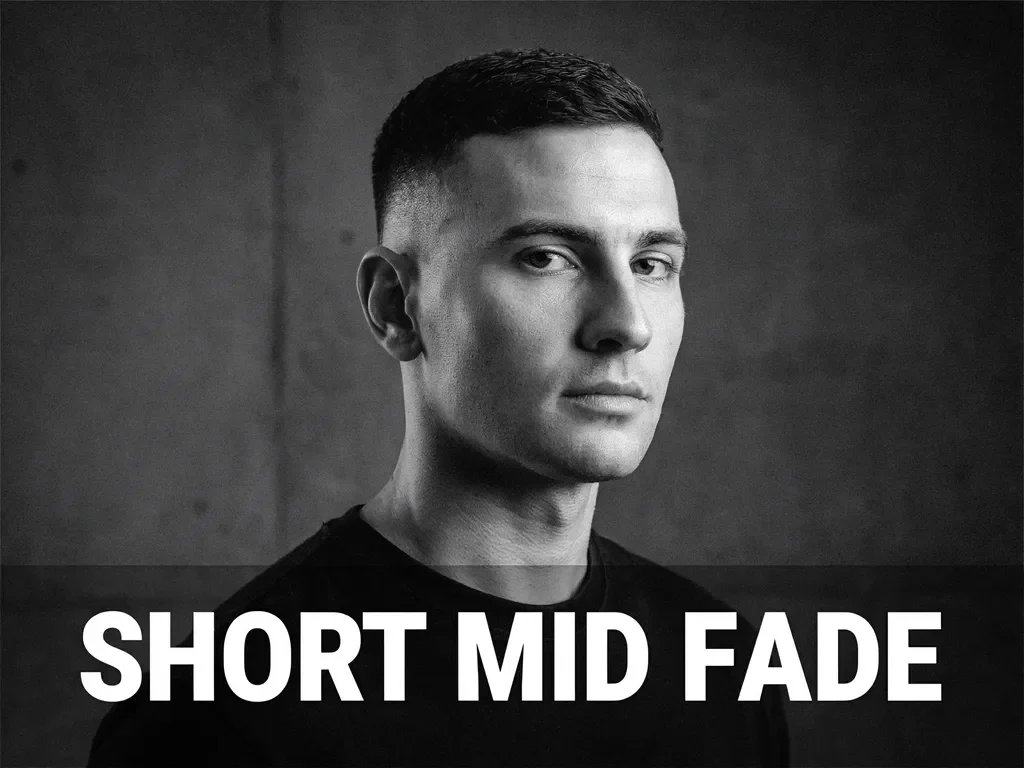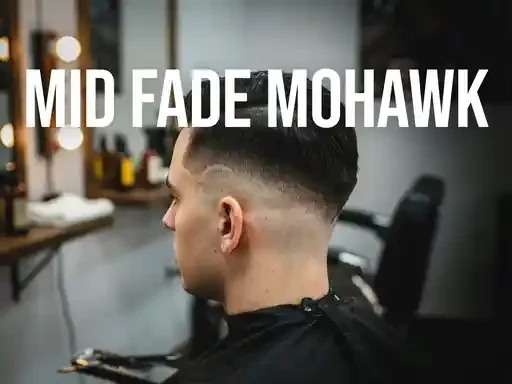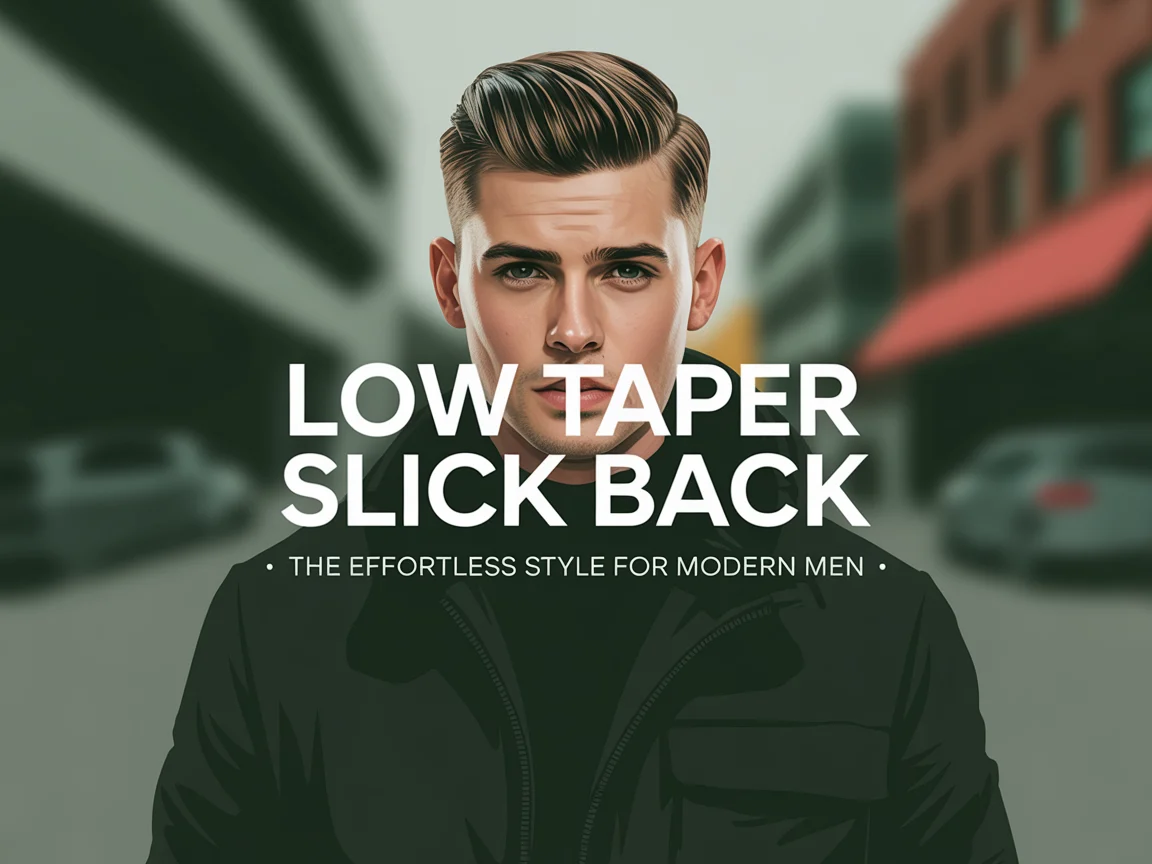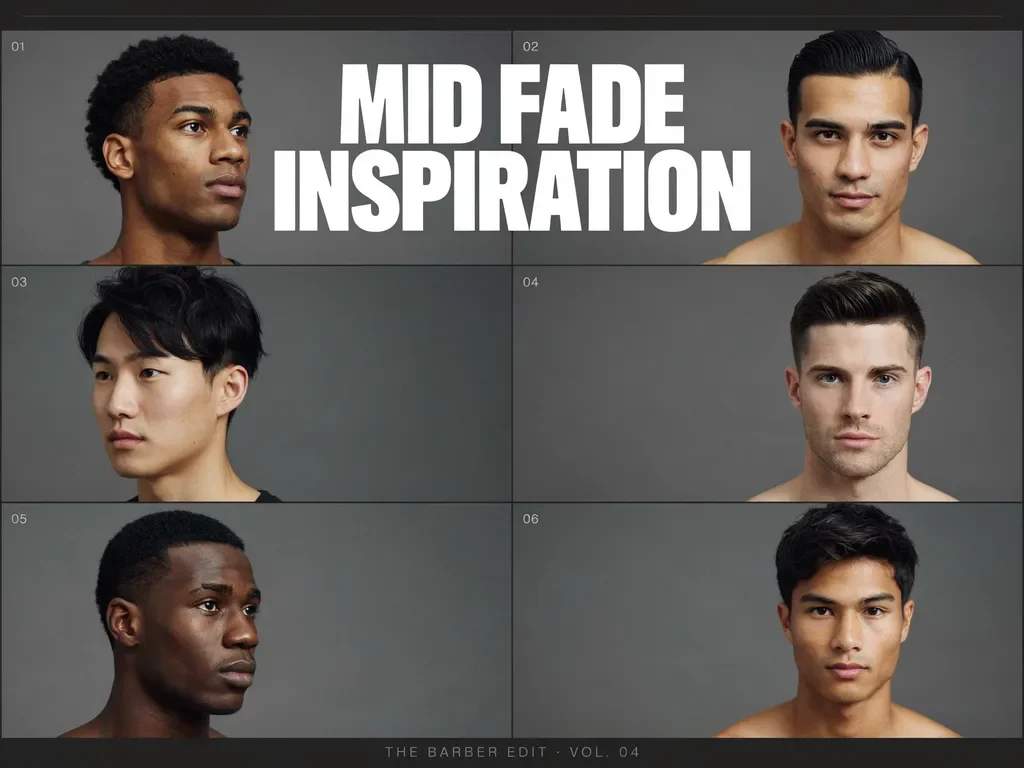
Mid Fade Brush Back: A Clean, Structured Everyday Style

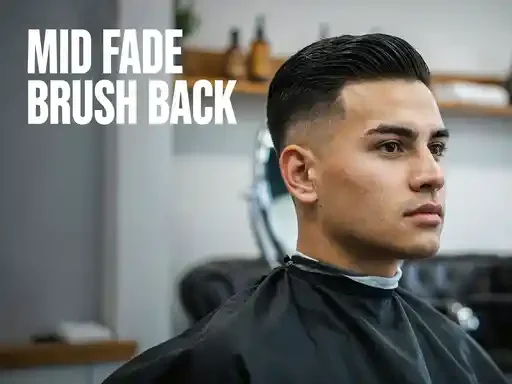
Quick answer: A brush back style sweeps the top hair straight backward, away from the forehead, without the more dramatic upward height of a quiff or pompadour. Paired with a mid fade, it creates a clean, put-together look that reads as slightly more formal than a textured crop but with less daily effort than a fully sculpted pompadour. It needs moderate length — around two to three inches — and a comb or brush, plus a medium-hold product, to direct the hair back smoothly.
The brush back sits comfortably between the more relaxed, low-effort styles and the taller, more dramatic ones in this guide, offering a polished look without requiring the height-building technique a quiff or pompadour needs.
What makes it different from a quiff or pompadour
Where a quiff keeps some forward volume and a pompadour builds significant height, a brush back is directed backward with comparatively less lift — the emphasis is on smoothness and direction rather than height. It’s a more subdued, versatile look that works well in professional settings without looking overly casual or overly dramatic.
Length needed
Around two to three inches on top gives enough length for the hair to comb backward smoothly and stay in place, without being so long that it starts curling or flipping at the ends in an uncontrolled way. Shorter hair can be brushed back too, but the effect is more subtle and less defined.
How to ask your barber for it
Something like: “leave two to three inches on top, styled to comb straight back, fade the sides at my temple.” This is a fairly standard, well-understood request, though mentioning whether you want a completely smooth, sleek finish or something with a bit more texture helps your barber cut the top with the right technique — a perfectly smooth brush back benefits from a more precisely even cut, while a slightly textured version can handle a bit more natural variation in length.
Styling technique
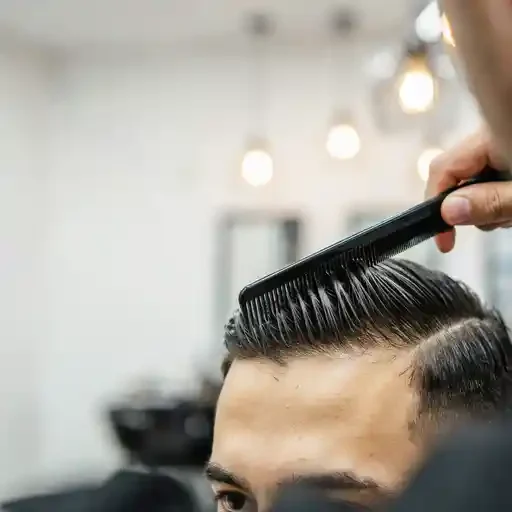
- Apply a medium-hold product — a water-based pomade or a firm cream — to damp hair.
- Comb the product through evenly from front to back.
- Use a comb, rather than just your fingers, to direct the hair straight back, working in sections for an even result.
- Let it air dry in position, or lightly blow-dry while holding the direction with the comb.
- A final light comb-through once dry cleans up any comb marks for a smoother finish.
Sleek versus textured brush back
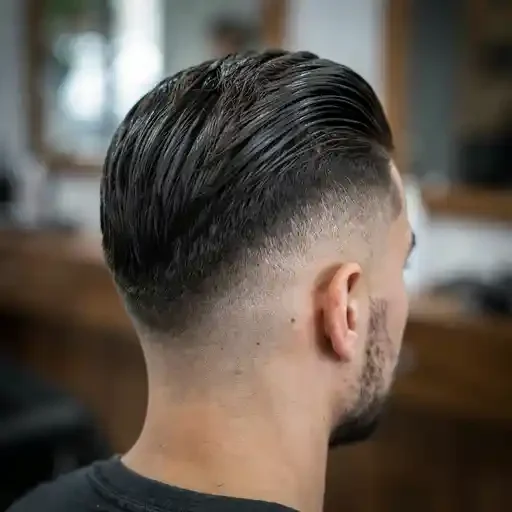
Sleek and smooth uses a stronger-hold, higher-shine product (often an oil-based pomade) and more deliberate combing for a glossy, uniform finish — closer in spirit to a slicked-back look, but without pulling all the hair fully flat.
Slightly textured uses a matte, medium-hold product and allows a bit more natural movement and separation rather than combing every strand into perfect uniformity — a more relaxed, everyday version of the same basic direction.
Which hair types suit a brush back
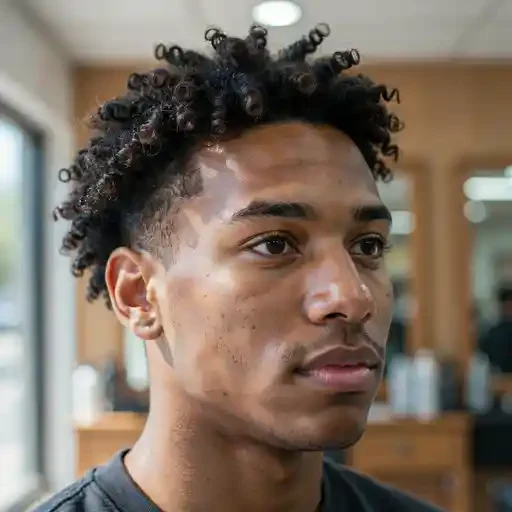
Straight and wavy hair generally hold this direction most predictably and smoothly. Curly hair can be brushed back too, though the result reads more textured than sleek, since curl pattern resists lying completely flat and smooth even when directed backward — this isn’t a problem, it’s simply a different, still attractive version of the same basic style.
Maintenance
The fade needs the usual regular attention, every 2 to 4 weeks. The top, needing a consistent length to comb back effectively, is often trimmed on a similar schedule to keep the style working, since too much added length can start to overwhelm the clean, directed look a brush back is going for.
The bottom line
A mid fade brush back offers a clean, versatile middle ground between low-effort textured styles and more dramatic, height-focused ones — moderate length, a medium-hold product, and a comb are the main tools needed. It works well in both casual and professional settings, and can be styled sleek and glossy or slightly textured depending on your preference.
Frequently asked questions
How is a brush back different from a quiff?
A brush back is directed backward with less upward lift, while a quiff builds more height and often keeps some forward volume at the front. A brush back reads as more subdued and versatile.
How much length do you need for a mid fade brush back?
Around two to three inches on top, enough for the hair to comb backward smoothly and hold direction without curling or flipping uncontrolled at the ends.
What product works best for a brush back?
A medium-hold, water-based pomade or firm cream works well for most versions. Oil-based pomade gives a sleeker, glossier finish if that is the specific look you want.
Does curly hair work with a brush back?
Yes, though the result reads more textured than sleek and smooth, since curl pattern resists lying completely flat even when combed backward, which is a different but still attractive version of the style.
How often does a mid fade brush back need a haircut?
The fade needs attention every 2 to 4 weeks, and the top is often kept on a similar schedule, since too much added length can overwhelm the clean, directed look the style depends on.
About the Author
Daniel Reyes got his first mid fade almost by accident. He asked his barber for “just a fade” and got one that started right at temple level. It became the cut he kept going back to, so he built mid-fade.com to cover it properly instead of burying it in generic fade lists.