Mid Fade for Fuller or Chubby Faces: What Actually Helps

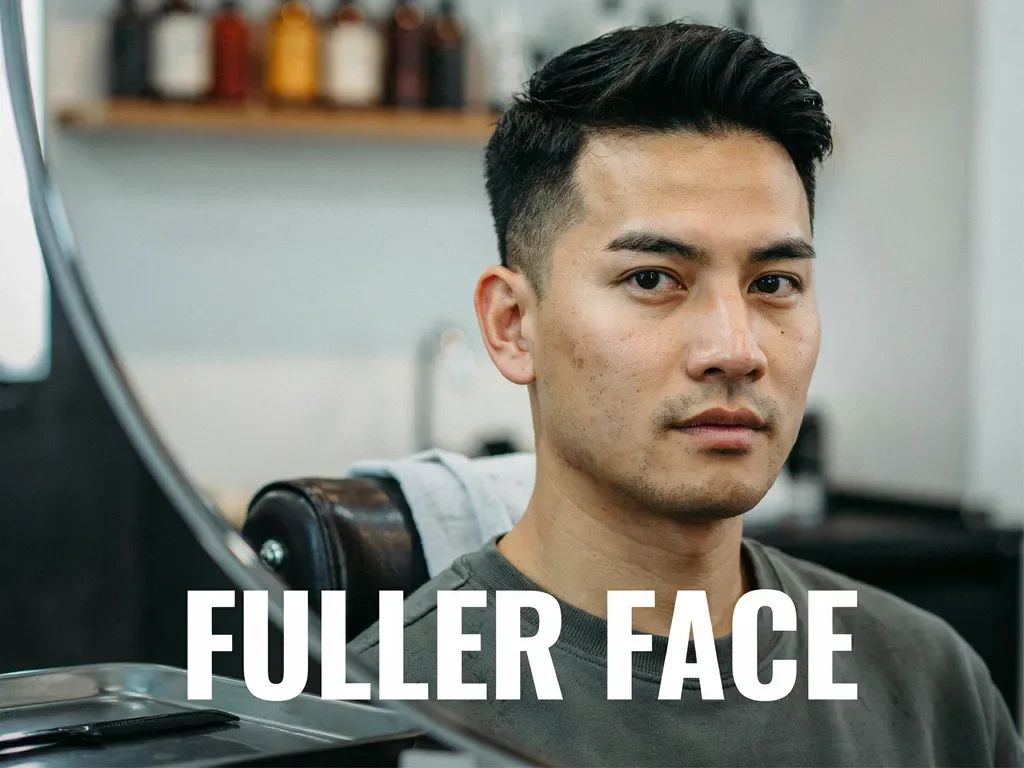
Quick answer: A fuller or rounder face benefits from a mid fade for the same core reason a round face does, the tight sides remove bulk exactly where a fuller face doesn’t need more visual width, while some height and structure on top adds a counterbalancing vertical line. Avoid very wide, bulky, or flat tops, and lean toward styles with defined shape, like a textured quiff or crop, rather than uniform, low-definition cuts.
A fuller face shares some styling logic with a round face, added width isn’t helpful, while some height and structure is, but often benefits even more specifically from the fade itself, since removing bulk at the sides has a particularly noticeable slimming effect when there’s more volume in the face to balance against.
Why the fade placement matters even more here
A mid fade’s tight, close-to-the-skin sides do real, visible work for a fuller face by eliminating any hair bulk that would otherwise add to the sense of width at the sides of the head. This effect is more pronounced on a fuller face than on a naturally narrower one, since there’s more to visually balance in the first place. This is one of the reasons fades in general, not just mid fades, are consistently recommended for men with fuller faces.
What to do on top
Add height and defined shape. A textured quiff, a structured crop with some lift, or a deliberately shaped top all introduce a vertical line that counters the fuller, rounder quality of the face, similar to the approach for a round face shape.
Keep some separation and texture rather than a smooth, uniform mass of hair. Textured, slightly piecey styling creates visual breaks that read as more angular and less soft than a completely smooth, rounded top shape.
A side part with volume works well too, adding both height and a defined line without requiring an especially dramatic style.
What to avoid
Wide, voluminous tops with no defined shape. Hair that flares outward without structure adds width in a place a fuller face doesn’t benefit from, working against the fade’s slimming effect at the sides.
Very flat, short, uniform tops. Similar to a round face, cutting the top extremely short with no height removes the opportunity to add the vertical balance that helps counter fullness.
Long, unstructured length with heavy weight. Hair that’s long enough to hang down without any shaping or texture can add visual bulk that works against the goal, particularly around the jaw and cheek area where a fuller face already has more volume.
Facial hair considerations
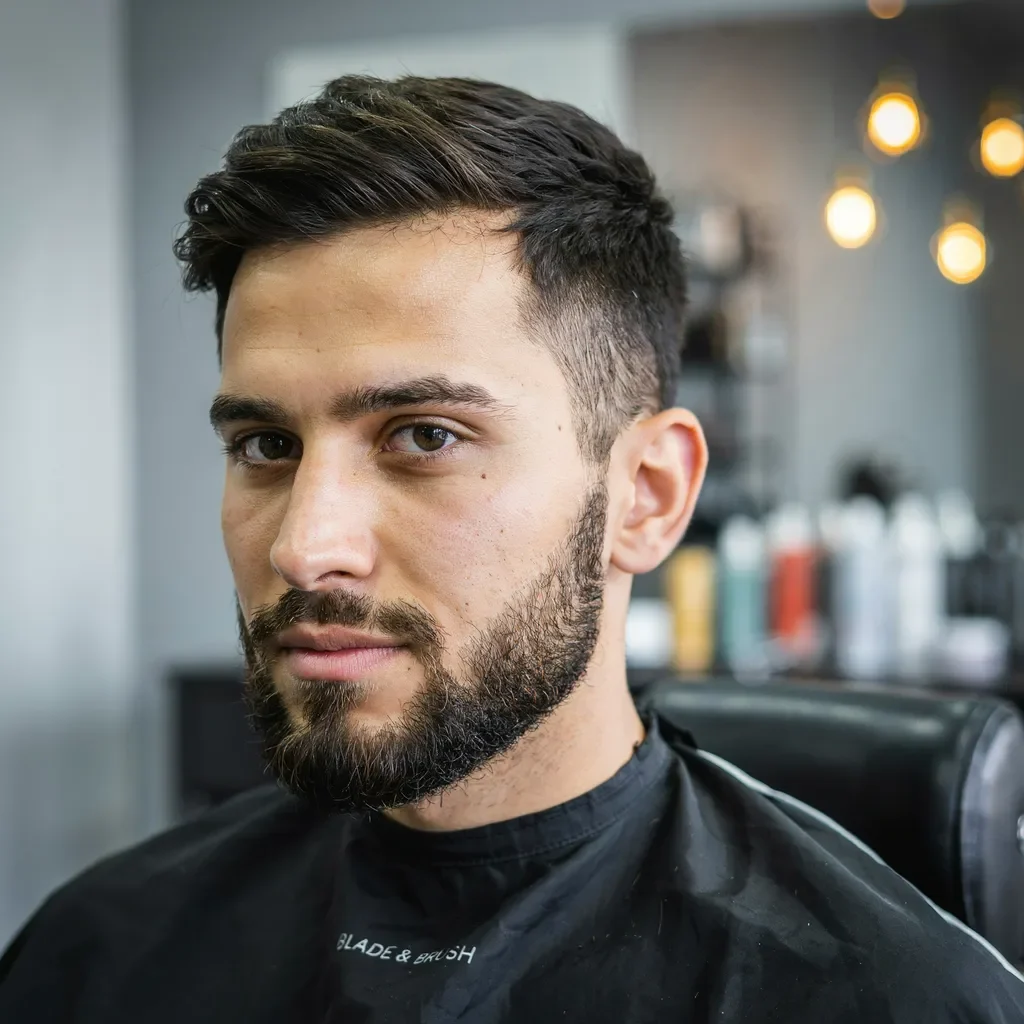
Beard choice matters here. A well-shaped, defined beard that follows and slightly sharpens the jawline can add helpful structure and the appearance of more angularity to a fuller face. An unshaped, fully grown-out beard with no defined edges can add further bulk and softness in an area that doesn’t need it. If you keep facial hair, regular shaping along clean lines makes a meaningful difference for this face type specifically.
Does depth of the fade matter here?
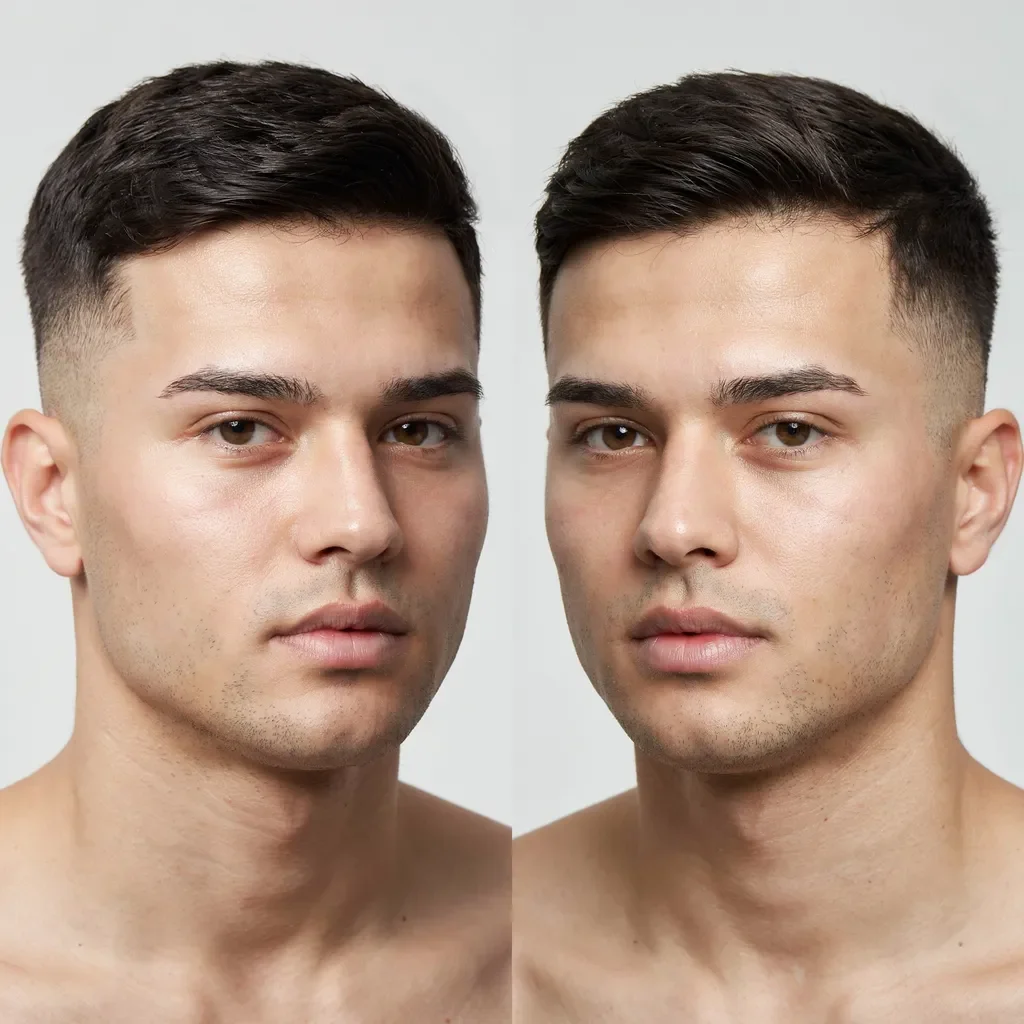
Somewhat. A tighter, higher-contrast fade (closer to bald at the bottom) creates a more pronounced slimming line than a softer, non-bald fade, simply because the contrast between skin and hair is greater. If maximizing the fade’s slimming visual effect is a priority, discuss a slightly deeper fade with your barber; if longevity between cuts matters more, a softer non-bald finish is still a reasonable, flattering choice, it just won’t be quite as dramatic in its effect.
A few style directions that work well
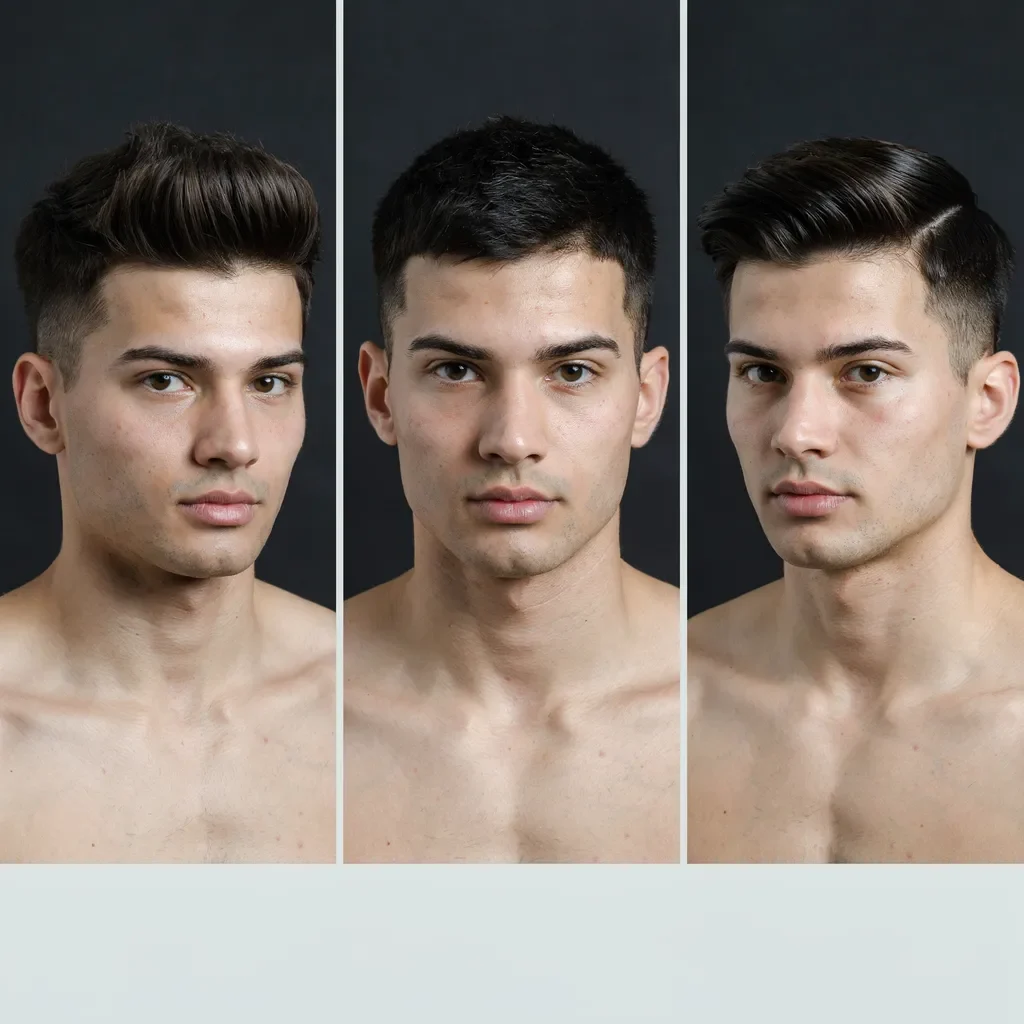
- Textured quiff: height and definition, directly counters fullness.
- Structured crop with a defined line: some length with clear shape rather than a soft, rounded mass.
- Side part with volume and a hard part line: adds a clean, angular element along with height.
The bottom line
For a fuller or rounder face, a mid fade helps in the same way it helps a round face, by removing bulk at the sides, and this effect is often more noticeable given there’s more volume to balance in the first place. Pair it with a top that has some height and defined shape, keep facial hair well-groomed with clean lines if you wear it, and avoid wide, flat, or unstructured styling that would work against the fade’s natural slimming effect.
Frequently asked questions
Does a mid fade help slim a fuller face? Yes, generally. The tight sides remove hair bulk exactly where a fuller face doesn’t need more visual width, creating a noticeable slimming effect, especially when paired with some height on top.
What top style works best for a fuller face with a mid fade? A textured quiff or structured crop with defined shape and some height works well, since it adds a vertical line that counters the face’s fuller, rounder quality.
Should a fuller face avoid long hair on top? Unstructured, heavy length without shaping can add visual bulk that works against the fade’s slimming effect. If you want longer hair, keep it textured and shaped rather than left flat and weighty.
Does beard shape matter for a fuller face? Yes, more than for some other face types. A well-defined, cleanly edged beard adds helpful angularity, while an unshaped, fully grown beard can add further softness and bulk.
Should a fuller face go for a deeper or softer fade? A deeper, closer-to-bald fade creates a more pronounced slimming line due to higher contrast, while a softer non-bald fade is still flattering but less dramatic in effect and holds up longer between cuts.
About the Author
Daniel Reyes got his first mid fade almost by accident. He asked his barber for “just a fade” and got one that started right at temple level. It became the cut he kept going back to, so he built mid-fade.com to cover it properly instead of burying it in generic fade lists.