Mid Fade Edgar Cut: The Bold, Squared-Off Fringe Style

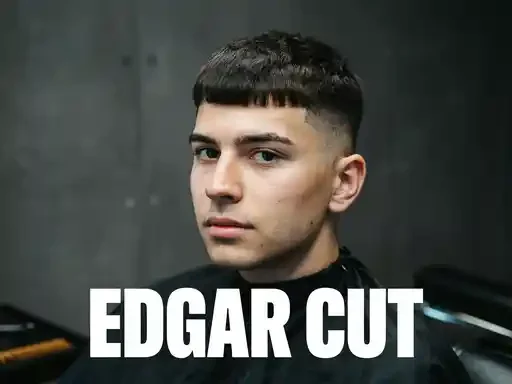
Quick answer: An Edgar cut features a short, notably squared-off fringe with sharp, straight edges — bolder and more geometrically defined than a Caesar cut’s straighter but softer fringe line. Paired with a mid fade, the combination is one of the more visually striking, deliberately edgy pairings in this guide, with precise lines that require more frequent barbershop maintenance than softer styles to stay looking sharp.
The Edgar cut has grown significantly in popularity in recent years, particularly among younger men, and is characterized by its confidently geometric, almost architectural fringe shape rather than a softer, more traditional forward-combed style.
What makes an Edgar cut distinct
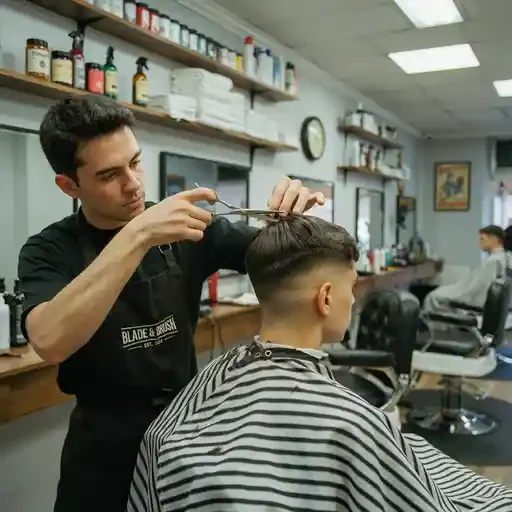
The defining feature is a squared, sharply defined fringe with straight, precise edges at the corners — rather than a rounded or softly tapered fringe line, an Edgar cut has genuine geometric sharpness, almost like a rectangular block of hair sitting above the eyebrows. The sides of the top, near the temples, are often cut in with similarly sharp, defined lines rather than a soft blend into the fringe.
How it compares to a Caesar cut
Both feature a forward fringe, but an Edgar cut takes the concept further with genuinely sharp, squared corners and edges rather than a straight but softer line. It reads as bolder and more deliberately stylized, closer in spirit to the visual sharpness of a hard part than the more understated classic quality of a Caesar cut.
Cutting technique
This is a precision-dependent style, requiring careful use of clippers and often a straight edge or guide to achieve genuinely sharp, symmetrical corners on the fringe. It’s worth seeking out a barber specifically experienced with this style, since achieving clean, symmetrical geometric lines is a different skill than general fade or texturizing work — ask to see examples of Edgar cuts they’ve done previously if you’re trying a new barbershop specifically for this style.
How to ask for it
Bring a reference photo — this is one of the styles where visual reference matters most, since “Edgar cut” as a term can be interpreted somewhat differently by different barbers in terms of exactly how squared and sharp the corners are. Being able to point to a specific example removes ambiguity.
Maintenance: expect more frequent visits
Similar to a hard part, the sharp geometric lines that define an Edgar cut lose their crispness faster than a softer fringe style would as hair grows. Many men with this style book touch-ups every 1 to 2 weeks specifically for the fringe shaping, even if the rest of their fade schedule is less frequent, since a slightly grown-out Edgar cut loses much of what makes the style distinctive in the first place.
Which hair types work best
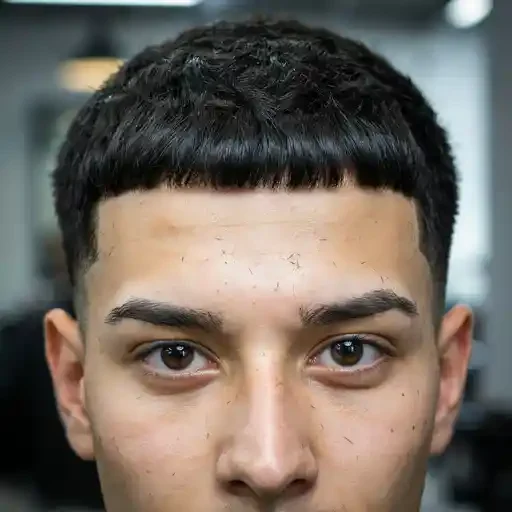
Straight, coarser hair tends to hold the sharp, squared shape most predictably and cleanly. Curly or very textured hair can be cut into an Edgar-inspired shape, but the natural curl pattern works against achieving fully crisp, straight-edged corners, so the result is typically a somewhat softer interpretation of the style rather than the most geometrically precise version.
Face shapes and the Edgar cut
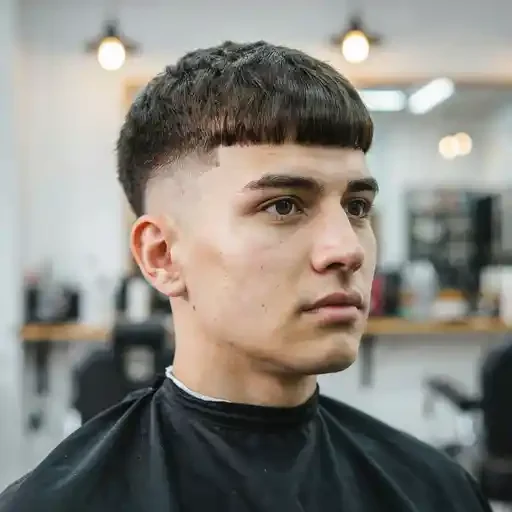
Because the fringe adds both a horizontal line and some visual weight at the forehead, it can work well for longer face shapes, similar to other fringe-forward styles. The bold, geometric quality of the style overall tends to suit more angular face shapes (square, for instance) particularly well, since the sharp lines echo an already-structured jaw rather than contrasting against it.
The bottom line
An Edgar cut paired with a mid fade delivers one of the more visually bold, deliberately geometric looks in this guide, but it demands precision from your barber and more frequent maintenance visits than softer styles to keep those sharp lines looking their best. Bring a reference photo, seek out a barber with specific experience in this style, and expect to book touch-ups more often than a standard mid fade schedule if keeping the fringe consistently sharp matters to you.
Frequently asked questions
How is an Edgar cut different from a Caesar cut?
An Edgar cut has genuinely sharp, squared corners and edges on the fringe, giving it a bolder, more geometric look, while a Caesar cut’s fringe is straight but softer, without the same architectural sharpness.
Does an Edgar cut need a specific barber skill?
Yes, more than many styles in this guide. Achieving clean, symmetrical, sharp corners requires precision work, and it is worth seeking out a barber with specific experience in this style.
How often does an Edgar cut need maintenance?
More frequently than a standard mid fade in many cases. Many men book touch-ups every 1 to 2 weeks specifically for the fringe, since the sharp lines lose crispness faster than softer styles.
Does curly hair work with an Edgar cut?
It can, though the natural curl pattern works against achieving fully crisp, straight edges, resulting in a somewhat softer interpretation of the style compared to straighter, coarser hair.
What face shapes suit an Edgar cut well?
Longer face shapes benefit from the horizontal fringe line, similar to other fringe styles, while more angular face shapes like square tend to suit the style’s overall sharp, geometric quality particularly well.
About the Author
Daniel Reyes got his first mid fade almost by accident. He asked his barber for “just a fade” and got one that started right at temple level. It became the cut he kept going back to, so he built mid-fade.com to cover it properly instead of burying it in generic fade lists.