Mid Fade Mullet: A Modern Take on a Retro Classic

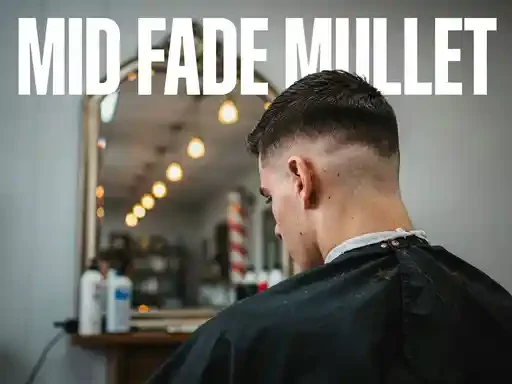
Quick answer: A mid fade mullet keeps noticeable length at the back of the head while the sides fade tightly starting at temple level, and the top is typically kept shorter to medium length. This modernized version, with a proper fade rather than a simple tapered or clippered side, is considerably more polished than the mullet more chaotic historical reputation might suggest, and it has become a genuinely popular, deliberate style choice in its own right.
The mullet has cycled through phases of being seen as a joke, a retro throwback, and now, particularly paired with a clean fade, a legitimate, fashion-forward style that plenty of men wear with confidence.
What makes a mid fade mullet different from an old-school mullet

The classic, often mocked version of a mullet typically had a fairly undefined, sometimes uneven transition between the sides and the long back section, with a top that could look equally undefined. A mid fade mullet applies actual fade technique, a clean, gradual transition starting at temple level, to the sides, and typically involves a more deliberately shaped top and back section as well, resulting in a considerably more polished, intentional-looking version of the same basic concept: short sides, long back.
The three zones to think about
- The sides, faded in the standard mid fade way, tight and clean starting at the temple.
- The top, generally kept shorter to medium in most modern mullet interpretations, this is not where the length statement is being made.
- The back, where the real length is retained and often the visual focal point of the whole style, ranging from a few inches to quite dramatic length depending on personal preference and how long you have been growing it.
How to ask your barber for it
Be specific about how dramatic you want the length contrast to be: fade the sides at my temple, keep the top a moderate length, and leave significant length at the back for a mullet. Reference photos help enormously here, since mullets vary widely in exactly how much back length is kept and how the transition between the faded sides and the long back is handled.
Growing into a mullet
If you are starting from a shorter cut, the back section needs real time to grow to a length worth calling a mullet, often several months, depending on how much length you are after. Many men start this process gradually, having their barber shape the growing-out phase so it does not look like an accident along the way, rather than simply avoiding the barber and hoping for the best.
Styling the back section
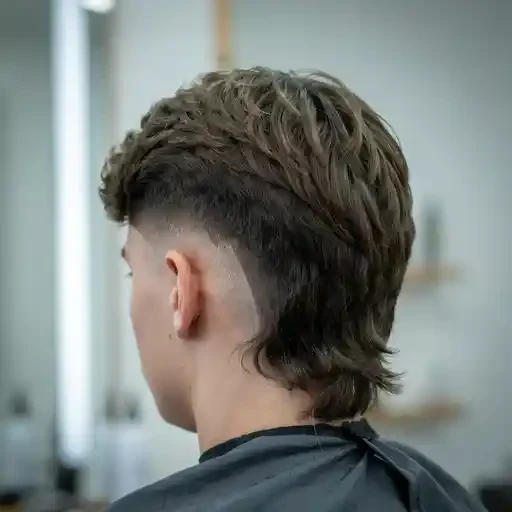
Depending on hair type and how long the back has gotten, some men leave it entirely natural and loose, others add texture with a light product to enhance movement, and some occasionally braid or tie back particularly long sections for practical or aesthetic reasons. There is no single correct approach, the back section styling is largely down to personal preference and how the hair naturally behaves at that length.
Does hair type change how a mullet looks?
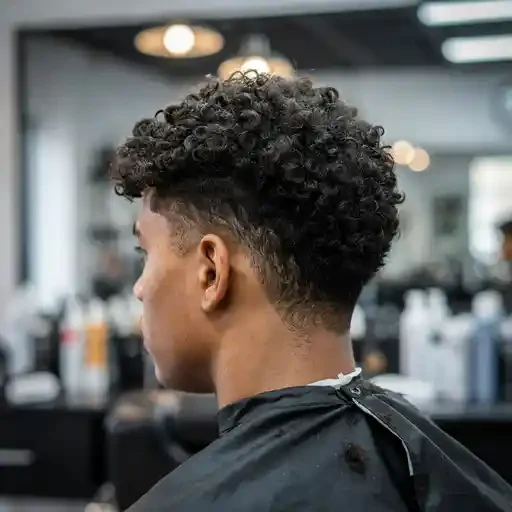
Yes, noticeably. Straight hair tends to hang with more weight and a cleaner line at the back. Wavy or curly hair adds natural texture and volume to the back section, which some men specifically prefer for a fuller, more textured mullet silhouette rather than a sleeker one. Curl shrinkage means curly-haired men will generally need more actual hair length to achieve a comparably long-looking mullet back section.
Maintenance
The fade needs the usual regular attention, every 2 to 4 weeks. The top is often trimmed on a similar schedule to keep it at its intended shorter-to-medium length. The back section is typically left to grow with only occasional health-focused trims, unless you are maintaining it at a specific target length rather than continuing to grow it longer, in which case periodic trims to maintain that length become part of the routine.
The bottom line
A mid fade mullet takes the classic short-sides-long-back concept and applies genuine fade technique and more deliberate shaping throughout, resulting in a considerably more polished, intentional look than the style dated reputation might suggest. It requires real patience to grow the back section to a worthwhile length, and clear communication with your barber about exactly how dramatic you want the length contrast to be.
Frequently asked questions
How is a mid fade mullet different from a classic mullet?
A mid fade mullet applies proper, clean fade technique to the sides rather than a simple tapered or clippered look, and typically involves more deliberate shaping of the top and back, resulting in a more polished overall style.
How long does it take to grow a mullet back section?
Often several months, depending on your hair growth speed and how much length you are aiming for, similar to growing any longer hair section from a shorter starting point.
Does hair type affect how a mullet looks?
Yes. Straight hair tends to hang with a cleaner line at the back, while wavy or curly hair adds natural volume and texture, and curly hair typically needs more actual length to achieve a comparably long visual result due to shrinkage.
How should you style the back section of a mullet?
This comes down to personal preference, some leave it natural and loose, others add texture with light product, and some tie back particularly long sections, depending on hair type and desired look.
Does the top need to be a specific length for a mullet?
Most modern mullet interpretations keep the top shorter to medium length, since the length statement of the style is concentrated at the back rather than on top.
About the Author
Daniel Reyes got his first mid fade almost by accident. He asked his barber for “just a fade” and got one that started right at temple level. It became the cut he kept going back to, so he built mid-fade.com to cover it properly instead of burying it in generic fade lists.