Mid Drop Fade vs Mid Burst Fade: What’s the Difference?

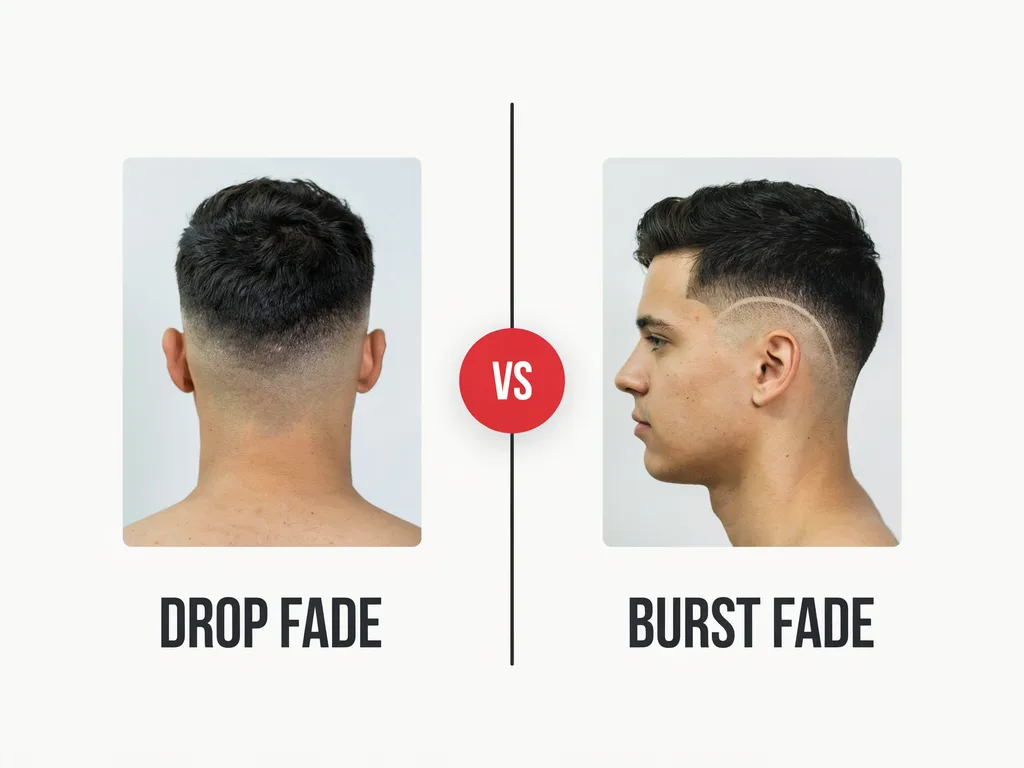
Quick answer: Both start the fade at temple level, so the difference is in how the fade line travels around the head. A mid drop fade curves downward behind the ear, "dropping" along the hairline so it hugs the head. A mid burst fade fans out in a semi-circle around the ear, leaving more length at the back and nape. The drop wraps low and rounded; the burst radiates around the ear and keeps a longer back.
These two are both mid fade variations, so they share the same temple-level starting point. What sets them apart is the shape the fade makes — and that shape changes the whole silhouette. Here's how to tell them apart and which one suits you.
Same start, different path
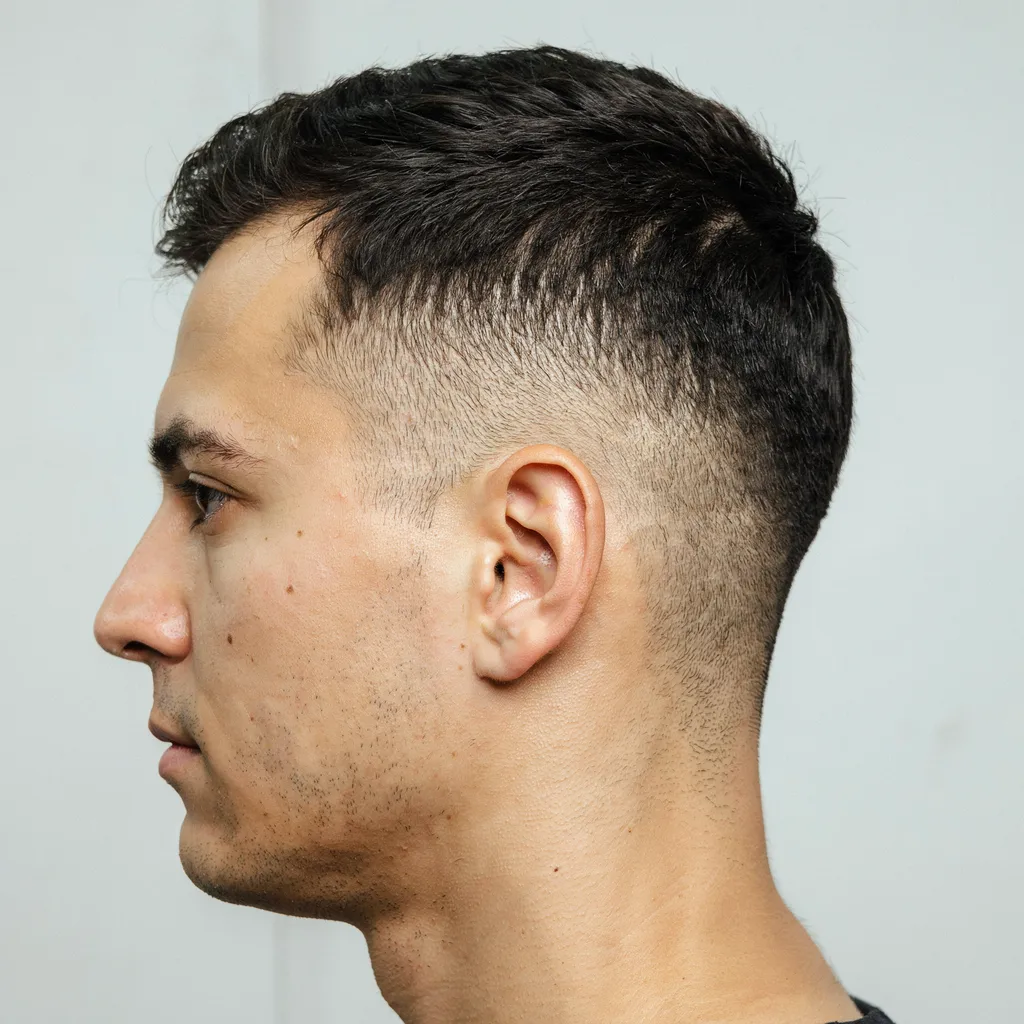
Every mid fade begins at temple level. From that shared starting point:
- A mid drop fade sends the fade line downward as it moves back, dropping lower behind the ear so it follows the curve of the skull and dips toward the nape.
- A mid burst fade curves the fade around the ear in a semi-circle — a "burst" radiating out from the ear — while leaving a strip of longer hair running down the centre back and nape.
So the drop pulls the line down and around; the burst wraps around the ear and stops, keeping the back fuller. For the shared placement basics, see our Where Does a Mid Fade Start guide.
What each one looks like
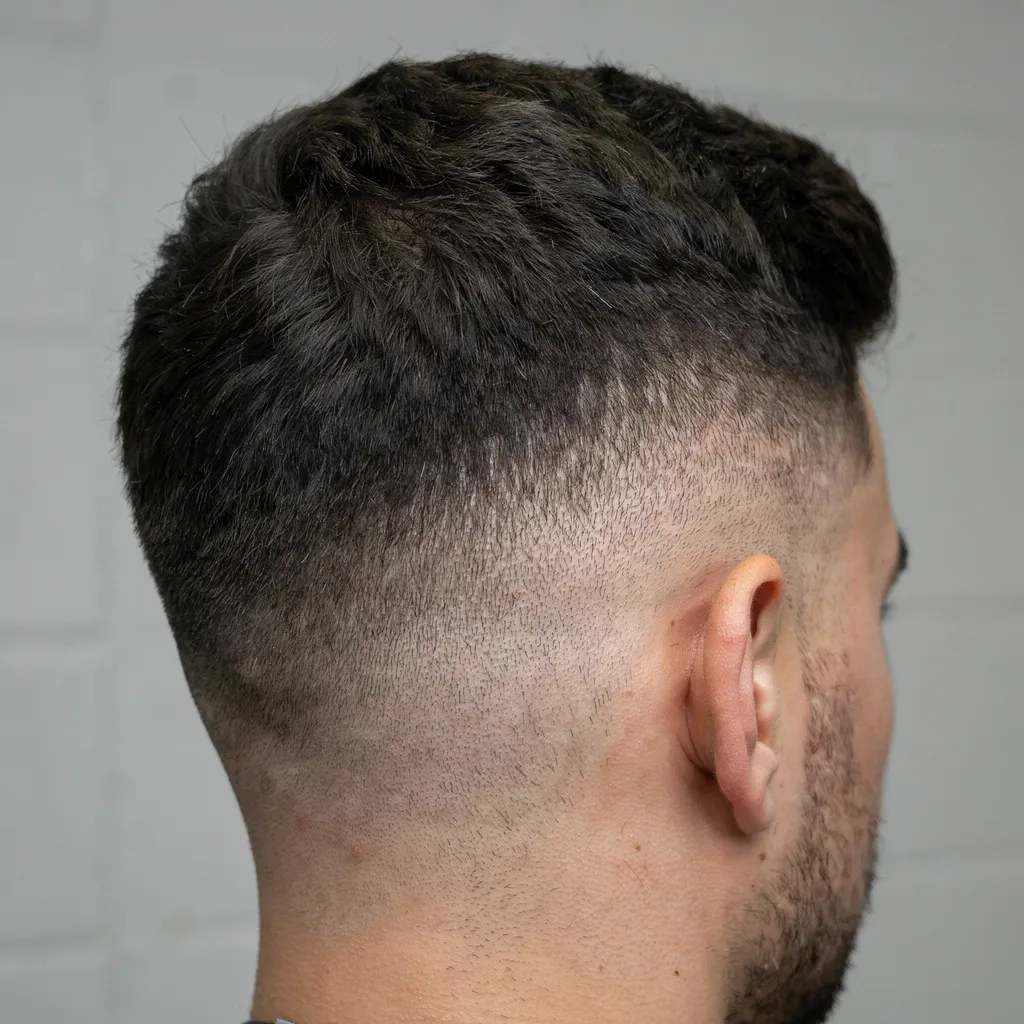
A mid drop fade looks rounded and head-hugging. Because the fade dips behind the ear, it frames the back of the head in a smooth curve — a look that pairs beautifully with curly or longer tops, since the dropped line follows the natural shape of the hair. It reads clean and modern from every angle.
A mid burst fade looks more dramatic around the ear and fuller at the back. The semi-circle burst draws the eye to the ear area, while the longer centre-back hair supports edgier styles. This is why the burst is the classic partner for mohawks, mullets, and blowouts.
Mid drop fade vs mid burst fade at a glance
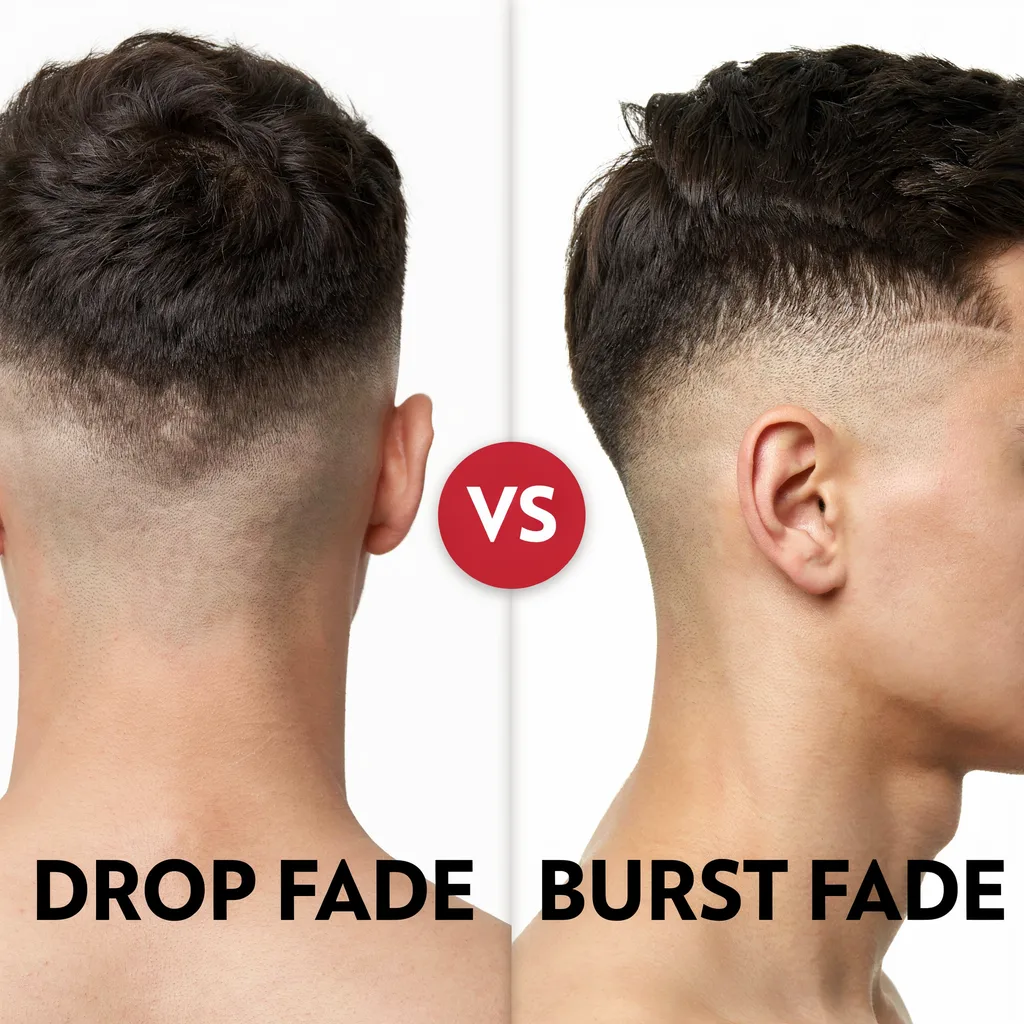
| Mid drop fade | Mid burst fade | |
|---|---|---|
| Fade line | Drops down behind the ear | Fans in a semi-circle around the ear |
| The back | Faded, rounded, hugs the head | Keeps a longer strip of hair |
| Silhouette | Smooth, curved, clean | Bold, radiating, fuller back |
| Best paired with | Curly or longer tops, clean looks | Mohawk, mullet, blowout, edgy tops |
| Vibe | Modern and neat | Statement and expressive |
Which should you choose?

- Choose a mid drop fade if you want a clean, rounded, head-hugging look that frames curls or a longer top — a versatile, modern choice that still looks tidy in most settings.
- Choose a mid burst fade if you want a bolder, more expressive cut, especially with a mohawk, mullet, or blowout, or if you like keeping some length at the back.
Face and hair type help decide too. The drop fade's curve flatters curly and wavy hair and rounder heads; the burst fade's kept-length back supports height and edgier shapes on top.
How to ask your barber
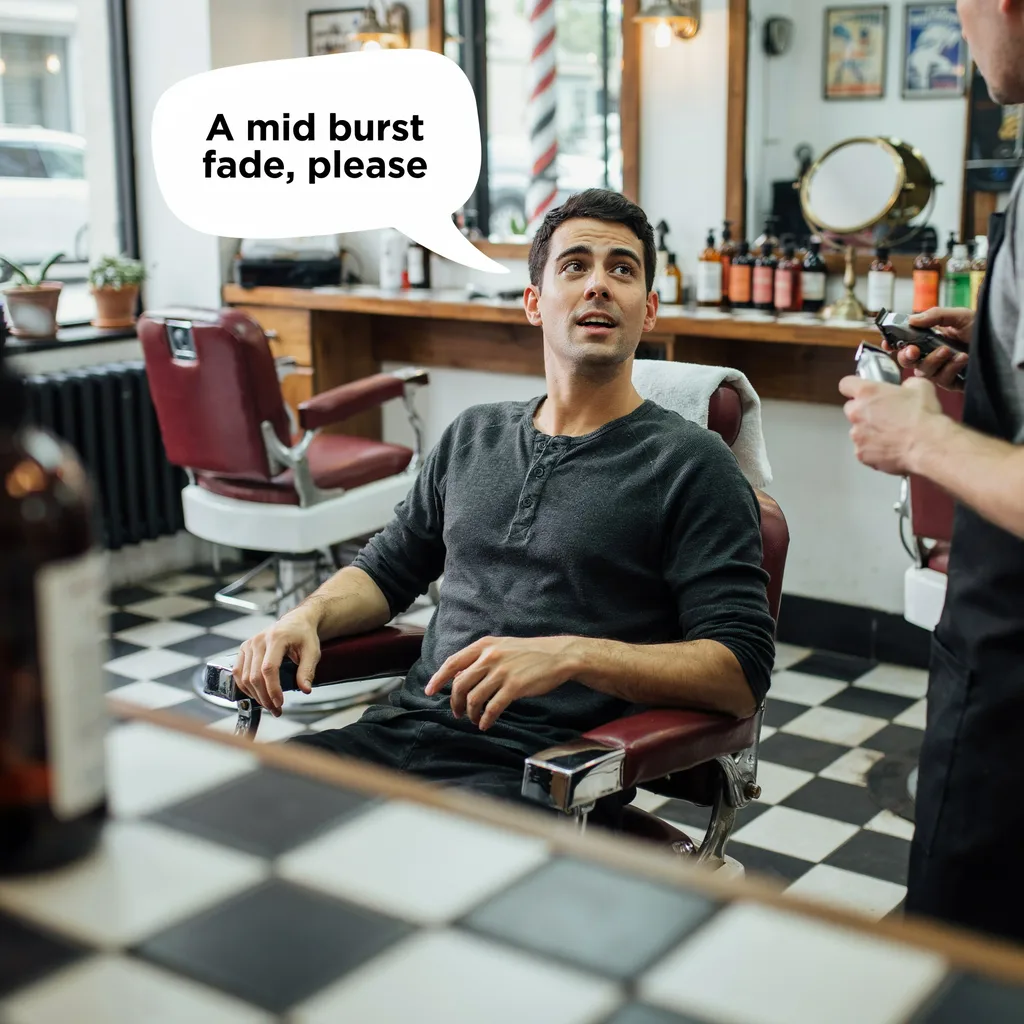
Both start at the mid position, so specify the shape you want the line to make:
"I'd like a mid drop fade — start at temple level and drop the fade line down behind my ear so it curves around the back."
Or: "Give me a mid burst fade — start at temple level and burst it around the ears, keeping some length down the back." A reference photo is especially useful here, because the difference is all in the shape of the line.
The bottom line
A mid drop fade and a mid burst fade both start at the temple, but the drop curves downward behind the ear for a rounded, head-hugging look, while the burst fans around the ear and keeps the back longer for a bolder style. Pick the drop for clean, curl-friendly framing, and the burst for edgier, fuller-back looks — then show your barber the shape you want.
Frequently asked questions
What's the difference between a mid drop fade and a mid burst fade? Both start at temple level, but a mid drop fade curves the fade line down behind the ear for a rounded look, while a mid burst fade fans it in a semi-circle around the ear and keeps a longer strip of hair at the back.
Which is better for curly hair, a drop fade or a burst fade? A mid drop fade often suits curly hair because its downward curve follows the natural shape of the hair. A burst fade works too, especially if you want a fuller, edgier back.
What styles pair with a mid burst fade? A mid burst fade is the classic match for mohawks, mullets, and blowouts, because the length it keeps at the back supports those bolder, higher-volume shapes.
Do both start in the same place? Yes. Both are mid fades, so both begin at temple level. The difference is only in how the fade line travels — dropping down for a drop fade, or fanning around the ear for a burst fade.
Which looks cleaner for everyday wear? A mid drop fade generally looks neater and more versatile for everyday and professional settings, while a mid burst fade makes a bolder statement.
About the Author
Daniel Reyes got his first mid fade almost by accident. He asked his barber for “just a fade” and got one that started right at temple level. It became the cut he kept going back to, so he built mid-fade.com to cover it properly instead of burying it in generic fade lists.