What Clipper Guard Numbers for a Mid Fade?

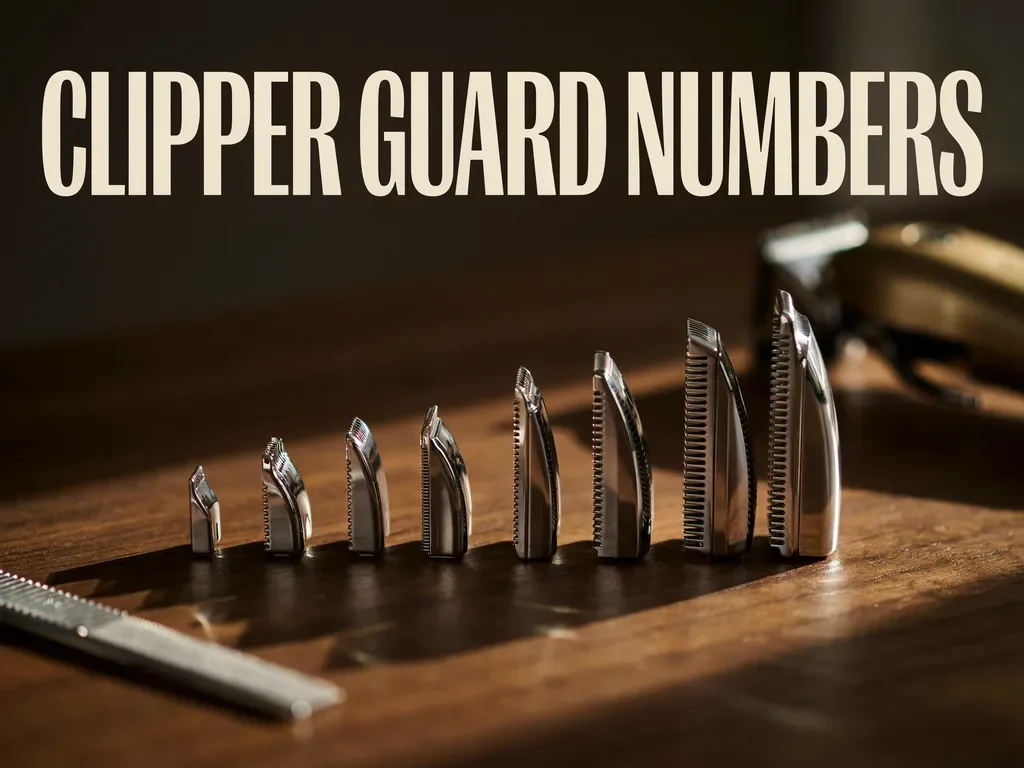
Quick answer: A mid fade is built from a ladder of guard numbers, shortest at the bottom to longest near temple level. A typical mid fade uses a #1 (or bare/foil for skin) at the bottom, a #2 through the middle, and a #3 up to where the fade ends at the temple, with the lines between them blended away. The exact numbers shift with how short you want the bottom and how long the top is, but the short-to-long ladder is always the principle.
Guard numbers are just lengths, and a fade is those lengths stacked and blended. Once you know what each number means and the order they go in, a mid fade stops being mysterious. Here's the full chart and the exact ladder.
Clipper guard number chart
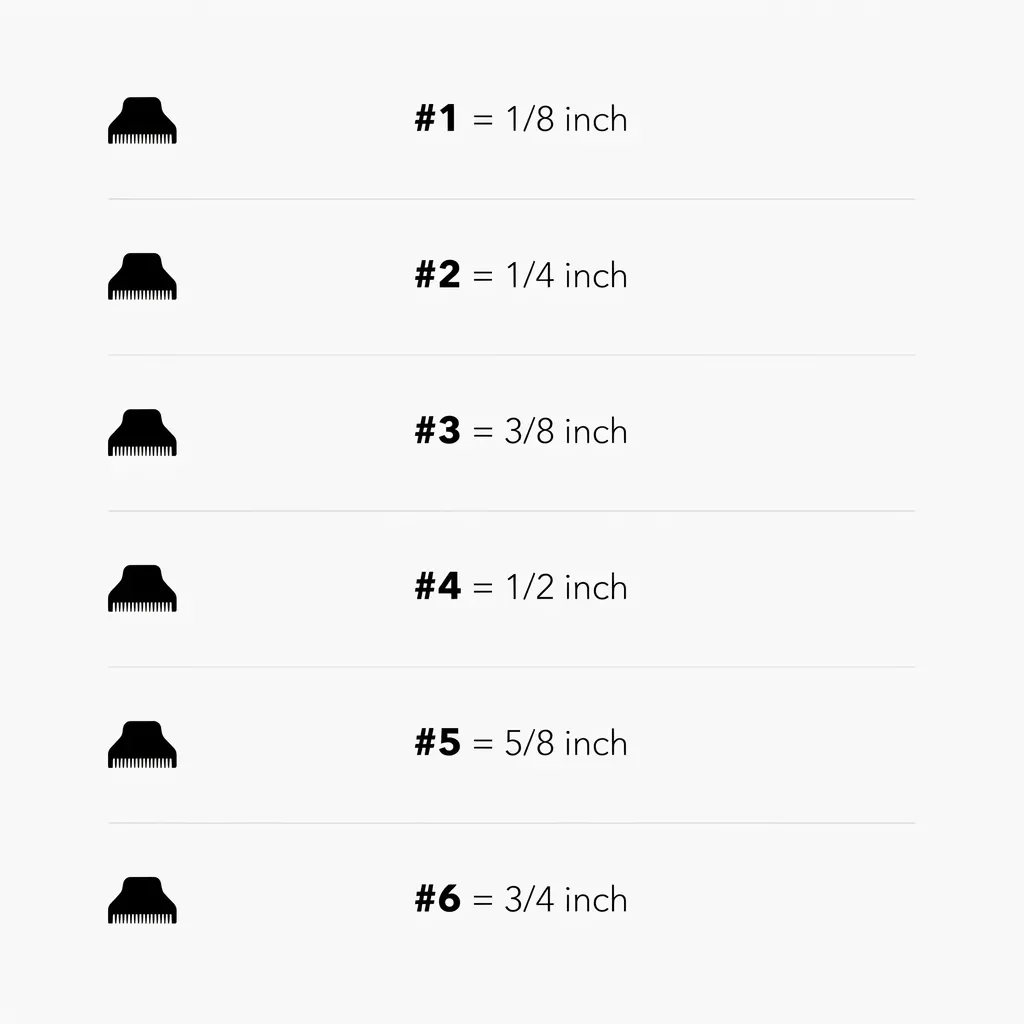
Guard numbers map to hair length. These are the standard sizes:
| Guard | Length (inches) | Length (mm) |
|---|---|---|
| #0.5 | 1/16" | 1.5 mm |
| #1 | 1/8" | 3 mm |
| #1.5 | 3/16" | 4.5 mm |
| #2 | 1/4" | 6 mm |
| #3 | 3/8" | 10 mm |
| #4 | 1/2" | 13 mm |
| #5 | 5/8" | 16 mm |
| #6 | 3/4" | 19 mm |
Bare blade (no guard) or a foil shaver goes down to skin, which is what you use at the very bottom of a skin fade.
The mid fade guard ladder
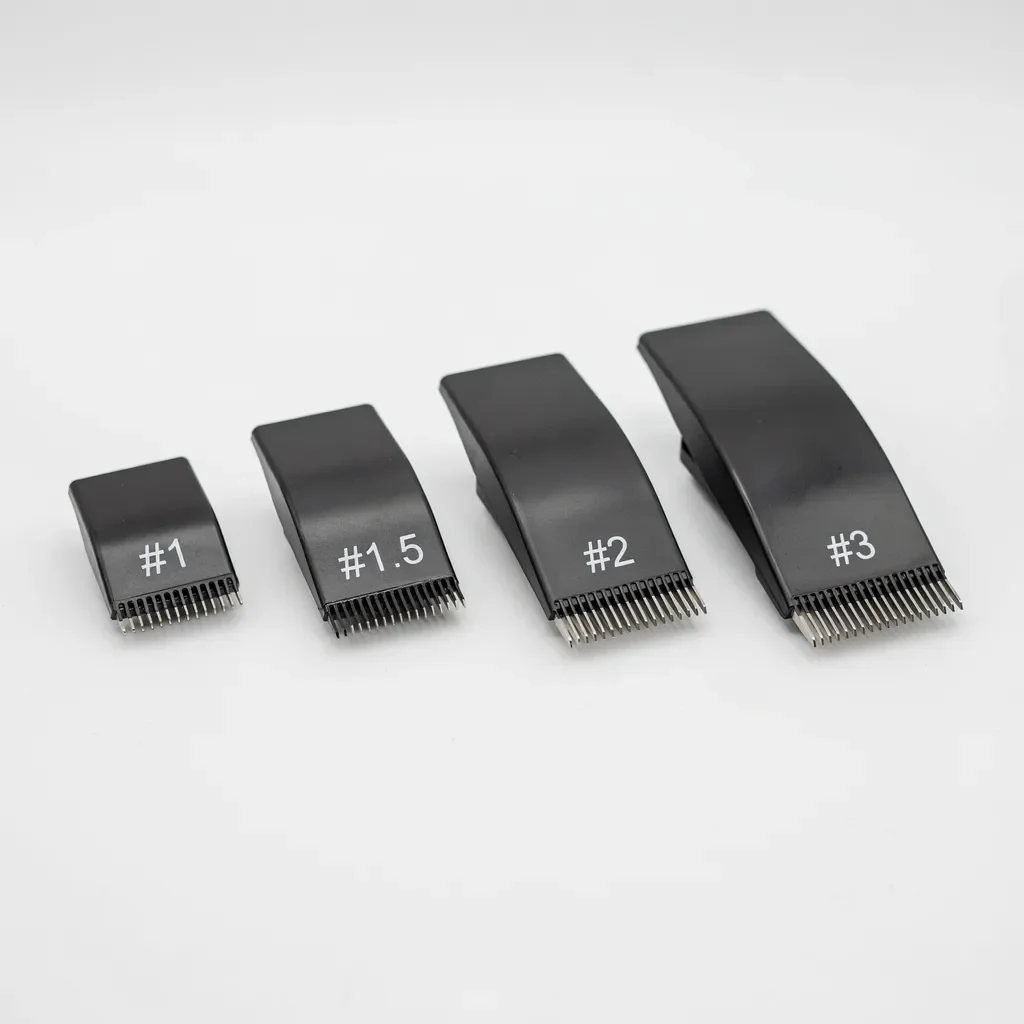
For a standard mid fade, barbers stack guards from short at the bottom to long near the temple, then blend the lines:
- Bottom (near ear/neck): bare/foil for skin, or a #0.5–#1 for a taper finish.
- Lower-middle: #1.5
- Middle: #2
- Upper (up to temple level): #3
- Above temple level: the top, left long and scissor-cut or styled separately.
The fade ends at temple level — that's what makes it "mid." For where that line sits, see our Where Does a Mid Fade Start guide.
How the numbers change with the finish
The guard ladder shifts depending on how sharp you want the bottom:
- Mid skin fade: start with a bare blade or foil shaver at the very bottom, then #0.5 → #1 → #2 → #3. Maximum contrast.
- Mid taper fade: start at #1 (no skin), then #1.5 → #2 → #3. Softer, lower-maintenance.
- Longer, softer mid fade: you can shift the whole ladder up (e.g., #2 → #3 → #4) for a gentler, less exposed look.
The principle stays the same — each step is one guard longer than the last, and the lines get blended out.
Why blending matters more than the exact numbers
The guard numbers create the "steps," but the fade only looks good once the hard lines between those steps are blended away. Barbers do this by half-guard passes (using the clipper's adjustable lever), "flicking" the clipper out as they move up, and clipper-over-comb work. So two barbers might use slightly different numbers and still get the same clean mid fade — the blend is what counts. For the full method, see our How to Do a Mid Fade at Home guide.
Matching guards to your hair and head

- Thick hair may need the ladder started a touch longer so the contrast isn't too stark.
- Fine hair can show scalp quickly, so a taper finish (no skin) is often more flattering.
- Curly hair blends differently — barbers often use slightly longer guards and more clipper-over-comb to control the curl.
If you're unsure, tell your barber your hair type and the finish you want, and let them choose the exact numbers.
The bottom line
A mid fade is a guard ladder: shortest at the bottom (bare/#1), stepping up through #2 to #3 near the temple, with the top left long above the temple line. Skin finishes start with a bare blade or foil; tapers start at a #1. The exact numbers flex with your hair and desired finish, but the short-to-long ladder — blended smooth — is always how a mid fade is built.
Frequently asked questions
What guard numbers are used for a mid fade? A typical mid fade uses a #1 (or bare/foil for skin) at the bottom, a #2 in the middle, and a #3 up to temple level, with the lines blended between them. The numbers shift with the finish and your hair.
What number is a mid fade on the sides? There's no single number — a fade is several numbers blended together. The bottom is shortest (bare, #0.5, or #1) and it steps up to about a #3 near the temple where the fade ends.
What guards for a mid skin fade vs a mid taper? For a mid skin fade, start with a bare blade or foil shaver, then #0.5 → #1 → #2 → #3. For a mid taper, start at #1 (no skin), then #1.5 → #2 → #3 for a softer finish.
How long is a #2 and #3 guard? A #2 is 1/4 inch (6 mm) and a #3 is 3/8 inch (10 mm). These are common middle-and-upper steps in a mid fade ladder.
Do the guard numbers change for thick or curly hair? Often, yes. Thick or curly hair may use slightly longer guards and more clipper-over-comb blending to control volume and curl, while fine hair often suits a taper finish to avoid showing scalp.
About the Author
Daniel Reyes got his first mid fade almost by accident. He asked his barber for “just a fade” and got one that started right at temple level. It became the cut he kept going back to, so he built mid-fade.com to cover it properly instead of burying it in generic fade lists.