Mid Fade for Curly Hair: What to Know Before You Cut

Curly hair is generally drier than straight hair by nature, since natural scalp oils have a harder time traveling down a curved hair shaft compared to a straight one. A curl-specific cream or a lightweight curl-defining product, rather than a heavy clay or pomade meant for straighter hair, tends to work better, it adds definition and moisture without weighing down or disrupting the curl pattern the way a heavier product can.
How often does curly hair with a mid fade need cutting?
About the same interval as straight hair for the fade itself, every 2 to 4 weeks depending on growth speed and depth. The top, if worn at a natural curl length, can sometimes be stretched slightly longer between cuts than a precisely shaped straight-hair top, since curl shrinkage means the visible length changes less dramatically as it grows compared to straight hair, where every added quarter-inch is immediately visible.
Common concerns curly-haired men have about fades
“Will the fade make my curls look uneven?” No, the fade blend happens at the sides, well below where the curl pattern on top begins, so it doesn’t interact with or disrupt your curls at all.
“Do I need a specialist barber for curly hair?” Not necessarily a specialist, but it’s worth confirming your barber is comfortable cutting curly hair dry and understands shrinkage, since this is the single most common technical mismatch that leads to an unhappy result.
“Will product weigh my curls down?” It can, if you use too much or the wrong type. Starting with a small amount of a lightweight, curl-specific product and adding more only if needed avoids this.
The bottom line
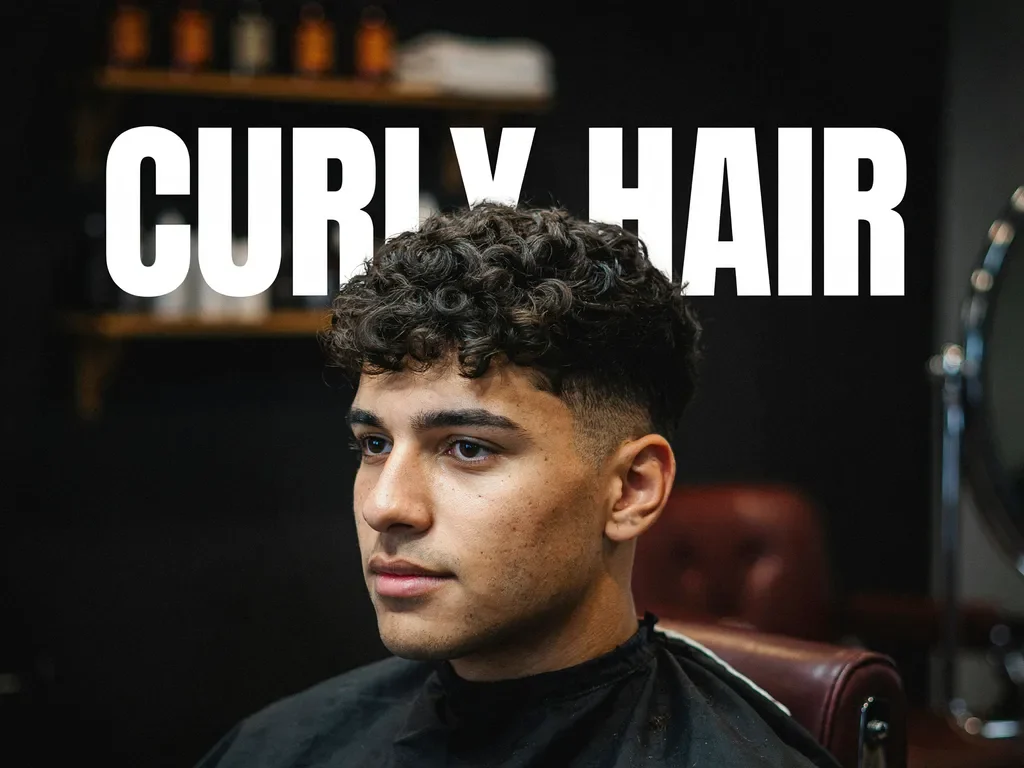
A mid fade suits curly hair well, and the fade itself doesn’t need any curl-specific adjustment. The real consideration is the top: ask for a dry cut (or close to it) to account for curl shrinkage, choose a curl-appropriate product rather than a heavier straight-hair product, and consider letting your natural texture do most of the styling work, since curly hair worn at its natural pattern paired with a tight fade is one of the more effortlessly striking combinations available.
Frequently asked questions
Should curly hair be cut wet or dry for a mid fade? Dry, or close to dry, is generally recommended. Curly hair shrinks significantly once dry, so cutting it wet can leave the top shorter than intended once it dries and springs back.
Does the fade blend need to be different for curly hair? No. The fade itself is cut very short regardless of hair type, so curl texture has little visible effect there. The main adjustment for curly hair applies to the top section.
What product works best for curly hair with a mid fade? A lightweight, curl-specific cream or curl-defining product tends to work better than heavier clay or pomade, since curly hair is naturally drier and heavier products can weigh curls down.
How often does curly hair with a mid fade need a haircut? Roughly the same interval as straight hair, every 2 to 4 weeks, though the top can sometimes be stretched slightly longer between cuts since curl shrinkage makes length changes less immediately visible.
Does a mid fade make curly hair look uneven? No. The fade happens well below where curl texture on top begins, so it doesn’t interact with or disrupt the curl pattern at all.
Quick answer: A mid fade works well on curly hair, but curls behave differently than straight hair when cut, so a few adjustments matter: ask your barber to cut curly hair dry (or close to dry) rather than wet, since curls shrink significantly once they dry and a wet cut can leave the top shorter than intended. The fade itself works the same regardless of hair type, but the top needs curl-specific handling.
Curly hair adds real texture and shape to the top of a mid fade that straight hair can’t replicate without product, but it also comes with a genuine technical consideration that’s worth understanding before you sit in the chair.
Why cutting curly hair wet is a common mistake
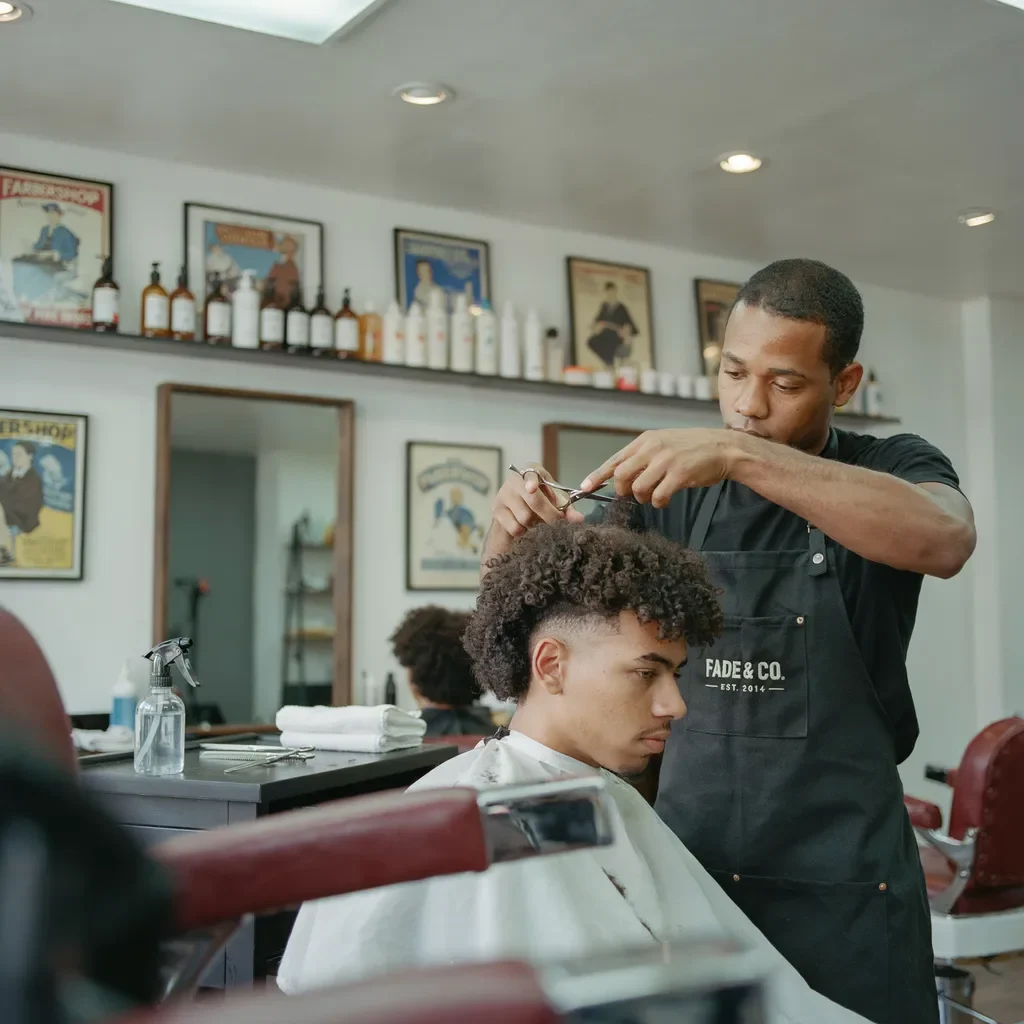
Curly and coily hair can shrink anywhere from 20% to 75% of its stretched-out length once it dries, depending on curl pattern tightness. A barber cutting curly hair wet, using the same reference points they’d use on straight hair, can end up leaving the top noticeably shorter than intended once it dries and the curls spring back up. This is one of the most common sources of disappointment for curly-haired clients getting a fade, not the fade itself, but a top that shrank more than expected.
The fix is straightforward: ask specifically for the top to be cut dry, or with your curl pattern already at least partially expressed, so your barber is cutting the length you’ll actually see day to day, not a stretched-out wet version of it.
Does the fade itself need adjusting for curly hair?
Not really, the fade blend at the sides works essentially the same on curly hair as on straight hair, since that hair is cut very short regardless of texture, and curl pattern has much less visible effect at short lengths. The main curl-specific consideration is entirely about the top.
What top styles work well with curly hair and a mid fade
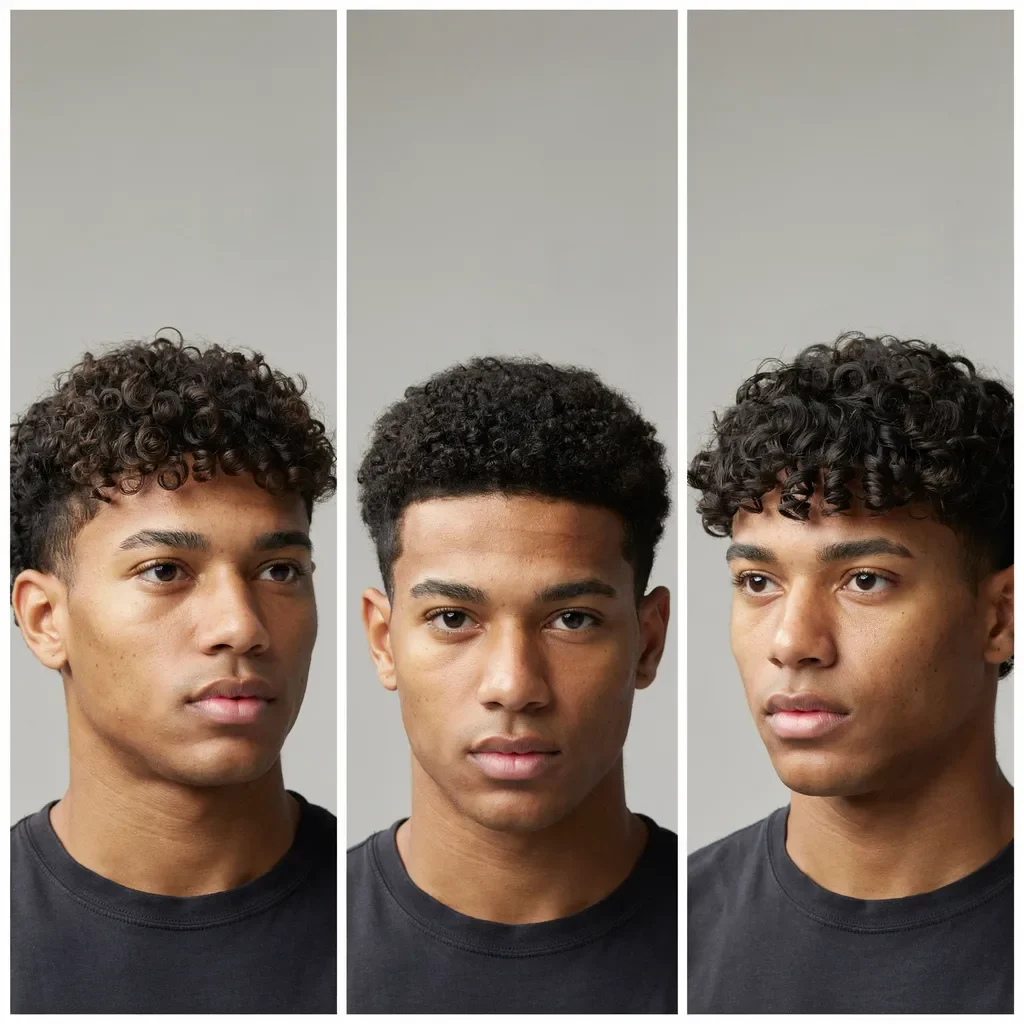
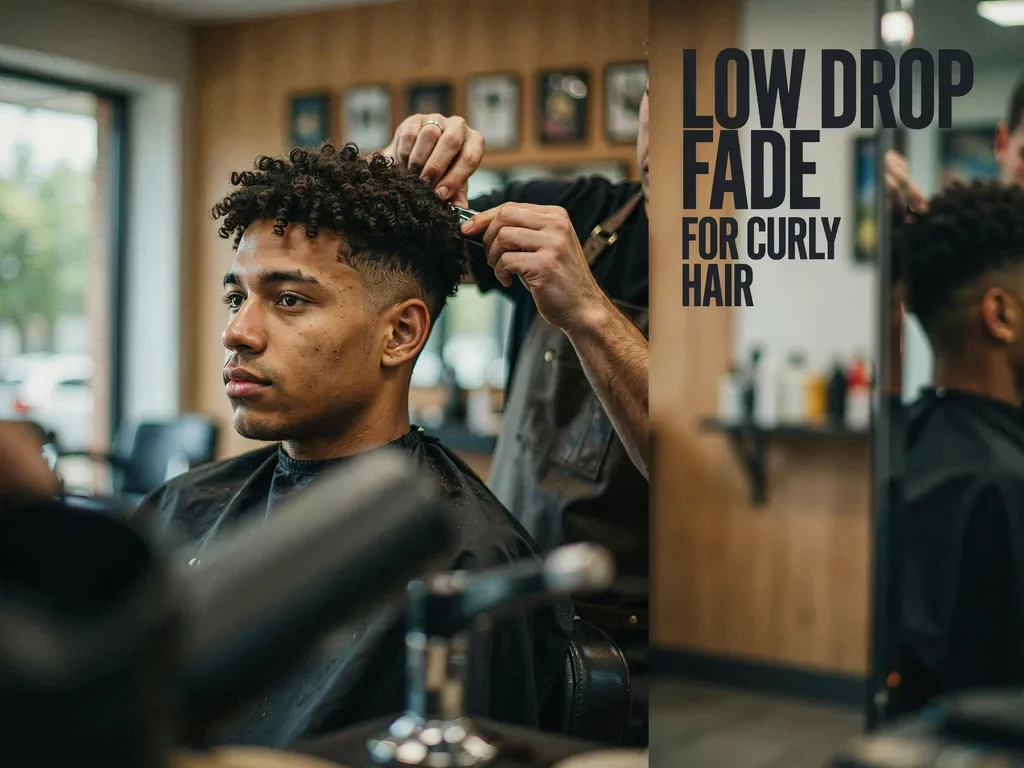
Natural curl left as-is, simply cut to an even length and allowed to sit in its natural pattern, is one of the lowest-maintenance and most striking options, the curl texture itself becomes the style, with no need for heavy product or precise daily shaping.
A curly textured crop, where the curls are cut to a slightly shorter, more uniform length on top, offers a bit more structure while still showing the natural texture clearly.
A curly fringe or forward-styled top works particularly well for curlier hair types, since the natural volume helps the fringe sit forward with body rather than lying flat.
Product considerations for curly hair specifically
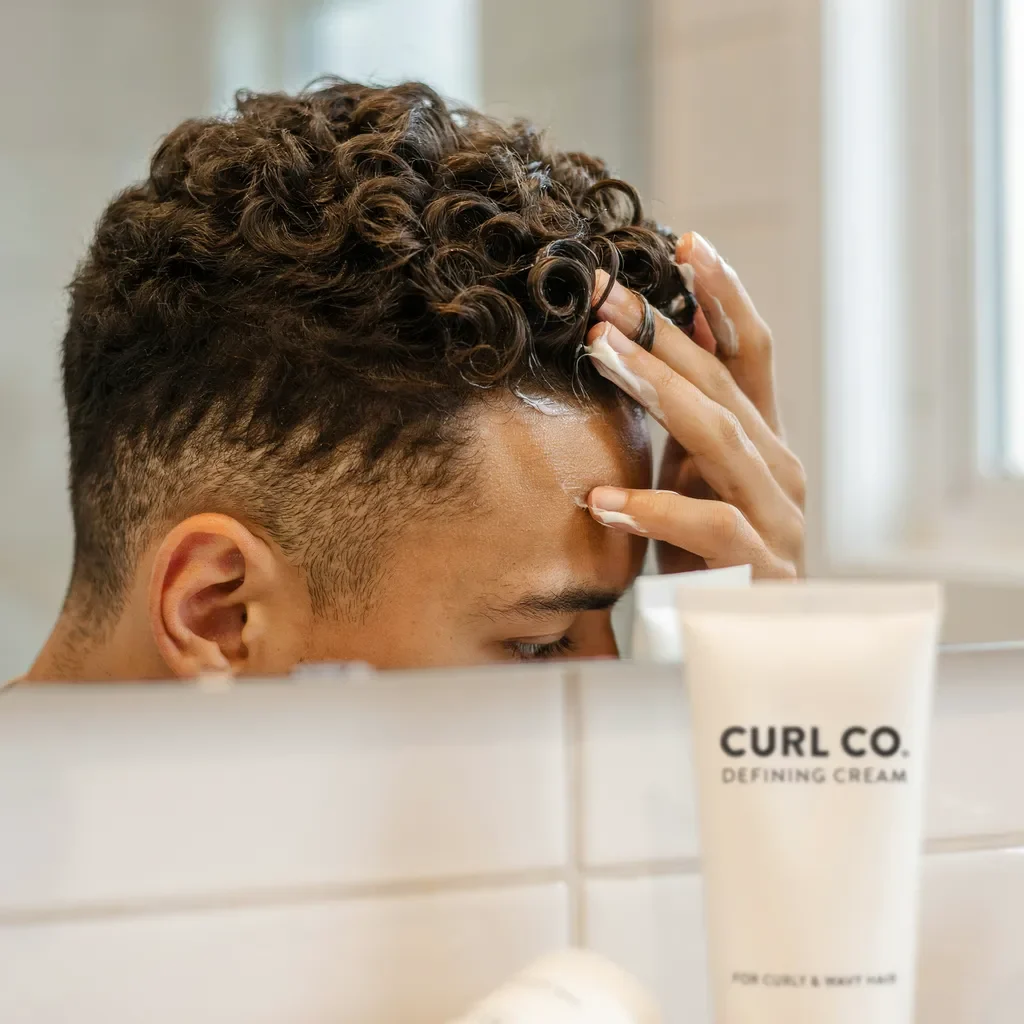
Curly hair is generally drier than straight hair by nature, since natural scalp oils have a harder time traveling down a curved hair shaft compared to a straight one. A curl-specific cream or a lightweight curl-defining product, rather than a heavy clay or pomade meant for straighter hair, tends to work better, it adds definition and moisture without weighing down or disrupting the curl pattern the way a heavier product can.
How often does curly hair with a mid fade need cutting?
About the same interval as straight hair for the fade itself, every 2 to 4 weeks depending on growth speed and depth. The top, if worn at a natural curl length, can sometimes be stretched slightly longer between cuts than a precisely shaped straight-hair top, since curl shrinkage means the visible length changes less dramatically as it grows compared to straight hair, where every added quarter-inch is immediately visible.
Common concerns curly-haired men have about fades
“Will the fade make my curls look uneven?” No, the fade blend happens at the sides, well below where the curl pattern on top begins, so it doesn’t interact with or disrupt your curls at all.
“Do I need a specialist barber for curly hair?” Not necessarily a specialist, but it’s worth confirming your barber is comfortable cutting curly hair dry and understands shrinkage, since this is the single most common technical mismatch that leads to an unhappy result.
“Will product weigh my curls down?” It can, if you use too much or the wrong type. Starting with a small amount of a lightweight, curl-specific product and adding more only if needed avoids this.
The bottom line
A mid fade suits curly hair well, and the fade itself doesn’t need any curl-specific adjustment. The real consideration is the top: ask for a dry cut (or close to it) to account for curl shrinkage, choose a curl-appropriate product rather than a heavier straight-hair product, and consider letting your natural texture do most of the styling work, since curly hair worn at its natural pattern paired with a tight fade is one of the more effortlessly striking combinations available.
Frequently asked questions
Should curly hair be cut wet or dry for a mid fade? Dry, or close to dry, is generally recommended. Curly hair shrinks significantly once dry, so cutting it wet can leave the top shorter than intended once it dries and springs back.
Does the fade blend need to be different for curly hair? No. The fade itself is cut very short regardless of hair type, so curl texture has little visible effect there. The main adjustment for curly hair applies to the top section.
What product works best for curly hair with a mid fade? A lightweight, curl-specific cream or curl-defining product tends to work better than heavier clay or pomade, since curly hair is naturally drier and heavier products can weigh curls down.
How often does curly hair with a mid fade need a haircut? Roughly the same interval as straight hair, every 2 to 4 weeks, though the top can sometimes be stretched slightly longer between cuts since curl shrinkage makes length changes less immediately visible.
Does a mid fade make curly hair look uneven? No. The fade happens well below where curl texture on top begins, so it doesn’t interact with or disrupt the curl pattern at all.
About the Author
Daniel Reyes got his first mid fade almost by accident. He asked his barber for “just a fade” and got one that started right at temple level. It became the cut he kept going back to, so he built mid-fade.com to cover it properly instead of burying it in generic fade lists.