Mid Fade vs Bald Fade: How Deep Should You Go?

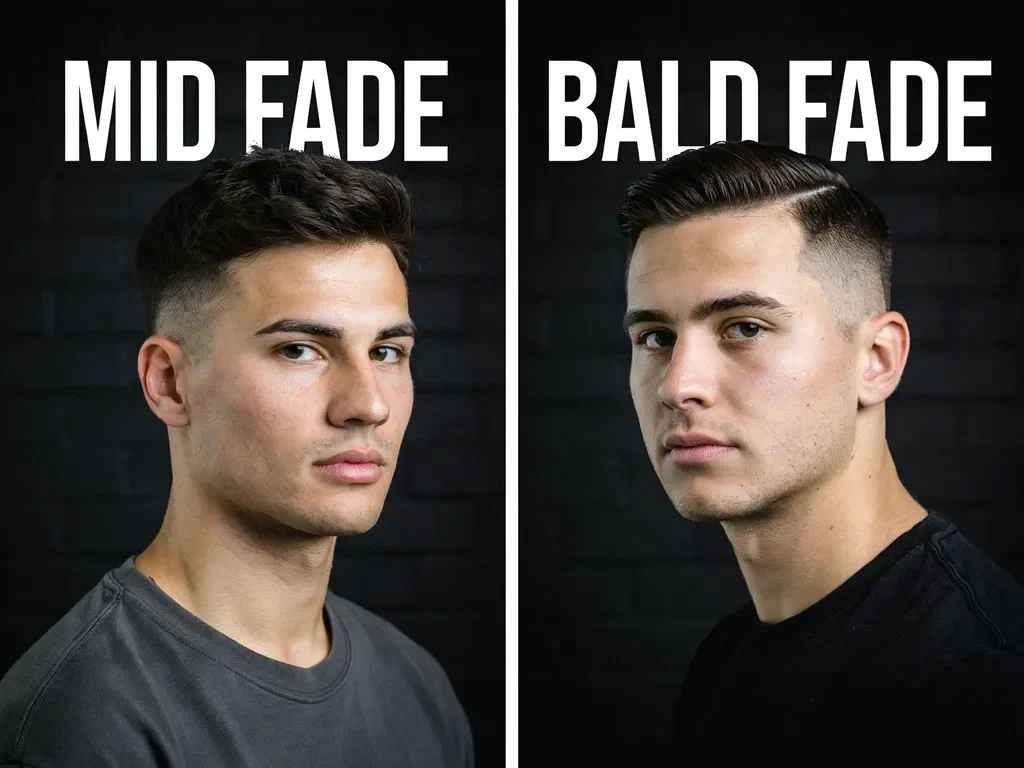
Quick answer: This isn’t really an either/or comparison. “Mid fade” describes where the fade starts (temple level), while “bald fade” describes how far down it goes (all the way to bare skin). A mid fade can be a bald fade, or it can stop short of skin and leave a shadow of hair. The real question isn’t which one to pick, it’s whether you want your mid fade taken all the way to skin or not.
People search “mid fade vs bald fade” expecting two competing styles, but they’re measuring different things, like asking whether a shirt is “blue” or “long sleeved.” Once you separate placement from depth, the choice gets much easier.
Two questions, not one
Every fade haircut answers two separate questions:
- Where does it start? This is placement, high, mid, or low. A mid fade starts at temple level, roughly halfway between your hairline and the top of your ear.
- How far does it go? This is depth, all the way to skin (bald), to a very short shadow (skin fade, functionally close to bald), or stopping at a visible but short length (taper, not bald).
“Bald fade” only answers the second question. It says nothing about where the fade begins. You can have a low bald fade (starts near the ear, goes to skin), a high bald fade (starts near the crown, goes to skin), or a mid bald fade (starts at the temple, goes to skin), which is what most people mean when they ask about mid fade vs bald fade.
What a mid bald fade actually looks like
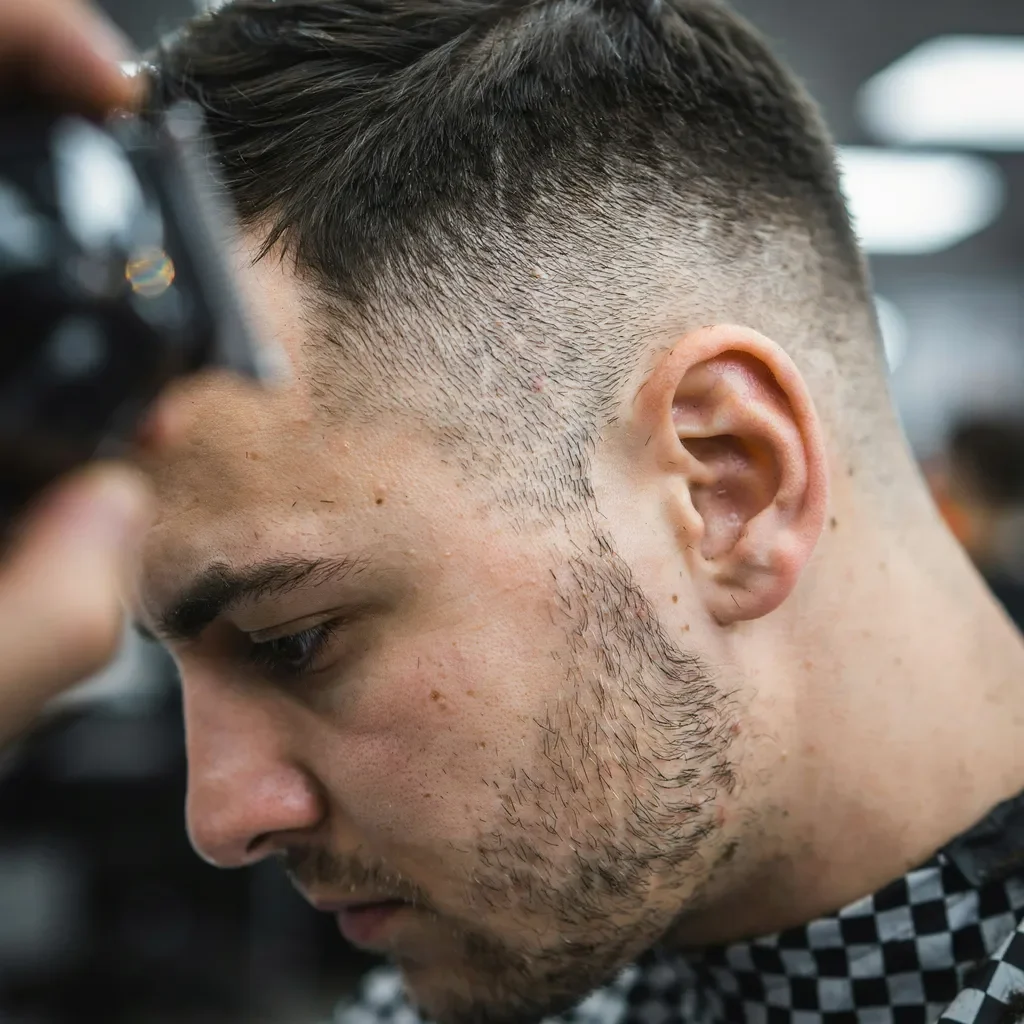
A mid fade taken to bald means the hair is buzzed down to skin starting right around the temple, then blends upward into whatever length you’re keeping on top. Because the starting point is roughly in the middle of the head, the bald section reads as bold but not extreme, it’s more skin than a low bald fade shows, but it doesn’t creep as high up the sides as a high bald fade does. It’s the version most barbers reach for when a client says “sharp, but not too much.”
The alternative, a mid fade that doesn’t go to skin, keeps a few millimeters of hair even at its shortest point. From a few feet away it can look almost as clean as a bald version, but up close there’s a soft shadow instead of bare skin. This is the version that photographs slightly less dramatically but holds up better between cuts, because there’s no stark hairline to skin transition to maintain.
Comparison table
| Mid fade (not bald) | Mid bald fade | |
|---|---|---|
| Starting point | Temple level | Temple level |
| Shortest point | Short but visible hair | Bare skin |
| Contrast | Moderate | High |
| Grows out | Softens gradually, forgiving | Regrowth shows as a visible line within 1 to 2 weeks |
| Maintenance | Every 3 to 4 weeks | Every 2 to 3 weeks, sooner if you’re strict about it |
| Best for | First timers, lower upkeep | Sharpest possible look, willing to keep up with it |
Which grows out better?
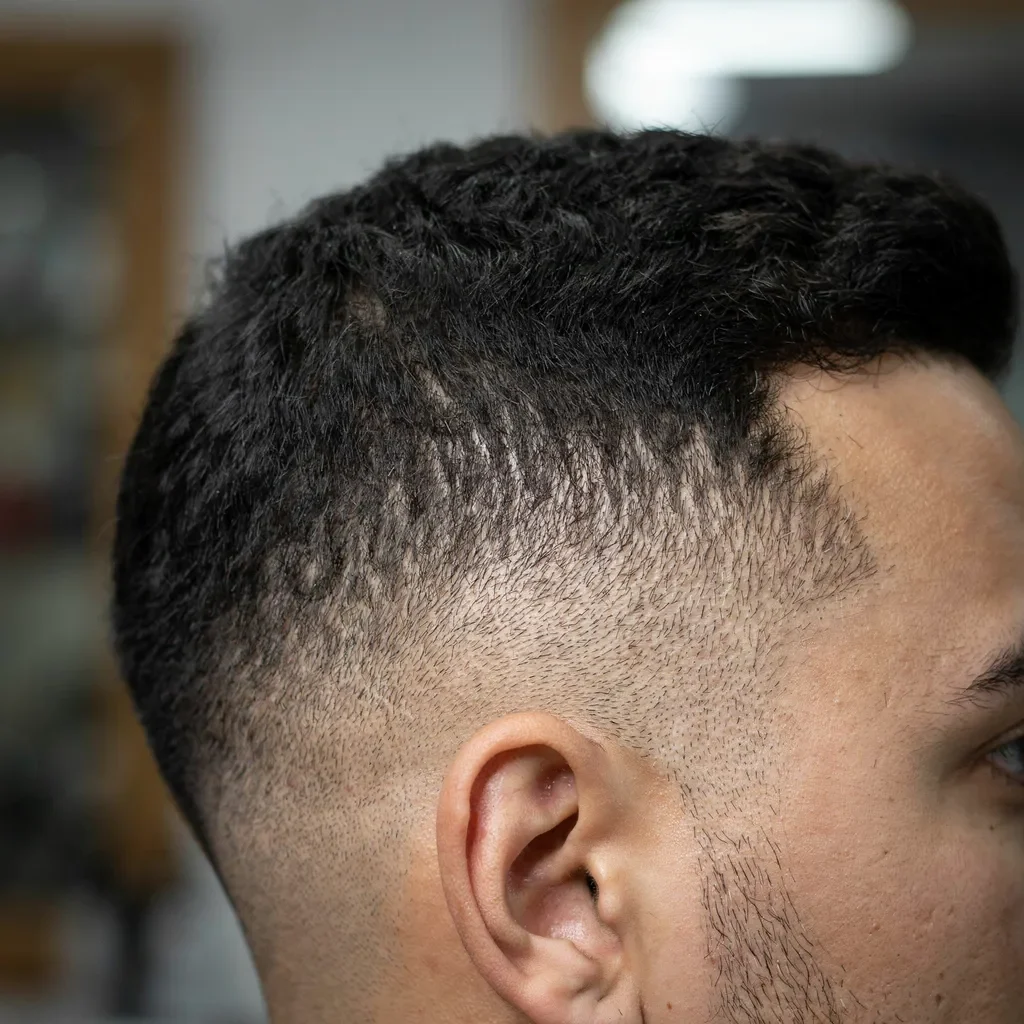
The non-bald mid fade, by a clear margin. Because there’s already a short length of hair at the fade line instead of skin, the regrowth blends in rather than creating a visible ring around your head. A bald version looks its absolute best for the first several days after a cut and then visibly softens, some men like that transition, others find themselves booking appointments every two weeks just to avoid it.
Does bald mean more maintenance everywhere, or just at the fade line?
Just at the fade line. Going bald at the bottom of a mid fade doesn’t change how often you need to trim the top, style it, or manage the rest of the haircut, it only affects how quickly that specific transition zone starts looking untidy. If you’re someone who’s fine with a softer, slightly grown out fade line but wants the top kept sharp, you can absolutely stretch a bald mid fade to 3+ weeks, it just won’t look razor crisp the whole time.
Who should choose which
- Choose a non-bald mid fade if this is your first fade, you don’t want to think about hair maintenance often, or you have a lighter hair to skin contrast where bald sections read as extremely stark.
- Choose a mid bald fade if you want the sharpest, most defined version of the cut and you’re genuinely willing to get touch ups every 2 to 3 weeks. It also tends to look best on darker hair against lighter skin, where the contrast is the whole point.
How to ask your barber for either
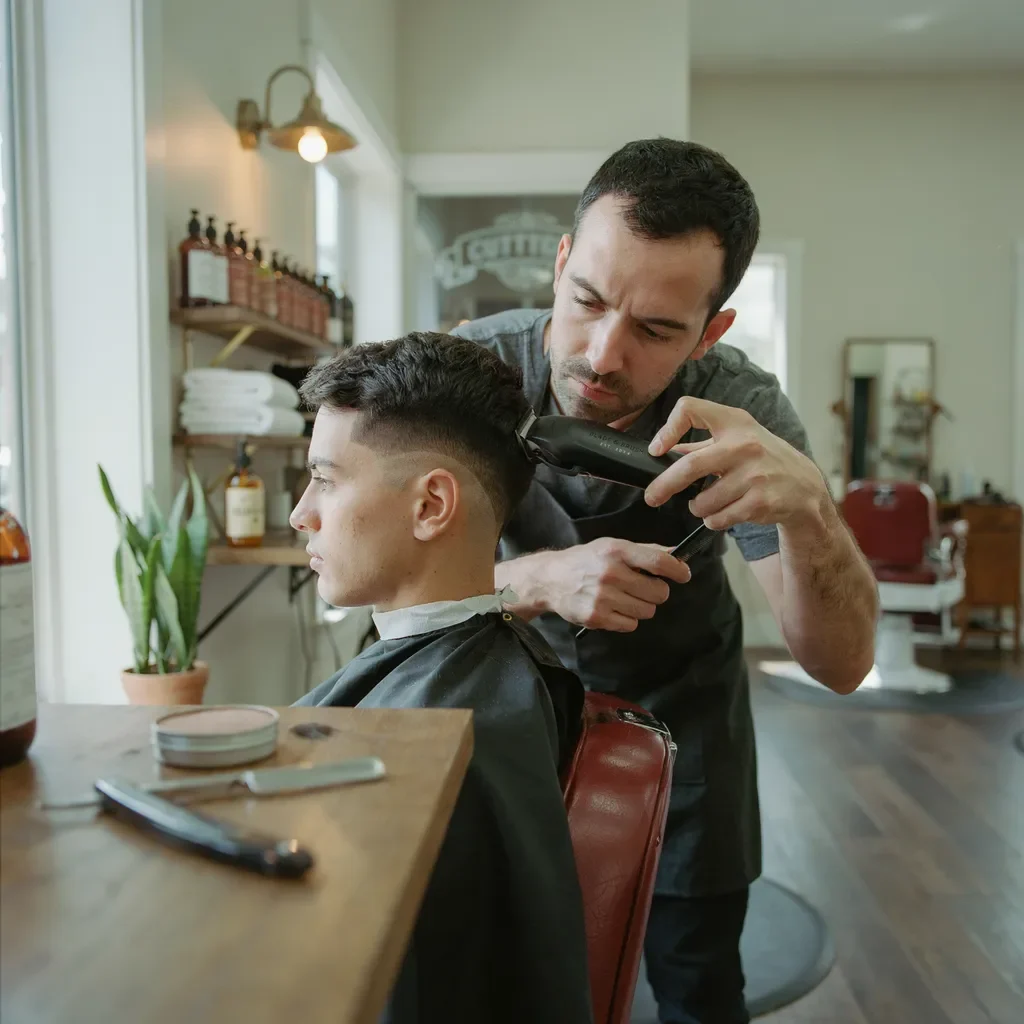
Don’t just say “bald fade” or “mid fade” on their own, combine the two ideas explicitly. Say: “I want the fade to start around my temple, and take it all the way to skin at the bottom” for the bald version, or “start the fade at my temple, but leave a little bit of length even at the shortest part, don’t take it fully bald” for the softer version. Barbers hear “bald fade” and “skin fade” used almost interchangeably, so being specific about the starting height matters more than the terminology.
The bottom line
A mid fade and a bald fade aren’t competing options, a mid fade is a placement, and bald is a depth you can apply to it or not. If you want the sharpest possible look and don’t mind more frequent trims, take your mid fade to skin. If you’d rather have something that holds up longer between cuts, keep a whisper of length at the bottom instead. Either way, the “mid” part, where it starts, stays exactly the same.
Frequently asked questions
Is a mid fade the same as a bald fade? No. Mid fade describes where the fade starts (temple level); bald fade describes how short the bottom is (bare skin). A mid fade can be bald or not, they are two different measurements, not two competing styles.
Does a mid bald fade look more dramatic than a regular mid fade? Yes, noticeably. Taking the fade all the way to skin creates much higher contrast against the hair above it, which is why it reads as sharper and more defined at the cost of growing out faster.
Can you have a low fade that’s also bald? Yes. “Bald” just means the depth goes to skin, it can be combined with low, mid, or high placement. A low bald fade starts near the ear and goes to skin; a mid bald fade starts at the temple and goes to skin.
How often do you need a haircut with a mid bald fade? Every 2 to 3 weeks to keep the skin to hair line looking sharp. If you’re comfortable with a slightly softer, grown out edge, you can stretch it closer to 4 weeks.
Which is better for a first fade, bald or not? A non-bald mid fade is the gentler starting point, it’s more forgiving as it grows out and doesn’t demand as strict a haircut schedule, which makes it a more practical choice if you’re not used to keeping up with fades yet.
About the Author
Daniel Reyes got his first mid fade almost by accident. He asked his barber for “just a fade” and got one that started right at temple level. It became the cut he kept going back to, so he built mid-fade.com to cover it properly instead of burying it in generic fade lists.