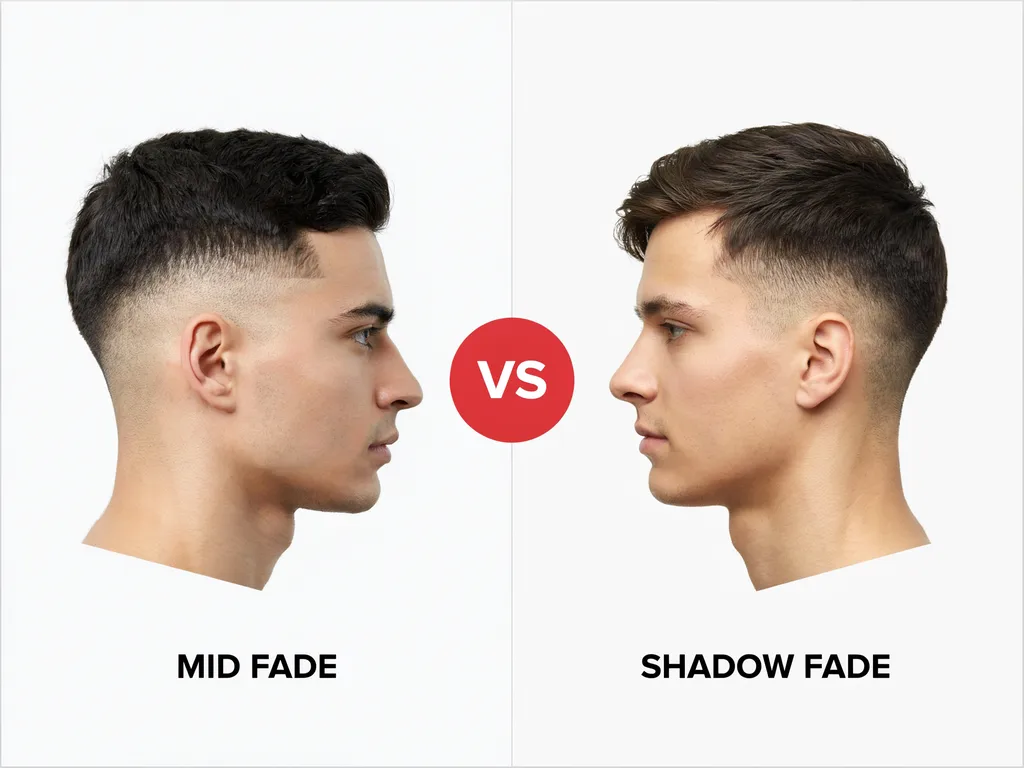
Mid Fade vs Drop Fade: What’s the Difference?

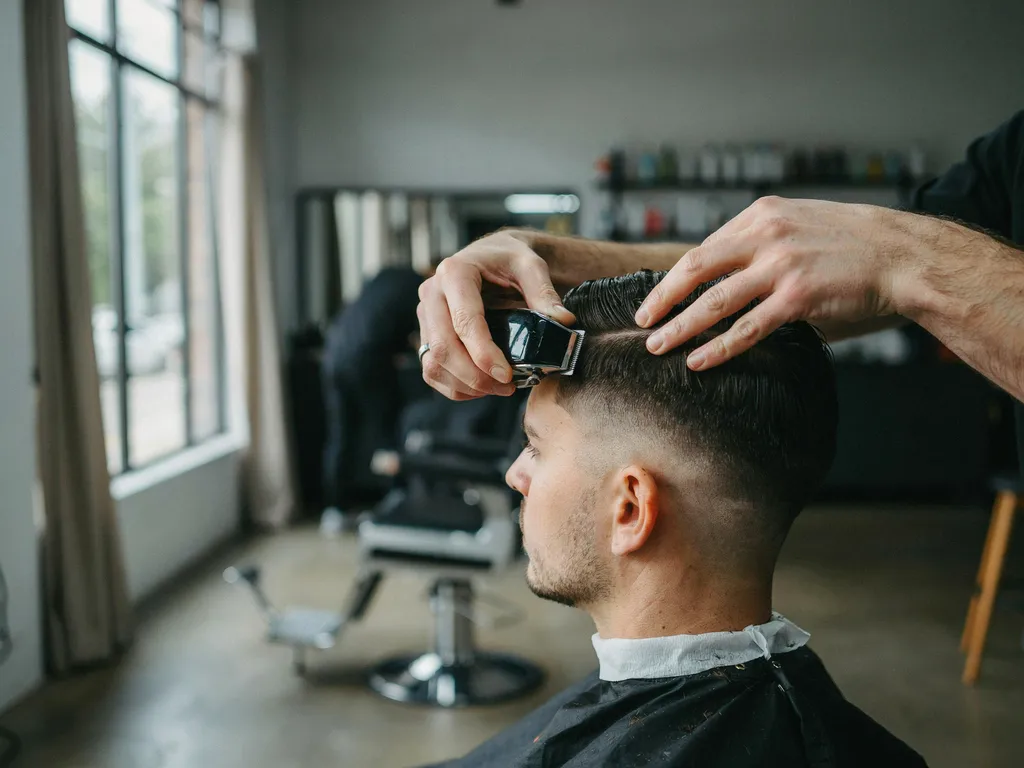
Quick answer: The difference is the shape of the fade line. A mid fade has a fade line that runs at a consistent height — straight across at temple level — and blends down evenly all around the head. A drop fade has a fade line that starts at temple level at the front but curves downward behind the ear, dropping lower at the back. The mid fade looks cleaner and more uniform; the drop fade frames the head more organically and creates a curved, head-hugging silhouette.
Both cuts start at the same height at the front of the head — the difference only becomes visible when you look at the sides and back. This guide breaks down exactly what separates them, how each one looks, which face shapes and hair types suit each, and how to ask your barber for the one you want.
What is a mid fade?
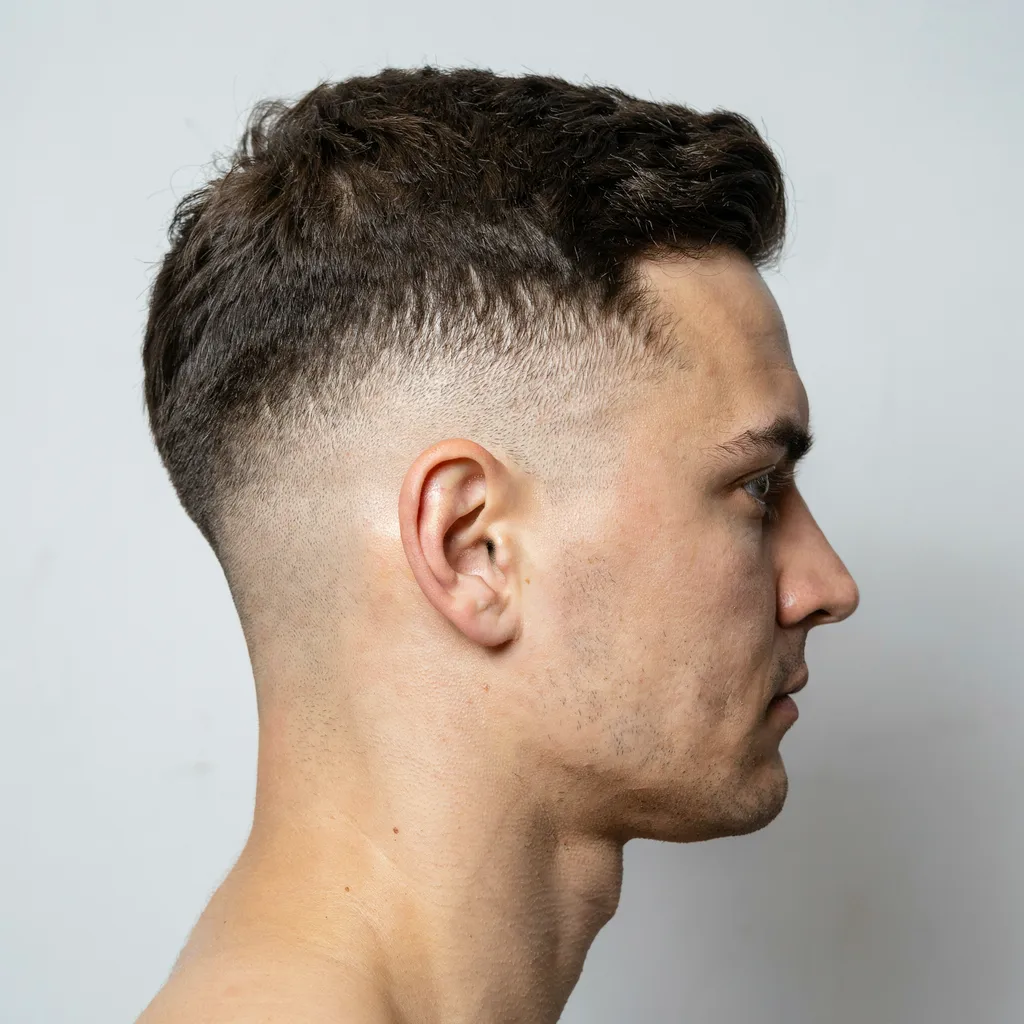
A mid fade is a haircut where the fade line runs at a consistent height all the way around the head — starting at temple level at the front, staying at that same horizontal level along the side, and wrapping around to the back at the same height. The result is a clean, even gradient that blends straight down from that uniform starting line.
Because the fade line is consistent and horizontal, the mid fade creates a very neat, symmetrical look from every angle. The sides look the same height whether you’re looking at the front, the side, or the back. For the complete overview of the cut, see our Mid Fade Haircut guide.
What is a drop fade?
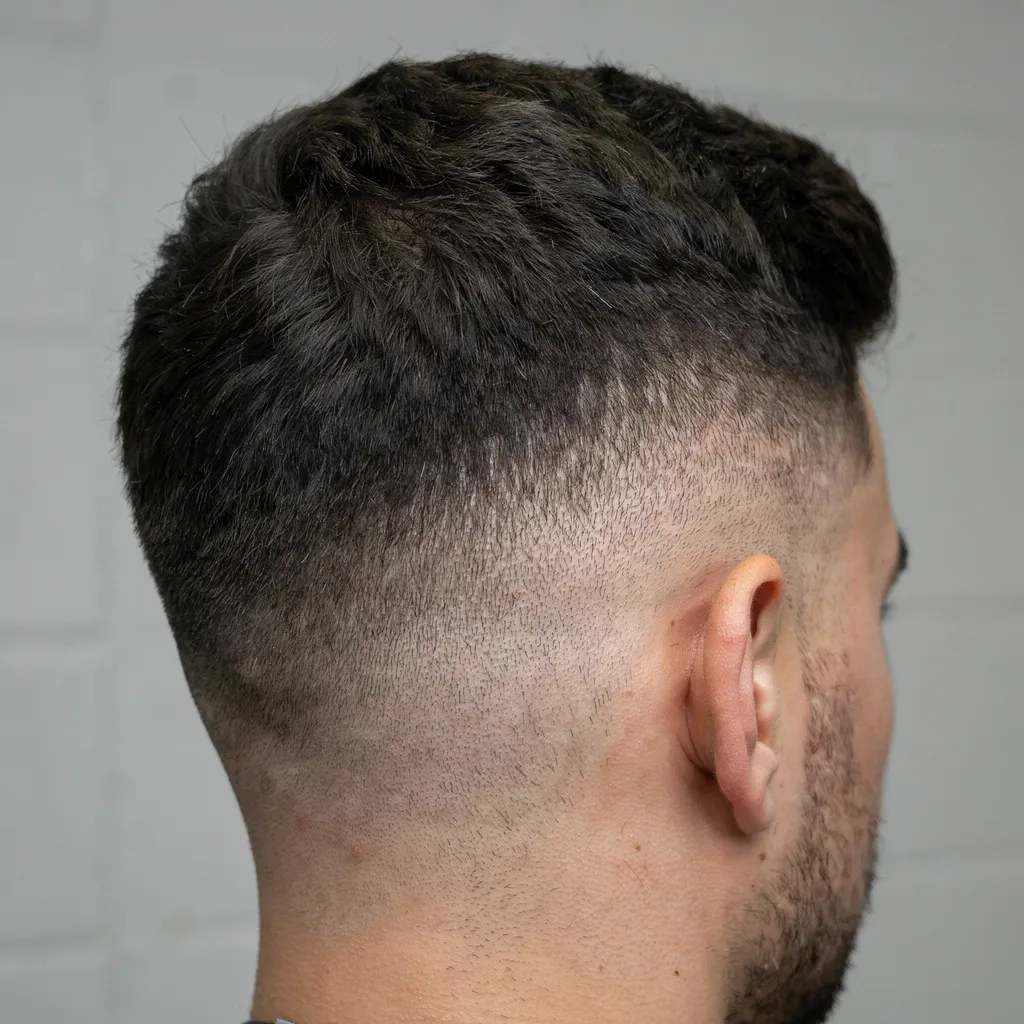
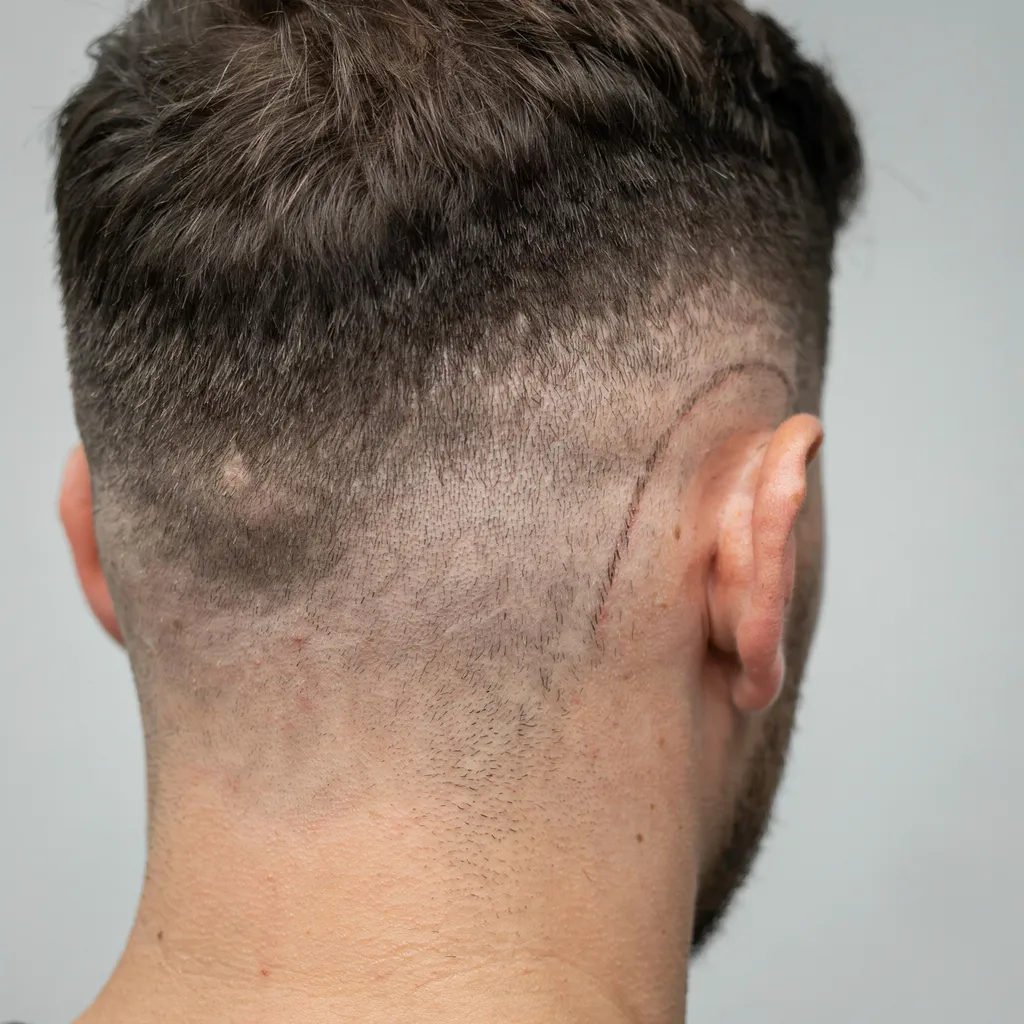
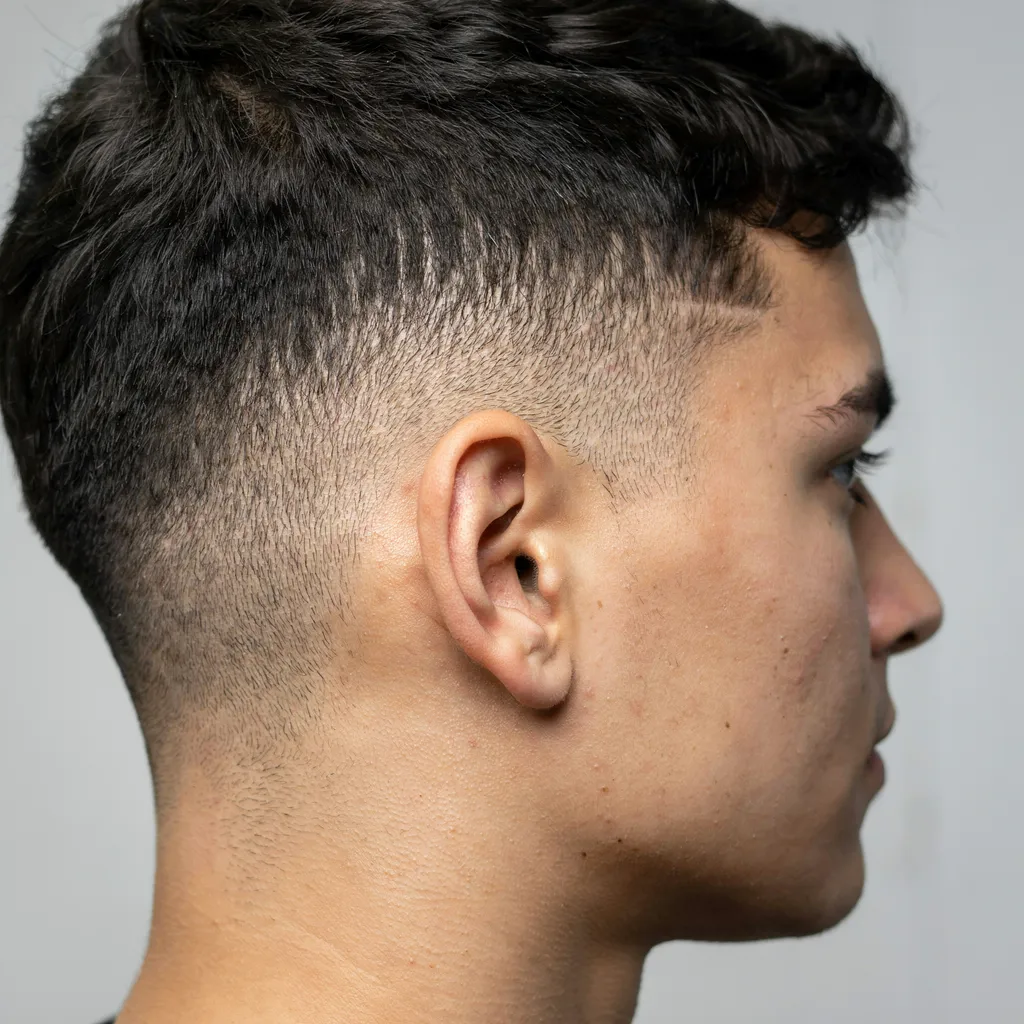
A drop fade starts at the same position as a mid fade at the front — around temple level — but the fade line curves downward as it travels behind the ear, dropping to a lower point at the back of the head. Instead of a straight horizontal line, the fade line follows a curved, descending arc that wraps around the ear and dips below it before continuing to the neckline.
This curved descent is where the “drop” in drop fade comes from. From the side, you can clearly see the fade line angling down behind the ear. From the back, the drop fade often shows a lower, rounder shape compared to the flat horizontal line of a standard mid fade. See our dedicated Mid Drop Fade guide for a full breakdown.
The key difference: fade line shape
| Mid Fade | Drop Fade | |
|---|---|---|
| Fade line shape | Straight / horizontal | Curved / descending arc |
| Height at front | Temple level | Temple level |
| Height behind ear | Same as front | Lower — drops below ear |
| Overall silhouette | Clean, uniform, symmetrical | Rounded, organic, head-hugging |
| Back view | Even horizontal blend | Curved, lower at the nape |
| Best for | Clean, sharp, versatile look | Softer, more natural contour |
| Pairs best with | Most styles on top | Curly, textured, afro tops |
How each one looks in person
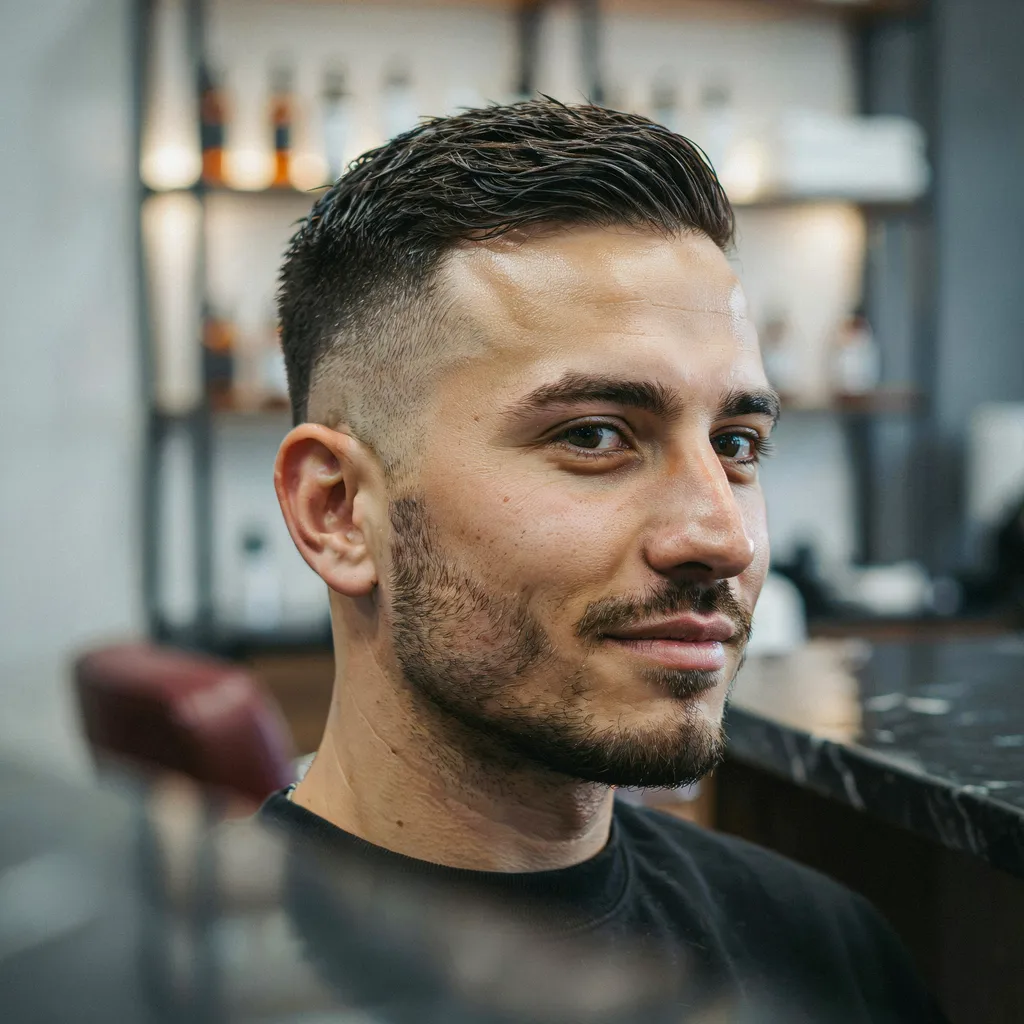
Mid fade: From any angle, the sides look neat and consistent. The gradient blends straight down from the temple-level line. The back shows an even horizontal connection between the two sides. It looks precise and deliberate — like a architectural line drawn around the head.
Drop fade: From the front it looks similar to a mid fade. The difference becomes visible from the side, where you can see the fade line curving down behind the ear. From the back, the faded area is lower and the shape is more rounded, following the natural curve of the skull. It looks softer and more organic than the straight horizontal line of a mid fade.
Which face shape suits each one?

Mid fade — flatters almost every face shape because the straight, consistent fade line keeps proportions balanced. It’s the safer, more universally flattering choice.
Drop fade — works particularly well for men with longer or more angular faces, because the curved, lower line at the back softens the overall shape and adds width visually. It can also suit round faces when the top adds height, because the lower back keeps the sides from appearing too wide.
Which hair type suits each one?
Mid fade — works with all hair types. Straight, wavy, curly, thick, fine — the clean horizontal line suits all textures equally.
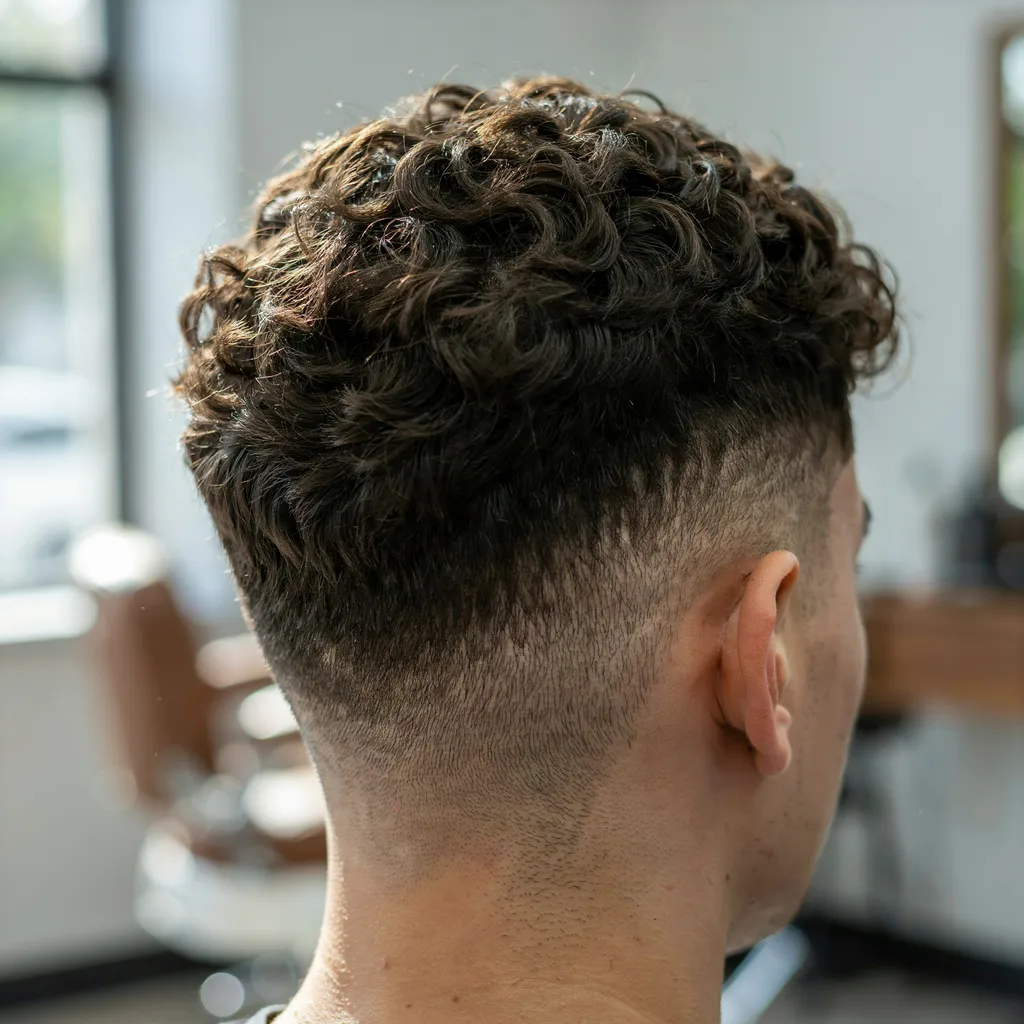
Drop fade — particularly popular with curly, coily, and afro-textured hair. The curved fade line follows the natural shape of the head and complements the rounded volume of curly tops beautifully. Many barbers consider the drop fade the most natural-looking choice for men with significant curl or coil. See best fades for curly hair for more on this pairing.
Which is harder to cut?
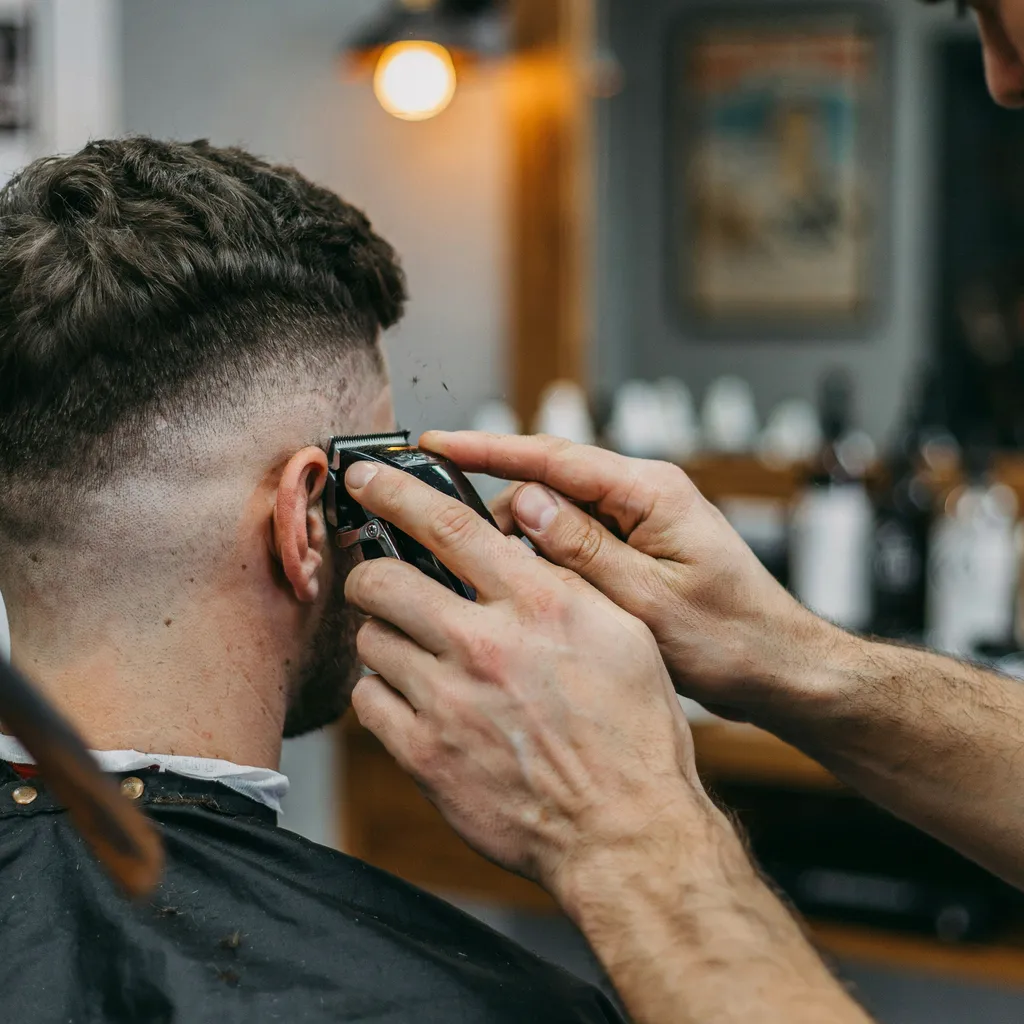
A drop fade is generally considered more technically demanding than a standard mid fade. The barber has to maintain a consistent, smooth curve as the fade line descends behind the ear — if the curve is uneven or too abrupt, it shows immediately. A mid fade’s straight horizontal line is easier to keep consistent around the head. If you are going to a barber for the first time, or trying a new barbershop, a mid fade is the safer choice because it is more forgiving to execute.
Which grows out better?
Both grow out similarly in terms of timing — roughly 2 to 3 weeks before the fade line softens noticeably. However, the drop fade’s curved line can look slightly more natural as it grows because the descending shape follows the head’s contour, whereas the mid fade’s straight line can look more obviously grown-out when regrowth fills in. Neither is dramatically better; the difference is subtle.
How to ask your barber for each one

For a mid fade:
“I’d like a mid fade — start the fade at temple level and keep the fade line straight across at that height all the way around.”
For a drop fade:
“I’d like a drop fade — start at temple level at the front but let the fade line curve down behind the ear as it goes around.”
Bringing a reference photo is always the most reliable communication, especially for a drop fade where the curve is the defining feature and harder to describe precisely in words.
Which one should you choose?
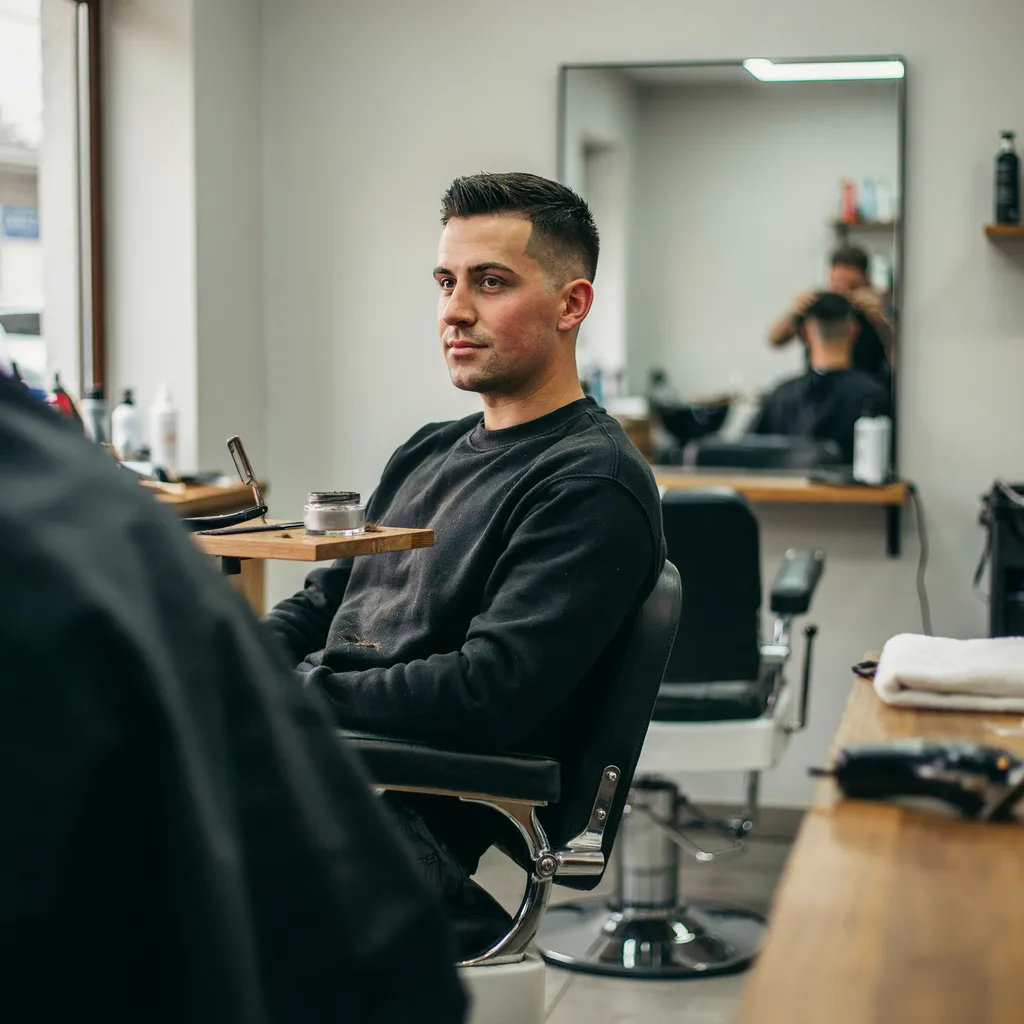
Choose a mid fade if you want a clean, sharp, universally flattering look that suits every setting and is easy to maintain consistently.
Choose a drop fade if you have curly or textured hair, want a softer and more organic silhouette, or prefer a fade line that follows the natural contour of your head rather than running straight across.
Both are excellent cuts — the choice comes down to the silhouette you prefer and the texture of your hair.
The bottom line
A mid fade runs straight across at temple level all the way around the head. A drop fade starts at the same height but curves downward behind the ear, creating a rounded, head-hugging shape. The mid fade is cleaner and more uniform; the drop fade is softer and more organic. Both are mid-height fades — the shape of the line is the only difference.
Frequently asked questions
What is the difference between a mid fade and a drop fade? A mid fade has a straight horizontal fade line that stays at temple level all the way around the head. A drop fade starts at temple level but curves downward behind the ear, creating a lower, rounded shape at the back.
Is a drop fade the same as a mid fade? No. Both can start at the mid position, but a drop fade has a descending curved fade line while a mid fade has a straight horizontal line. The shape of the fade line is what separates them.
Which is better, a mid fade or a drop fade? Neither is objectively better. A mid fade suits those who want a clean, symmetrical look. A drop fade suits those who prefer a softer, more natural contour, particularly men with curly or textured hair.
Does a drop fade suit curly hair? Yes. The drop fade is particularly popular with curly, coily, and afro-textured hair because the curved fade line follows the natural shape of the head and complements rounded, voluminous tops.
Can a drop fade start at mid height? Yes. A drop fade can start at low, mid, or high placement — the “drop” refers to how the line curves, not where it starts. A mid drop fade starts at temple level and curves down behind the ear.
About the Author
Daniel Reyes got his first mid fade almost by accident. He asked his barber for “just a fade” and got one that started right at temple level. It became the cut he kept going back to, so he built mid-fade.com to cover it properly instead of burying it in generic fade lists.