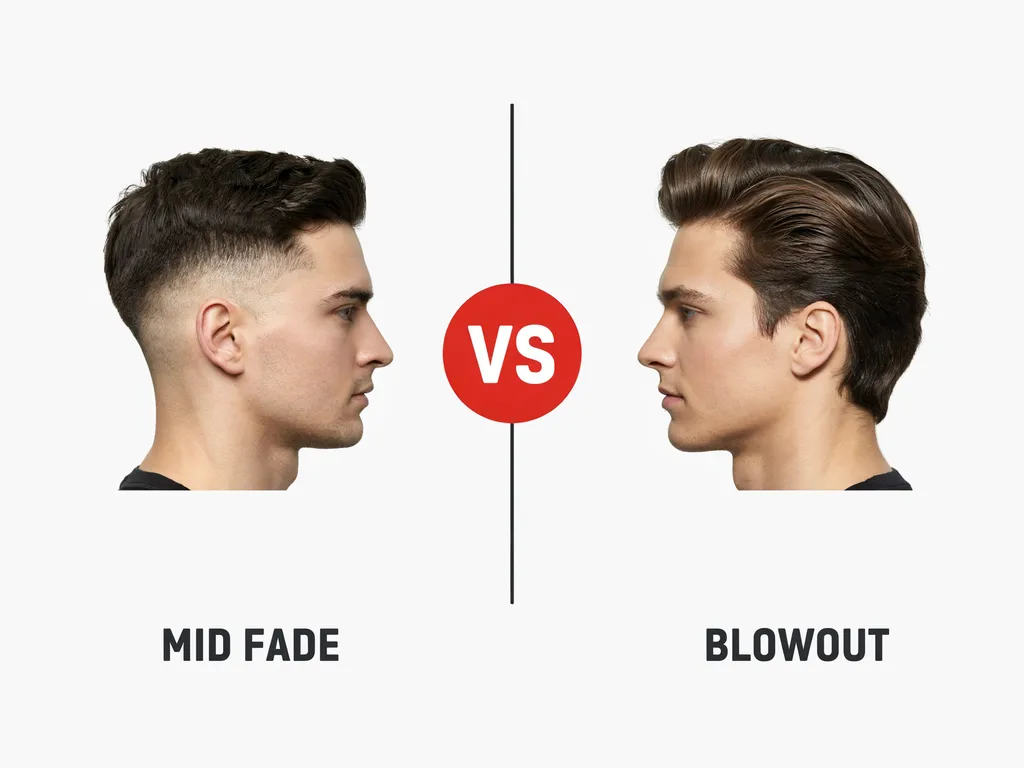
Mid Fade vs Temple Fade: What’s the Difference?


Quick answer: The difference is coverage. A mid fade blends the entire side and back of the head — from temple level all the way down and around to the neckline. A temple fade (also called a temp fade) only fades a small area around the temples and the front hairline, leaving the rest of the sides and back at a consistent length. The mid fade is a full-side technique; the temple fade is a targeted, localised one.
The word “temple” appears in both cuts — which is part of why they get confused. A mid fade starts at the temple. A temple fade focuses on the temple. But what each cut does from that point is completely different. This guide breaks it down clearly.
What is a mid fade?
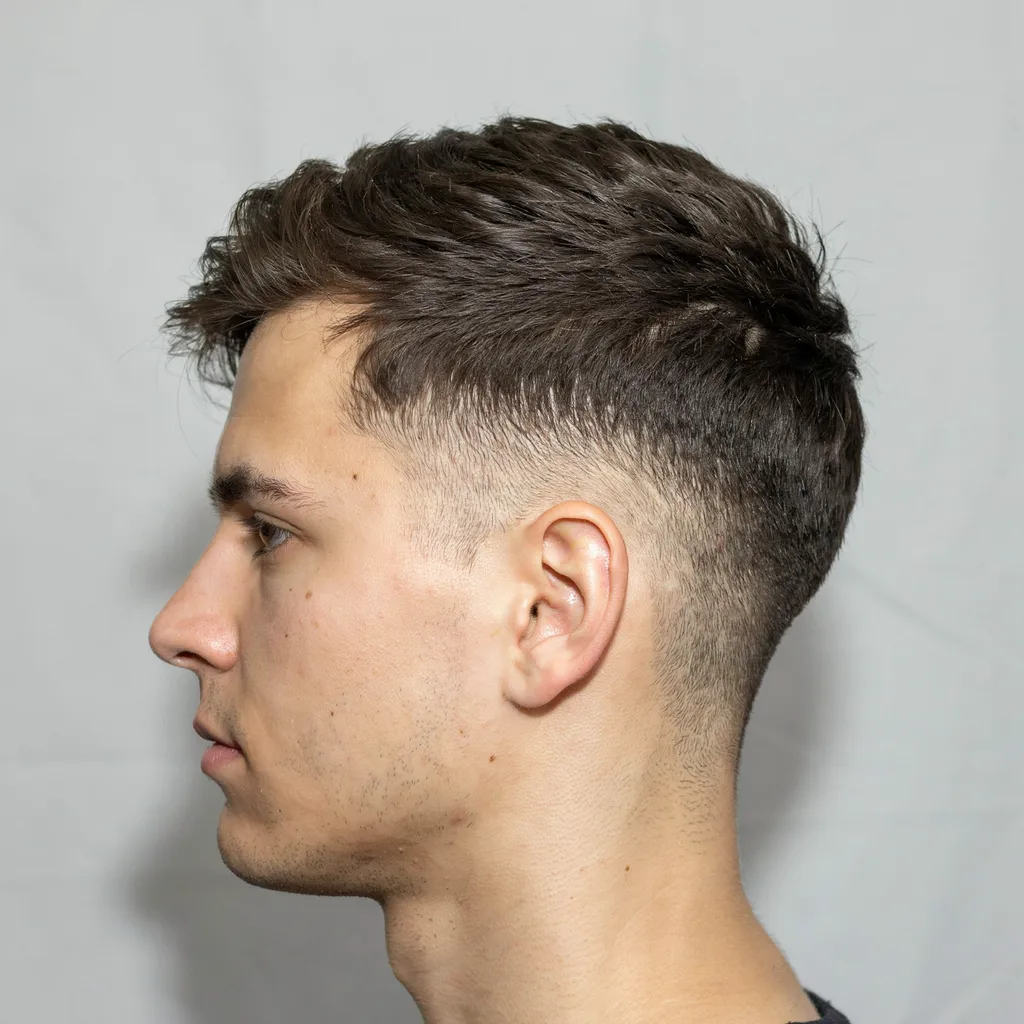
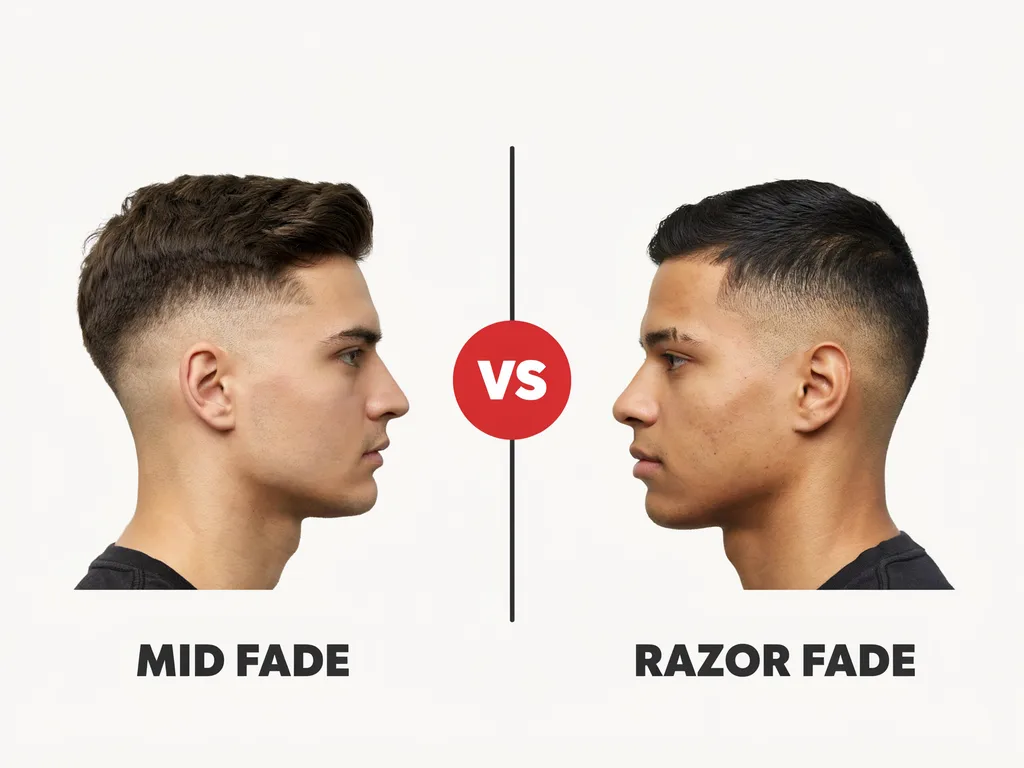
A mid fade starts at temple level and blends the hair gradually shorter across the entire side and back of the head — from the temples, past the ears, around to the neckline, all connected into one continuous gradient. The whole perimeter of the head is involved in the blend. For the complete breakdown, see our Mid Fade Haircut guide.
What is a temple fade?
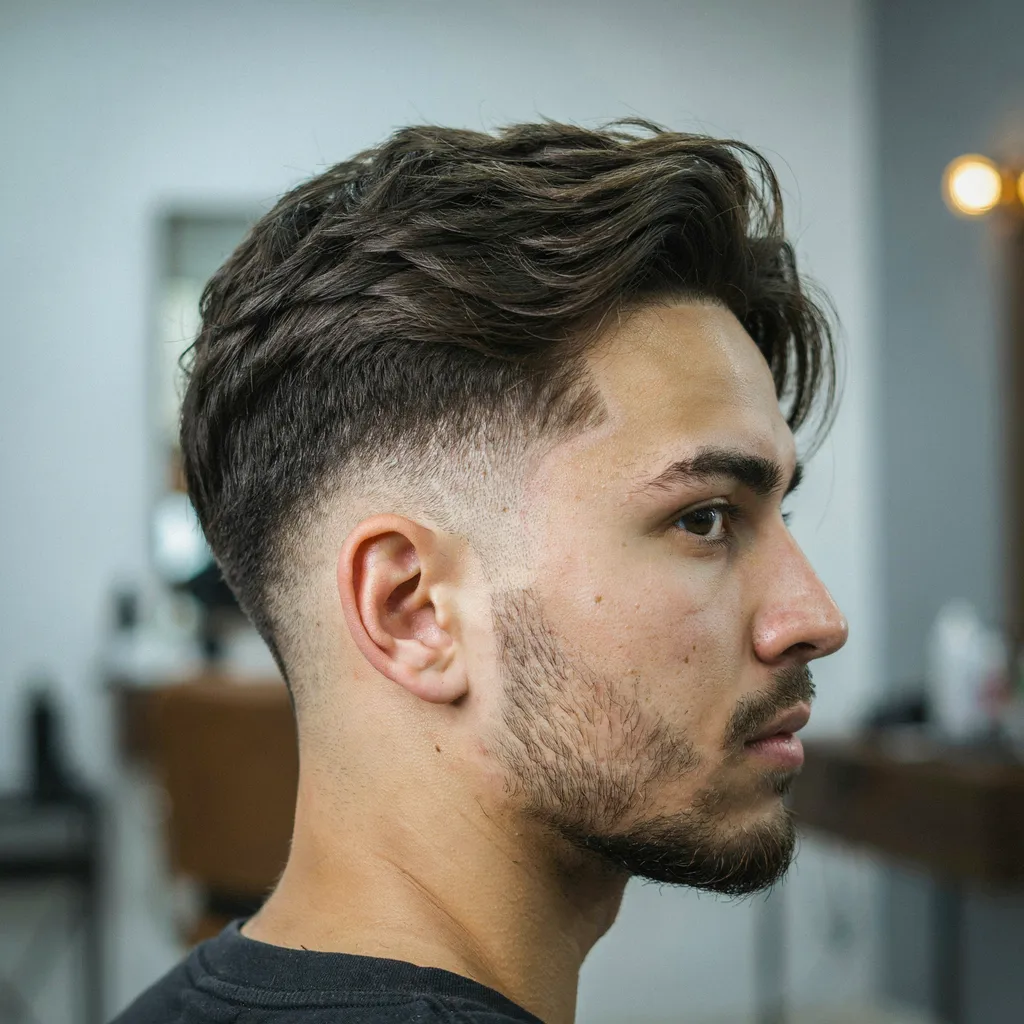
A temple fade — also called a temp fade or a Brooklyn fade — is a much more targeted cut. Instead of fading the entire side of the head, the barber only fades the hair in the temple region: the area at the front of the head beside the eye, along the front hairline, and sometimes just above and in front of the ear. The rest of the side and the back are left at their natural or clipper-trimmed length — not faded.
The result is a cut where the temples and hairline are extremely clean and defined, but the bulk of the side hair stays at its existing length. It is often used to sharpen up a haircut without fully committing to a fade all the way around. See our dedicated Temp Fade Haircut guide for a full visual breakdown.
The key difference: coverage
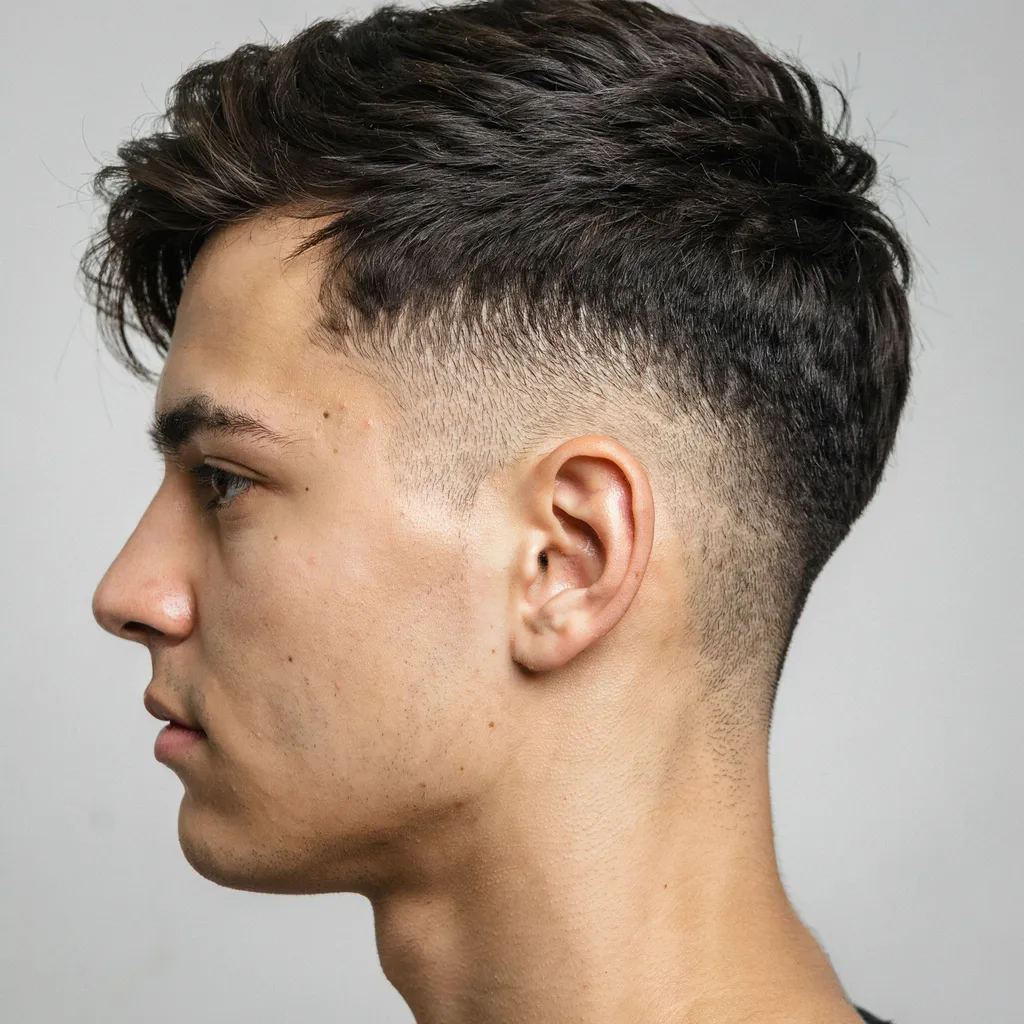
| Mid Fade | Temple Fade | |
|---|---|---|
| Coverage area | Entire side and back | Temple / front hairline only |
| Side hair | Fully faded — gradient all the way down | Left at existing length |
| Back | Fully blended into neckline | Usually untouched or basic trim |
| Contrast | Full-side gradient | Localised — front only |
| Complexity | Full fade technique | Quicker, targeted technique |
| Maintenance | Every 2–3 weeks | Every 2–4 weeks |
| Best for | Modern full-fade look | Clean hairline, softer overall |
How they look different in person

Mid fade: The sides read as one smooth, continuous gradient from full length at the top down to short or skin at the bottom. Whether you look from the front, the side, or the back, the fade wraps all the way around the head. The overall look is clean and defined from every angle.
Temple fade: From the front, the hairline looks extremely sharp and the temples are tight and clean. But when you look at the side or the back, the hair is longer and not faded — it sits at whatever length it was cut to. The cut is intentionally localised. It creates a neat, face-framing effect without the full commitment of an all-around fade.
When is a temple fade used?

A temple fade is commonly used in a few specific situations:
- As an addition to an existing haircut. A barber adds a temple fade to clean up the front hairline of a cut that otherwise has no fade — sharpening the temples without changing the rest of the style.
- For men who want a neater look without a dramatic fade. If the idea of faded sides feels too bold or too high-maintenance, a temple fade gives a cleaner, more defined front without touching the sides.
- Combined with other cuts. A temple fade can sit alongside a taper at the back, or be added to a mid fade for extra definition at the front hairline — in which case the temple area gets extra attention within the broader mid fade.
Can you have both a mid fade and a temple fade?
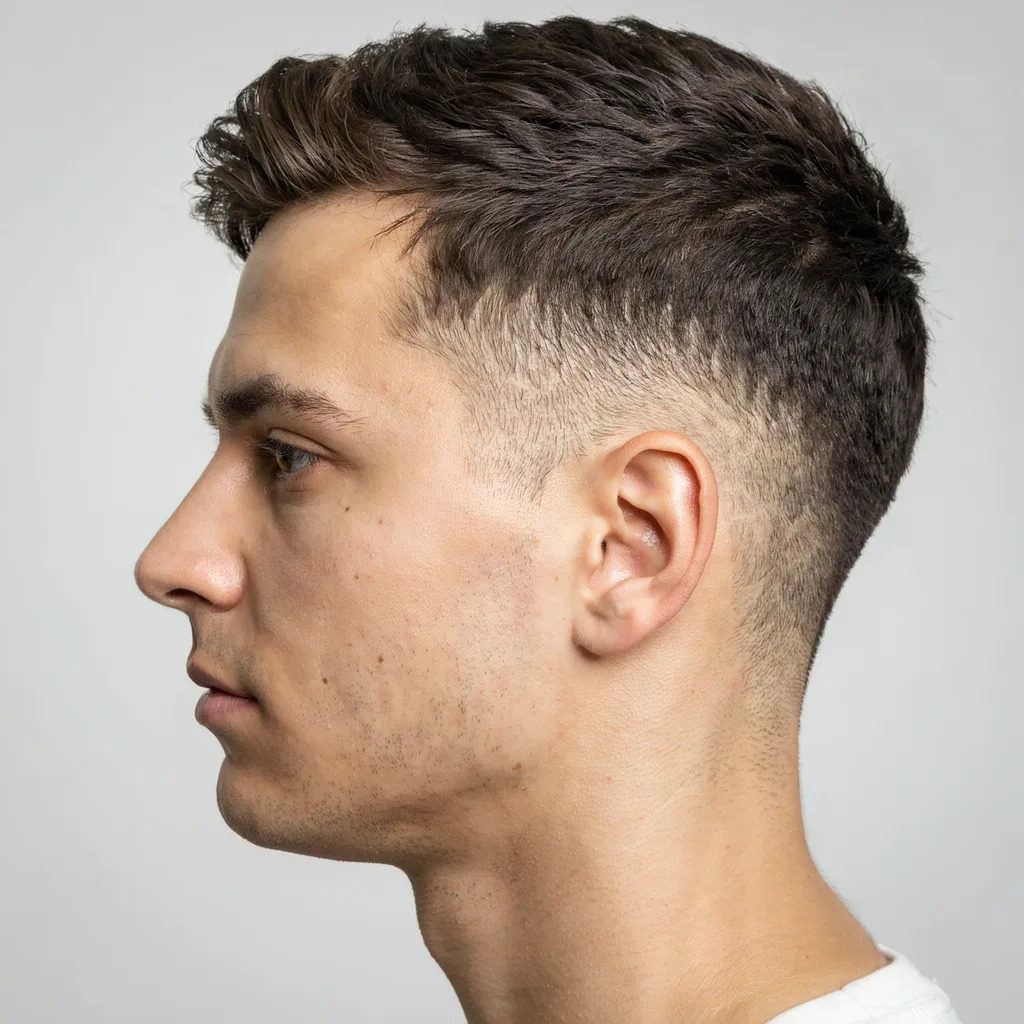
Yes — and it is actually common. A barber can execute a mid fade all the way around and then give extra definition and sharpness specifically at the temple area, creating a temple-fade finish within the broader mid fade. In this case, the temple fade is not an alternative to the mid fade; it is an enhancement of it. The result is a mid fade with an especially clean, sharp front hairline.
Which suits different face shapes?

Mid fade — flatters almost all face shapes because the full-side gradient balances the face proportions from every angle.
Temple fade — particularly effective for men who want to clean up the front of their hairline without affecting the sides. It is a good choice for men with naturally neat or thick sides who just want sharper definition at the front.
Which is more low-maintenance?

A temple fade is generally lower maintenance than a full mid fade because it only covers a small area. The temples need to be touched up regularly — usually every 2 to 3 weeks — but the rest of the hair can go longer between full cuts. A mid fade requires the entire side gradient to be refreshed on the same schedule.
How to ask your barber for each

For a mid fade:
“I’d like a mid fade — start the fade at temple level and blend it all the way around to the neckline.”
For a temple fade:
“I’d like a temp fade — just clean up and tighten the temples and front hairline, and leave the rest of the sides at their current length.”
For both combined:
“I’d like a mid fade all around, and give the temple area extra definition — really sharpen up the front hairline.”
Which should you choose?

Choose a mid fade if:
- You want a full, modern fade look from every angle.
- You want the sharpest possible contrast between the sides and the top.
- You are comfortable with a regular 2 to 3 week barber schedule.
Choose a temple fade if:
- You want to sharpen the front hairline without committing to a full fade.
- You prefer a lower-maintenance option.
- You want a cleaner look without dramatically changing your current cut.
Choose both if:
- You want a full mid fade with maximum definition at the front hairline — the strongest version of the cut.
The bottom line
A mid fade covers the entire side and back of the head in a continuous gradient. A temple fade only targets the temple and front hairline area, leaving the rest of the sides untouched. They serve different purposes — the mid fade is a full technique, the temple fade is a targeted one — and they can work together for the sharpest possible result.
Frequently asked questions
What is the difference between a mid fade and a temple fade? A mid fade blends the entire side and back of the head from temple level down. A temple fade only fades the temple and front hairline area, leaving the rest of the sides at their existing length.
Is a temple fade the same as a temp fade? Yes. Temple fade and temp fade are the same cut — “temp” is simply the shortened version of “temple.” Both refer to a localised fade around the temple and front hairline.
Can you have a mid fade and a temple fade at the same time? Yes. A barber can apply a mid fade all around the head and then add extra definition specifically at the temple area, combining both techniques for a sharper front hairline within the broader mid fade.
Is a temple fade easier to maintain than a mid fade? Generally yes. A temple fade only covers a small area so the overall maintenance is less intensive than a full mid fade, though the temple area itself still needs regular touching up every 2 to 3 weeks.
Which is better for a natural everyday look — a mid fade or a temple fade? A temple fade is the more conservative and everyday option because it only affects the front hairline. A mid fade is bolder and more dramatic. For a softer overall look, the temple fade or a mid taper is the better choice.
About the Author
Daniel Reyes got his first mid fade almost by accident. He asked his barber for “just a fade” and got one that started right at temple level. It became the cut he kept going back to, so he built mid-fade.com to cover it properly instead of burying it in generic fade lists.