Mid Fade Man Bun: Length, Technique, and Practical Tips

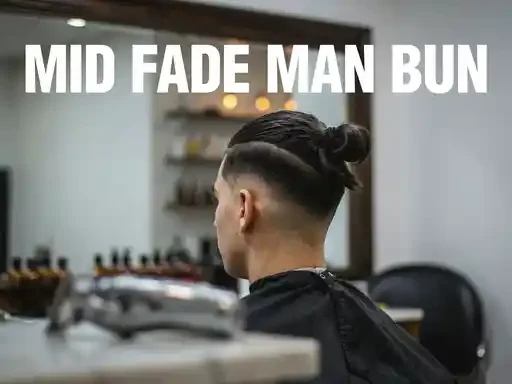
Quick answer: A man bun gathers long top hair into a knot at the crown or back of the head, creating a distinctive silhouette against a mid fade tight sides. You will need at least four to five inches of length to gather and tie securely, along with a hair tie designed for thicker hair (not a standard thin elastic, which tends to break or pull). The style itself is quick to do daily once the hair is long enough, the real time investment is in growing to that length in the first place.
The man bun paired with a fade has been a consistently recognizable combination for a number of years, offering a practical way to manage longer hair while still keeping a sharp, defined look at the sides.
How much length you actually need
Roughly four to five inches minimum is generally needed to gather hair into a secure bun without it slipping loose or looking too small and sparse. More length gives you more options, a larger, fuller bun, or the ability to try variations like a half-up style on days you do not want the hair fully gathered.
Tools that actually matter
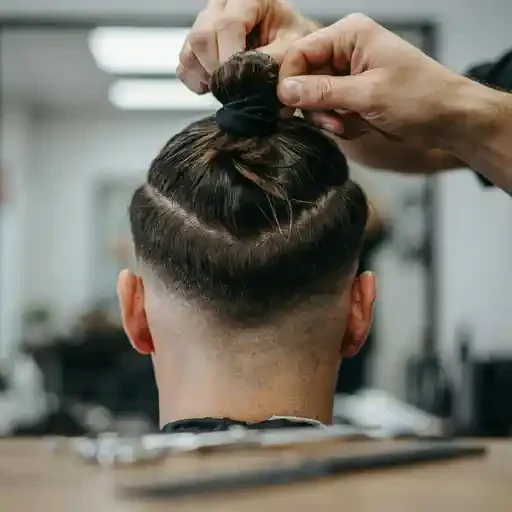
A proper hair tie, not a standard thin elastic, thicker, fabric-covered hair ties or specific man bun ties designed for coarser or thicker hair hold more securely and are less likely to snap or pull hair compared to typical thin elastics made for finer hair.
A wide-tooth comb or brush, used to gather the hair smoothly before tying, helps avoid a lumpy, uneven-looking bun.
Basic technique
- Gather all the top hair (leaving the faded sides alone, obviously) into your hand at your preferred height, typically at the crown or slightly higher, though personal preference varies.
- Smooth it with a comb or your other hand to remove major lumps or unevenness.
- Secure with your hair tie, wrapping several times for a firm hold without pulling too tightly at the scalp, which can cause discomfort or, over time with repeated tension, contribute to hair breakage right at the hairline.
- For a more polished look, twist the gathered hair once or twice before wrapping the tie around it, which creates a slightly more defined, less loose bun shape.
Where to position the bun
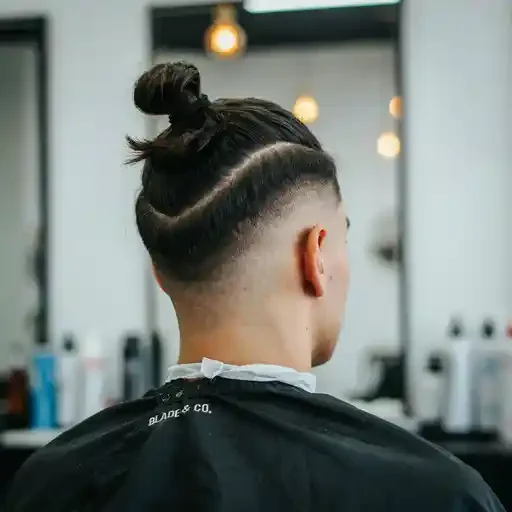
High bun, at or near the crown, tends to look sharper and more deliberate, and pairs particularly well with a mid fade clean sides by keeping visual focus upward and away from the fade transition itself.
Lower bun, toward the back of the head, is a more relaxed, casual option, though it can partially cover or interact visually with the top of the fade transition depending on exact placement.
A note on hair health
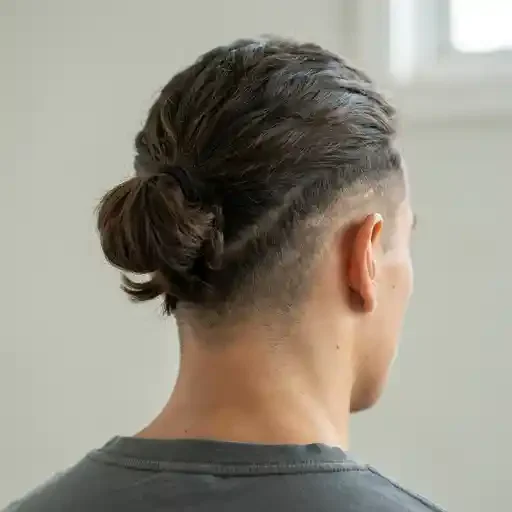
Wearing a bun with consistent, tight tension in the same spot every day can, over time, contribute to a specific type of hair thinning at the hairline called traction alopecia, particularly if the bun is pulled very tightly. This is worth being mindful of, a slightly looser bun, or occasionally varying the position and tension day to day, reduces this risk compared to always pulling the same section tightly in exactly the same spot.
Does hair type affect the bun?
Straight and wavy hair generally gather and tie predictably. Curly or coily hair, due to its natural volume, sometimes creates a fuller-looking bun with less actual length needed, since the hair takes up more visual space per strand. Very fine, silky hair can be trickier to keep secured, since it has less natural grip, a slightly firmer wrap or an extra loop with the hair tie helps compensate.
Maintenance
The fade needs the usual regular attention, every 2 to 4 weeks. The top hair being grown for a bun is typically left mostly alone in terms of cutting, aside from occasional trims to manage split ends, since the whole point is retaining and eventually maintaining significant length.
The bottom line
A mid fade man bun is a practical, distinctive way to manage genuinely long hair while keeping a sharp fade at the sides, it needs real length (four to five inches minimum) to tie securely, the right hair tie for the job, and some mindfulness about tension to protect the hairline over time. Once the length is there, the daily styling itself takes very little time.
Frequently asked questions
How much hair length do you need for a man bun?
At least four to five inches is generally the minimum to gather and tie securely, with more length giving you a fuller bun and more styling options.
What kind of hair tie should you use for a man bun?
A thicker, fabric-covered hair tie or one designed specifically for coarser hair, rather than a standard thin elastic, which is more likely to snap or pull.
Can a tight man bun damage your hairline?
Yes, potentially, with consistent tight tension in the same spot over time contributing to a type of hairline thinning called traction alopecia. A looser bun or varying position helps reduce this risk.
Does curly hair need less length for a full-looking bun?
Often yes, since curly or coily hair natural volume takes up more visual space per strand, sometimes creating a fuller-looking bun with somewhat less actual length than straight hair needs.
Where should you position a man bun with a mid fade?
A high bun near the crown tends to look sharper and keeps visual focus away from the fade transition, while a lower bun is more relaxed but can visually interact more with the top of the fade.
About the Author
Daniel Reyes got his first mid fade almost by accident. He asked his barber for “just a fade” and got one that started right at temple level. It became the cut he kept going back to, so he built mid-fade.com to cover it properly instead of burying it in generic fade lists.