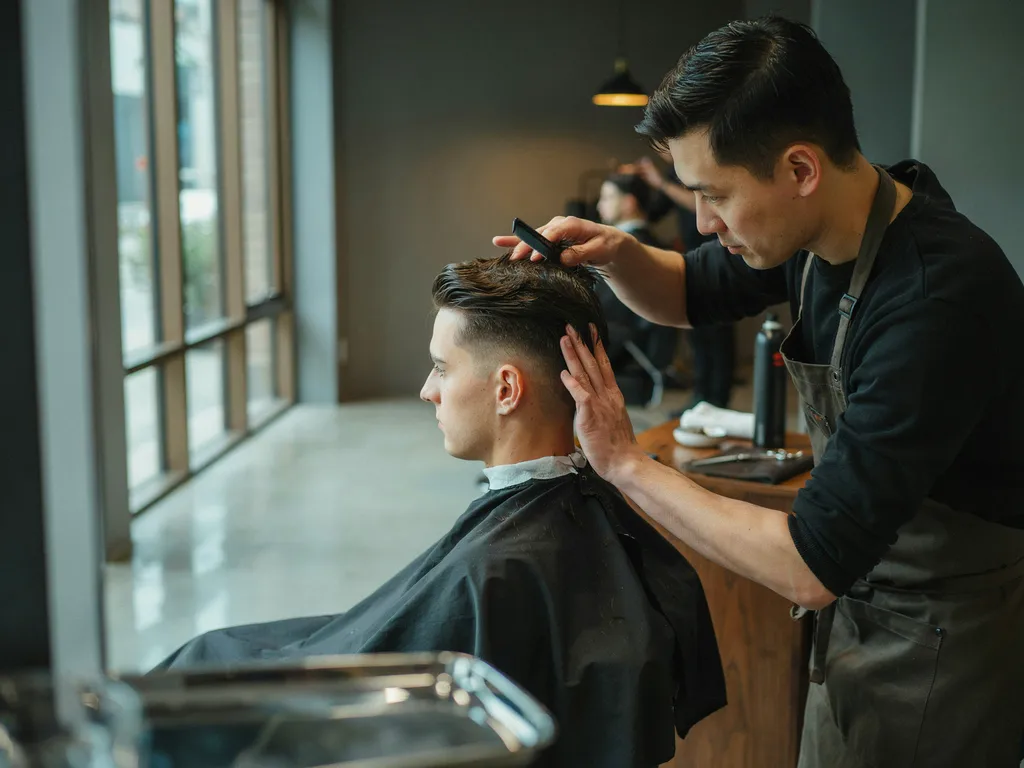
The History & Origin of the Mid Fade Haircut


Quick answer: The mid fade evolved from military-regulation haircuts of the 1940s and 1950s, where short, clean sides were standard. It was refined in African American barbershops through the 1960s–1980s as barbers developed precision blending techniques, then exploded into mainstream culture through hip-hop, NBA style, and social media in the 1990s–2010s. Today the mid fade is the most-requested fade variation in modern barbershops worldwide.
Every great haircut has a story. The mid fade didn’t appear overnight — it grew out of decades of barbering culture, military grooming standards, music, sport, and eventually the internet. Understanding where it came from adds a layer of appreciation to a cut that millions of men ask for every week. Here is the full history.
The military roots: 1940s–1950s
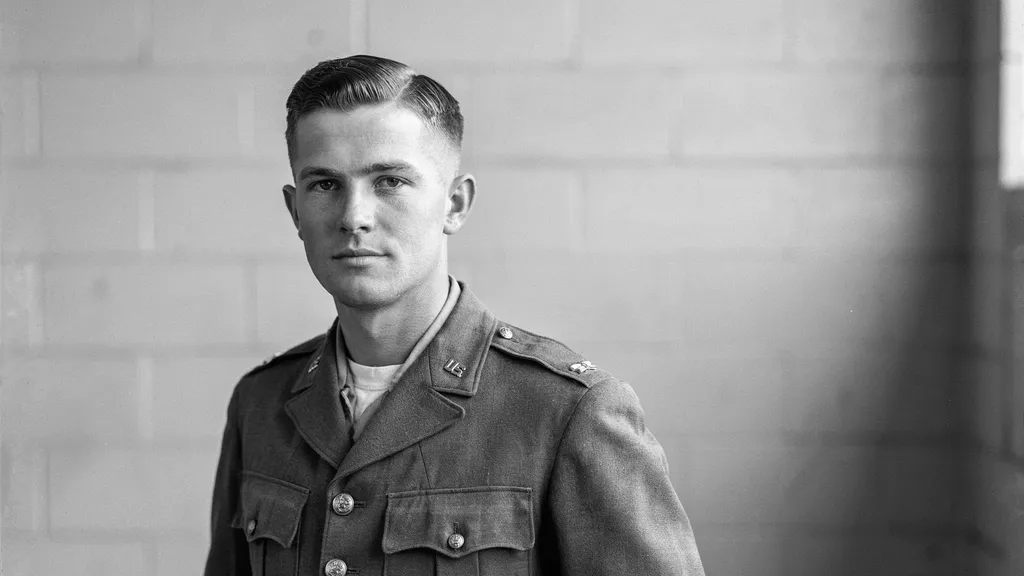
The story of the fade begins in the United States military. From the 1940s onward, military regulations required extremely short, clean sides and back — hair had to be off the collar, off the ears, and neatly tapered. Barbers on military bases became highly skilled at blending the sides short while leaving some length on top, partly for practicality and partly because a completely shaved head wasn’t always required.
This military taper — short at the bottom, slightly longer as it rose — is the technical ancestor of every modern fade. The discipline of the military environment meant these cuts had to be done quickly, cleanly, and consistently, which pushed barbers to refine their blending technique. When servicemen returned to civilian life, they brought the preference for clean, tapered sides with them, and those standards slowly worked their way into everyday barbershops.
The barbershop era: 1960s–1970s
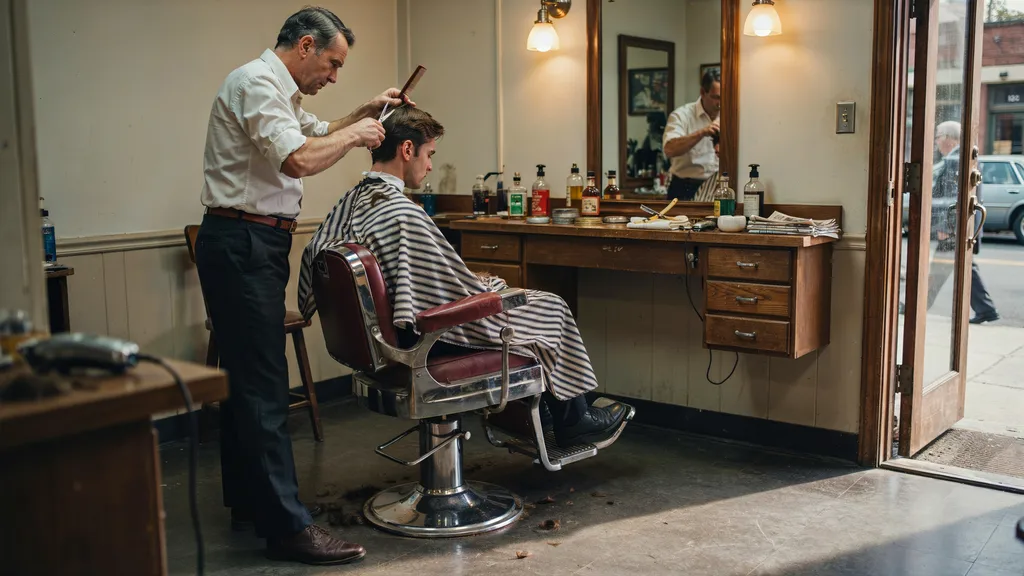
Through the 1960s and 1970s, the real artistry of the fade was being developed in African American barbershops across the United States. Barbers in cities like New York, Chicago, Los Angeles, and Detroit began pushing the technical limits of clipper work — blending more gradually, going shorter at the bottom, and creating smoother transitions between lengths.
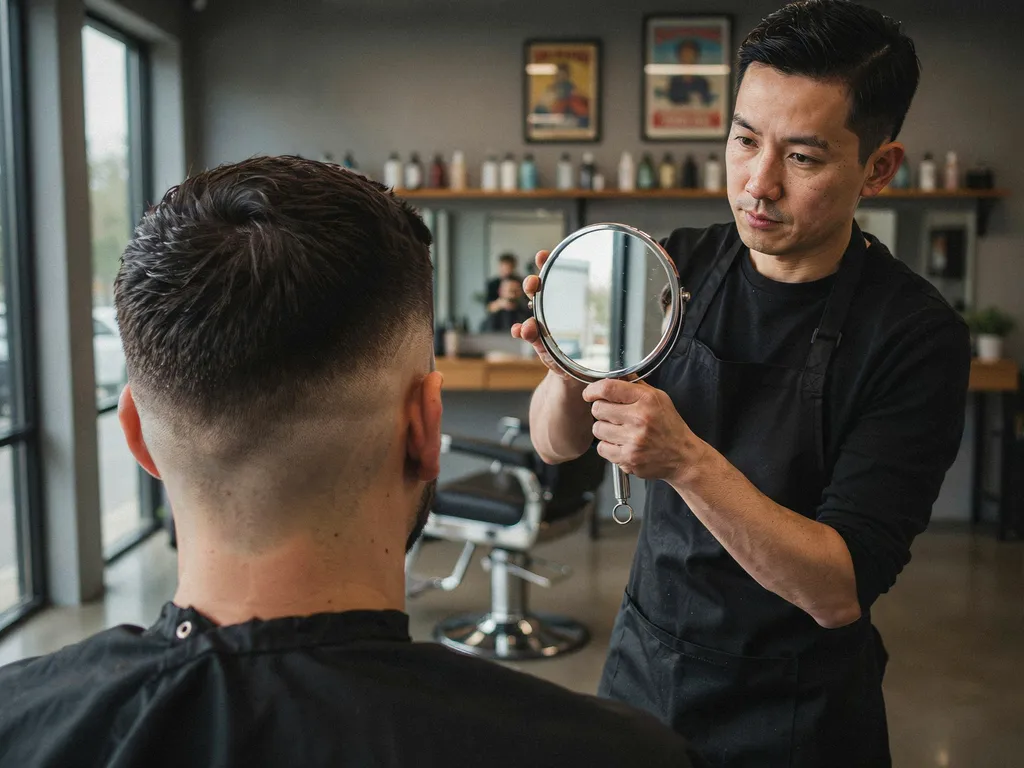
The barbershop was a cultural institution, not just a place to get a haircut, and skilled barbers built strong reputations on the quality of their fades. This era saw the development of the core techniques that still define a modern fade: guard progression (moving from a #1 to a #2 to a #3 as you work up the head), scissor-over-comb blending for the transition zone, and the use of a detail trimmer or outliner to clean up the edges.
The fade in this period was closely tied to identity and community — a sharp fade was a marker of pride and craftsmanship on both sides of the chair.
Hip-hop and the fade explosion: 1980s–1990s
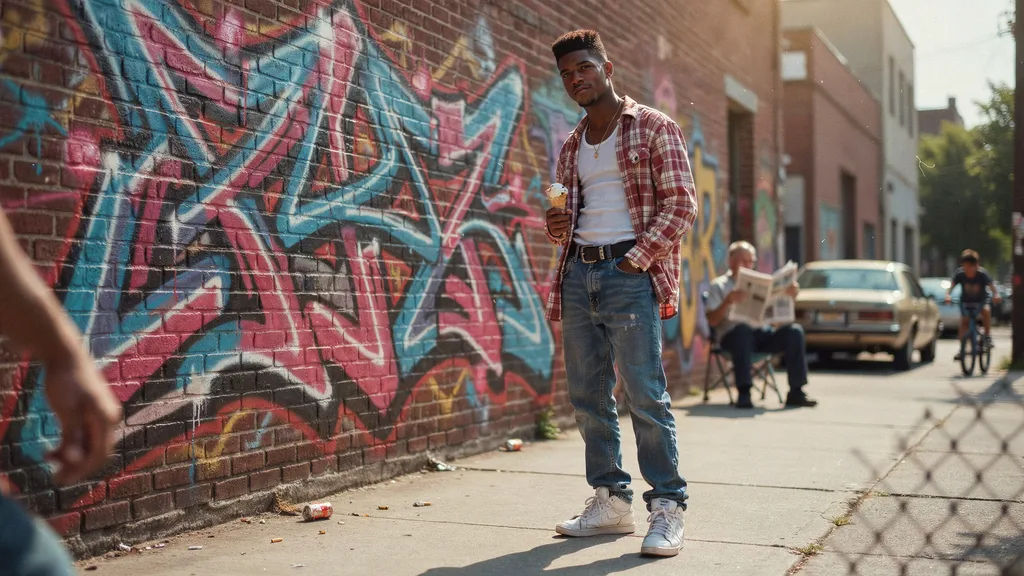
If the military gave the fade its bones and the barbershop gave it its technique, hip-hop gave it its cultural moment. Through the 1980s and into the 1990s, artists, athletes, and entertainers from hip-hop culture made sharp, geometric, high-contrast fades a defining part of their image. The high-top fade, the flat-top, and bold designs shaved into tight sides became visual signatures of the era.
The NBA was equally influential. Players in the late 1980s and 1990s wore immaculate fades courtside and in locker-room interviews, putting the cut in front of millions of television viewers every week. Boys and young men across the country wanted what they saw, and barbershops across America — and increasingly around the world — had to master the fade to keep up with demand.
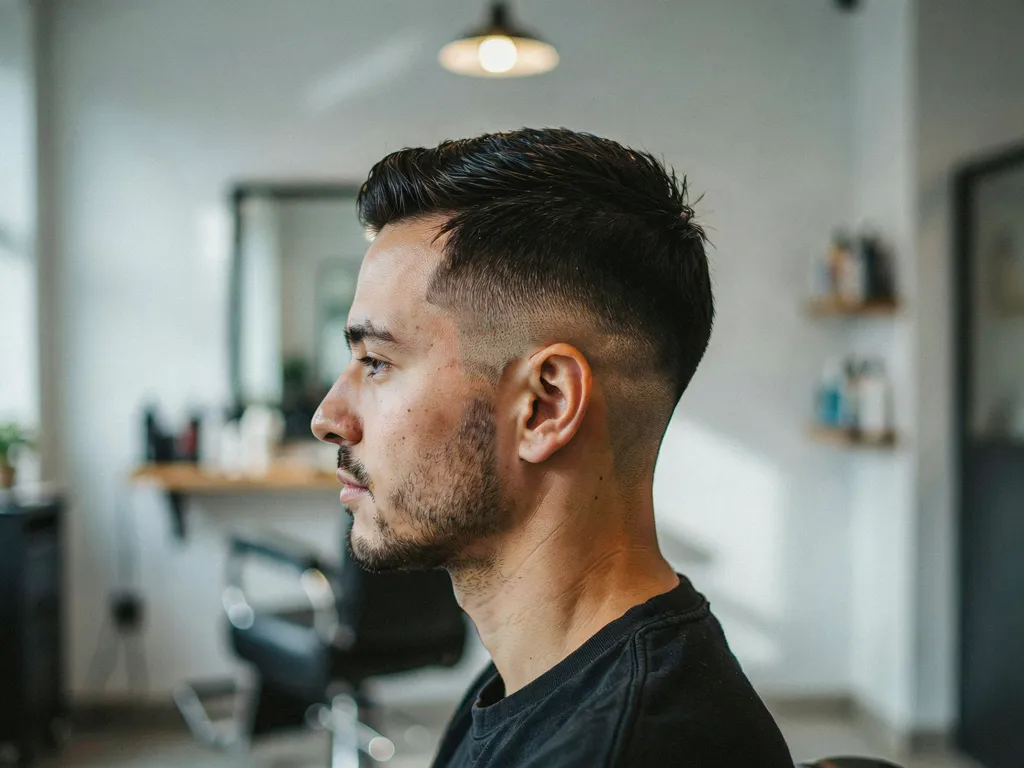
By the early 1990s, the fade had moved from a subcultural signature to a mainstream staple. The mid fade specifically — starting at temple level, balanced between the extremes of low and high — emerged as the most wearable and universally flattering height, and it quickly became the default when someone just asked for “a fade.”
The internet and global spread: 2000s–2010s
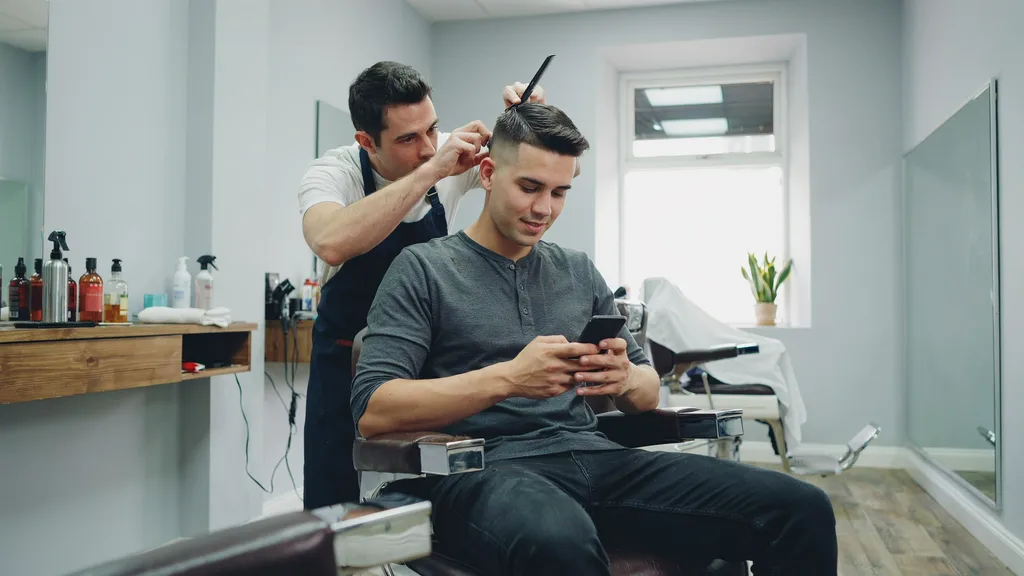
The internet transformed the fade from a primarily American phenomenon into a genuinely global style. In the 2000s, forums and style blogs began circulating fade photos across borders. By the early 2010s, Instagram and Pinterest had created an entirely new ecosystem for haircut inspiration — someone in London, Lagos, or Lahore could find the exact mid fade style they wanted, save the photo, and walk into a local barbershop with a reference.
This visual spread accelerated the refinement of the cut. Barbers began competing publicly — sharing their work online, building followings, and pushing the technical quality of fades to new heights. Tutorial videos on YouTube made the techniques accessible to a new generation of barbers worldwide, and the mid fade became a genuinely international standard.
The mid bald fade — where the blend goes all the way to skin — rose to prominence during this period, driven partly by the dramatic visual contrast that photographed so well on social media. The mid taper fade remained the softer, everyday counterpart for those who wanted the same placement with a more natural finish.
The modern mid fade: 2015–present
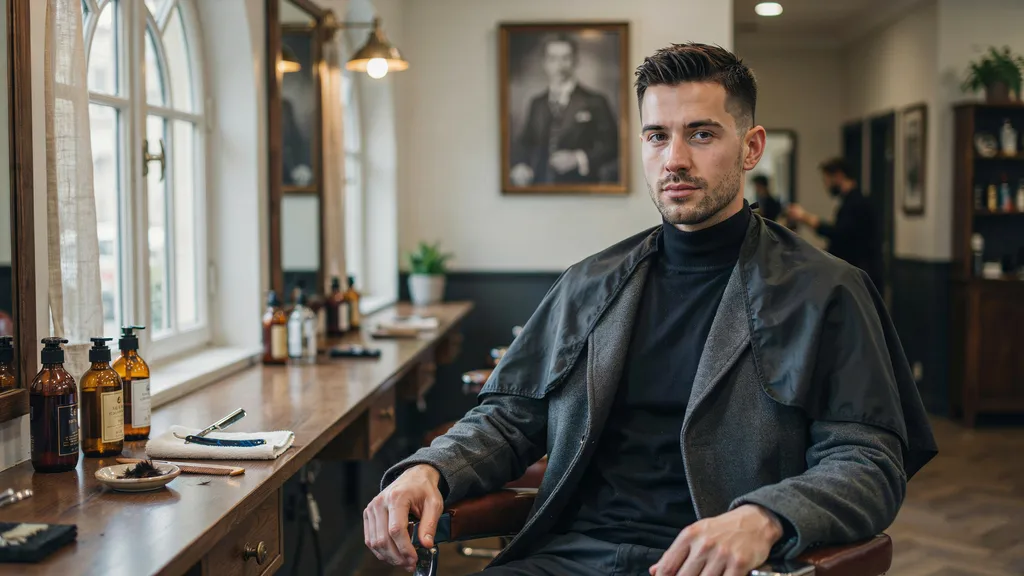
From the mid-2010s onward, the mid fade has been the single most-requested fade variation in barbershops around the world. Several things have kept it at the top. First, its versatility — it works with every hair type, every face shape, and virtually every style on top, from a textured crop to a slick back to a comb over. Second, its balance — it sits at the sweet spot between too subtle and too extreme, which makes it appropriate in almost any setting. Third, the ongoing influence of sport, music, and social media, which keeps the cut visible and aspirational.
The rise of barbering as a professional trade — with dedicated schools, competitions, and social media communities — has also elevated the quality of mid fades globally. Techniques that were once the preserve of a handful of elite barbers are now widely taught and widely practised. The result is a cut that, when done well, is a genuine piece of craft.
The mid fade’s journey from military regulation to global phenomenon took about eighty years. It shows no sign of slowing down. For everything about the modern cut — how to wear it, style it, and keep it sharp — see our complete Mid Fade Haircut guide.
The bottom line

The mid fade has roots in military grooming, was shaped by generations of skilled barbers in African American communities, was catapulted into mainstream culture by hip-hop and sport, and was globalised by the internet and social media. It is not a trend — it is an eighty-year evolution of one of the most refined techniques in men’s grooming.
Frequently asked questions
Where did the mid fade originate? The mid fade evolved from military taper cuts of the 1940s, refined by African American barbers through the 1960s–1980s, and popularised globally through hip-hop culture, sport, and social media from the 1980s onward.
When did the fade haircut become popular? The fade gained mainstream popularity in the late 1980s and 1990s, driven by hip-hop artists and NBA players. It became a global standard in the 2010s through Instagram and YouTube.
Why is the mid fade so popular? The mid fade sits at a balanced placement — not too subtle, not too extreme — and suits almost every face shape, hair type, and style on top, making it the most versatile and widely flattering fade variation.
Is the fade haircut part of African American culture? The fade has deep roots in African American barbershop culture, where the core blending techniques were developed and refined from the 1960s onward. It is widely recognised as a significant part of that cultural tradition.
Has the mid fade always been the most popular fade? Not always. The high-top fade and flat-top were more prominent in the late 1980s and early 1990s. The mid fade rose to dominance as a more versatile and wearable alternative from the mid-1990s onward and has held that position since.
About the Author
Daniel Reyes got his first mid fade almost by accident. He asked his barber for “just a fade” and got one that started right at temple level. It became the cut he kept going back to, so he built mid-fade.com to cover it properly instead of burying it in generic fade lists.