Where Does a Mid Fade Start on the Head? (Placement Guide)

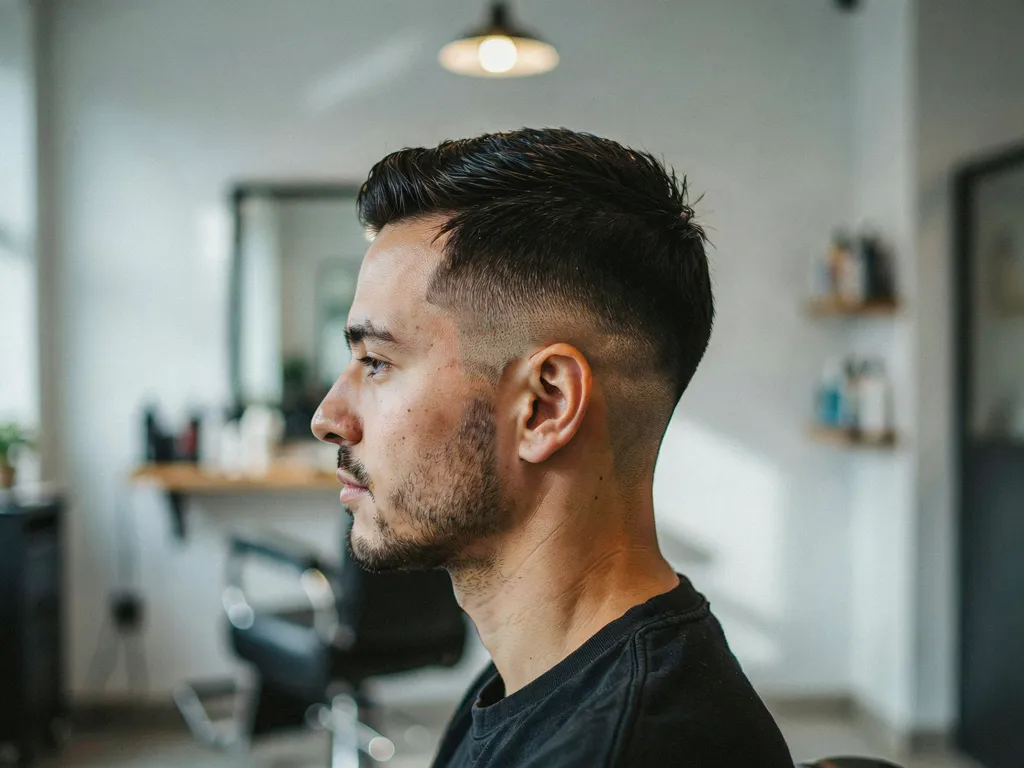
Quick answer: A mid fade starts at temple level — roughly 1 to 2 inches above the ears, in the middle of the side of the head. From that point the hair blends gradually shorter down to the ears and neckline, while the hair above the temple stays full. This middle starting point is what separates a mid fade from a low fade (which starts just above the ear) and a high fade (which starts near the crown).
The single thing that defines any fade is where it begins. Get the starting point right and you get the exact look you wanted; get it wrong and a “mid fade” can accidentally turn into a low or high fade. This guide shows you precisely where a mid fade’s fade line sits, how to picture it on your own head, and how to make sure your barber starts it in the right place.
The exact starting point of a mid fade
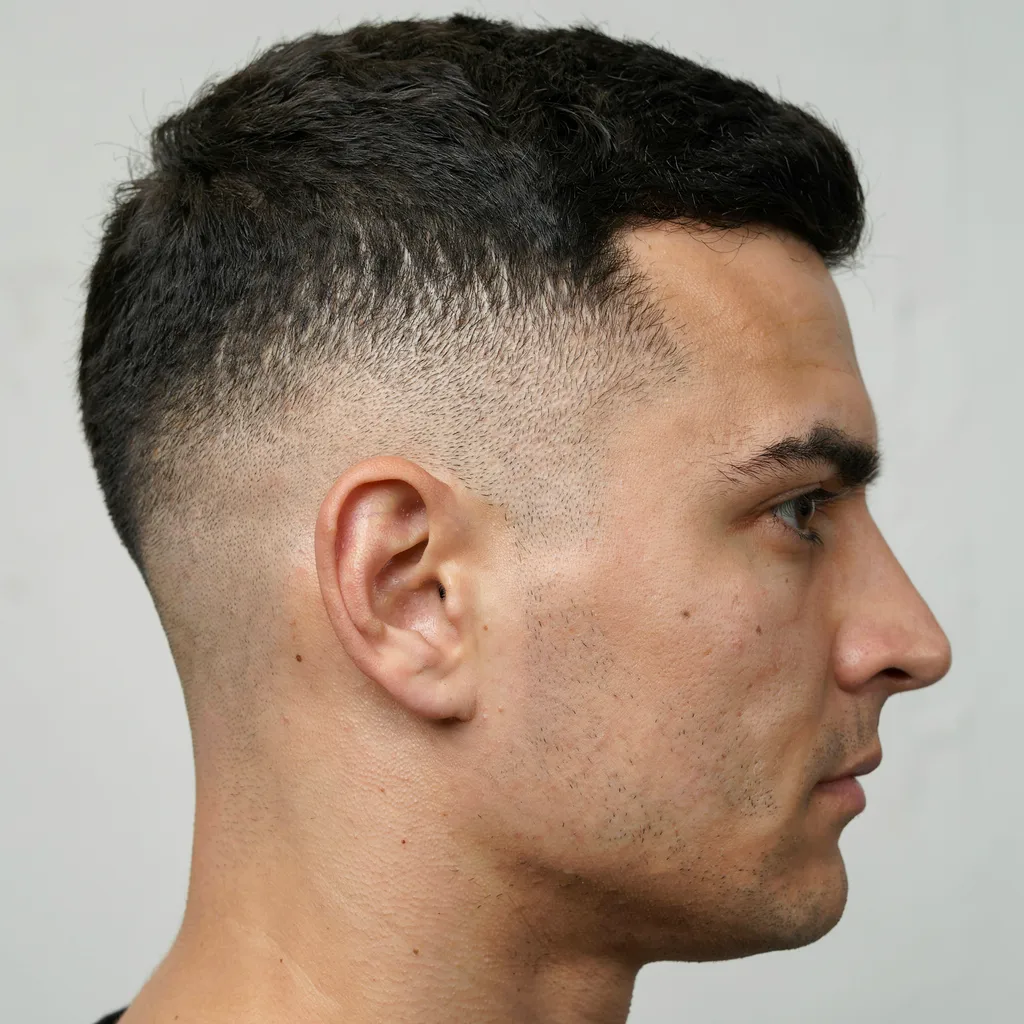
A mid fade begins at temple level — the point on the side of your head that lines up roughly with the outer corner of your eyebrow, about 1 to 2 inches above the top of your ear. That’s the spot where the fade “starts,” meaning it’s the highest point where the blending begins. Below that line, the hair gets progressively shorter as it travels down toward the ear and the back of the neck. Above that line, your hair keeps its full length on top.
Because the transition begins in the middle of the side, a mid fade creates a clear, visible contrast between short sides and a longer top — but it stops short of exposing the upper sides of the head the way a high fade does. That balance is the entire appeal of the cut. For the full picture of the style, its variations, and how to wear it, see our complete Mid Fade Haircut guide.
How to picture it on your own head
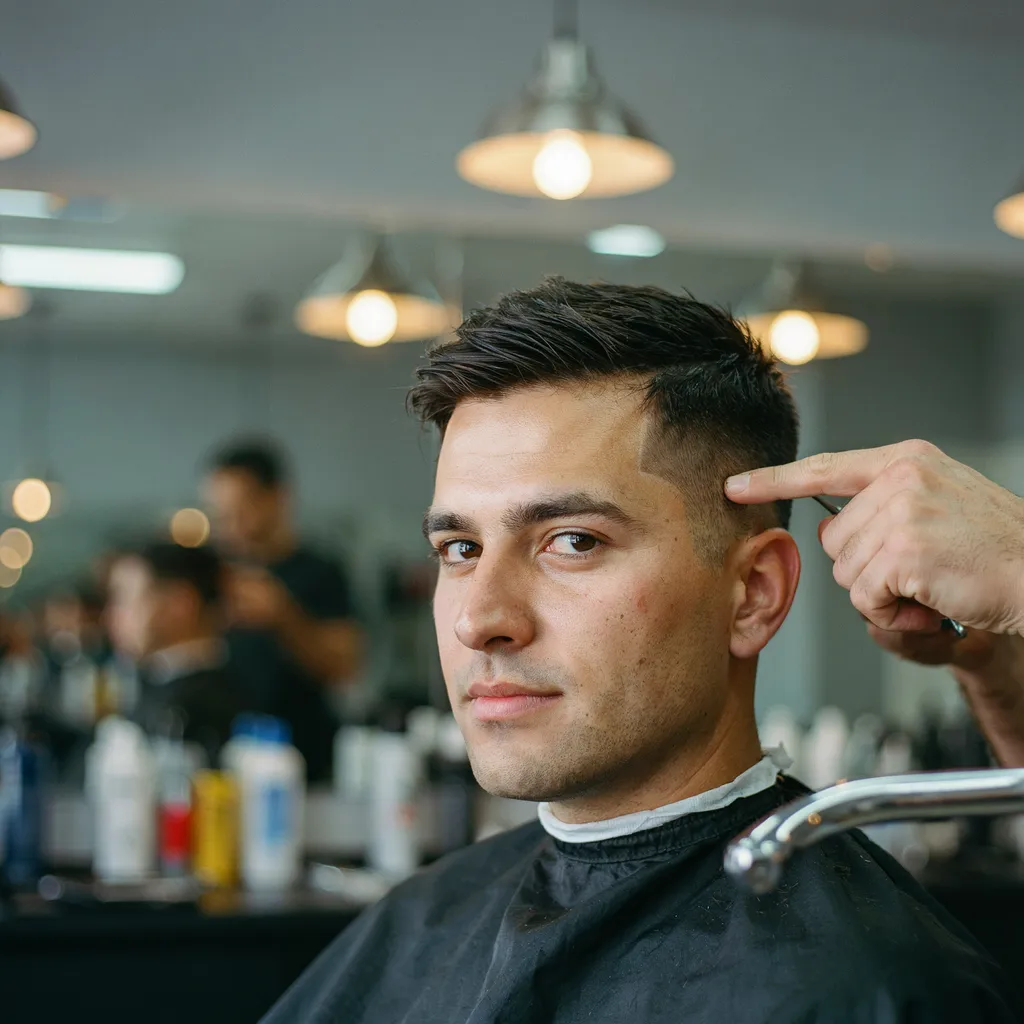
You don’t need to be a barber to visualise it. Try this:
- Find your temple — the soft spot beside your eye, level with the end of your eyebrow.
- Imagine a horizontal line running back from there, 1 to 2 inches above your ear.
- Everything below that line is the fade — blending from short at the bottom to a touch longer as it rises.
- Everything above it keeps its length.
That imaginary line is your fade line. On a mid fade it sits squarely in the middle of the side — not hugging the ear, not climbing toward the crown.
Where a mid fade sits vs low and high fades
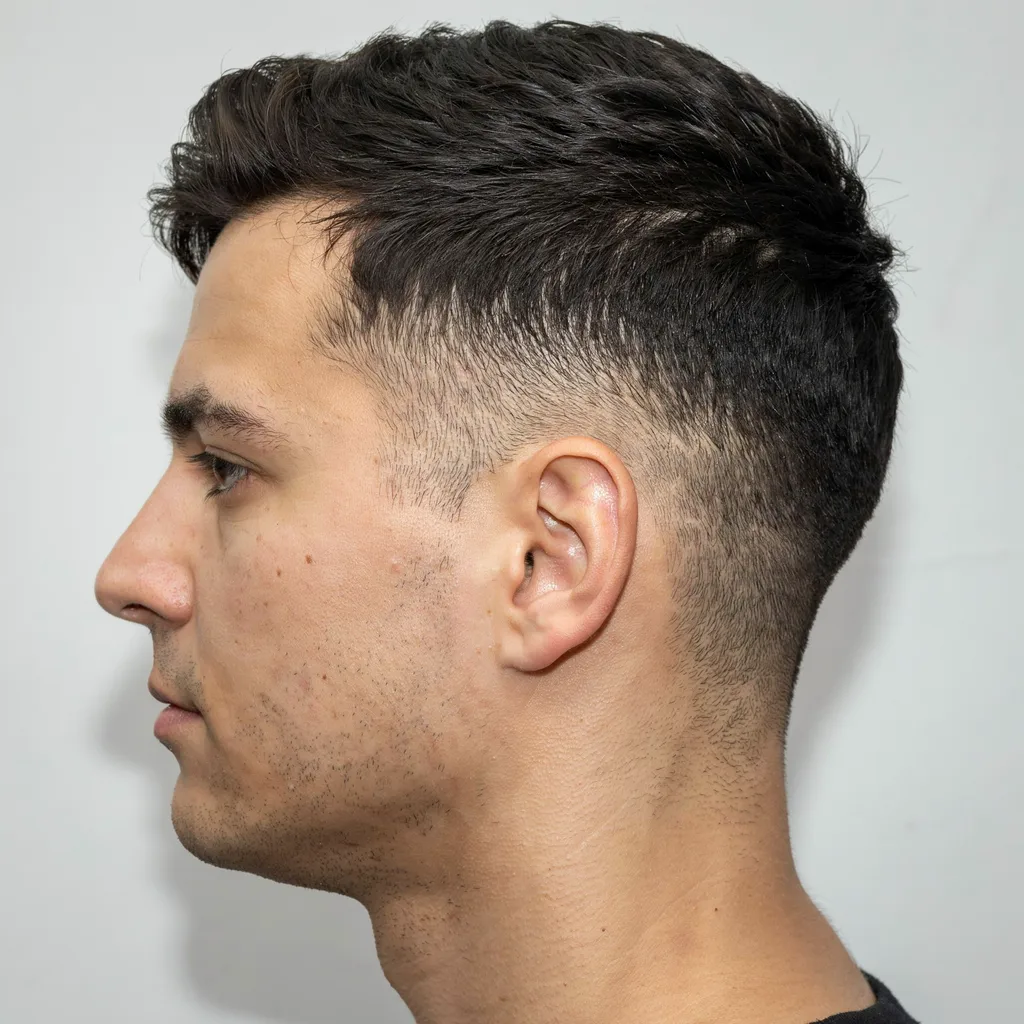
Since all fades are defined by their starting height, the clearest way to lock in “mid” is to compare the three:
- Low fade — the fade line starts just above the ear, low on the head. Subtle and conservative, with the least skin shown.
- Mid fade — the fade line starts at temple level, in the middle. Balanced contrast without going extreme.
- High fade — the fade line starts near the crown, high on the head, leaving the sides almost shaved for maximum contrast.
Move that same starting line up or down the head and you change the entire character of the cut. If you’d like to see the three placements side by side with photos, our Low Fade vs Mid Fade vs High Fade comparison breaks each one down.
Does the starting point change with the variation?
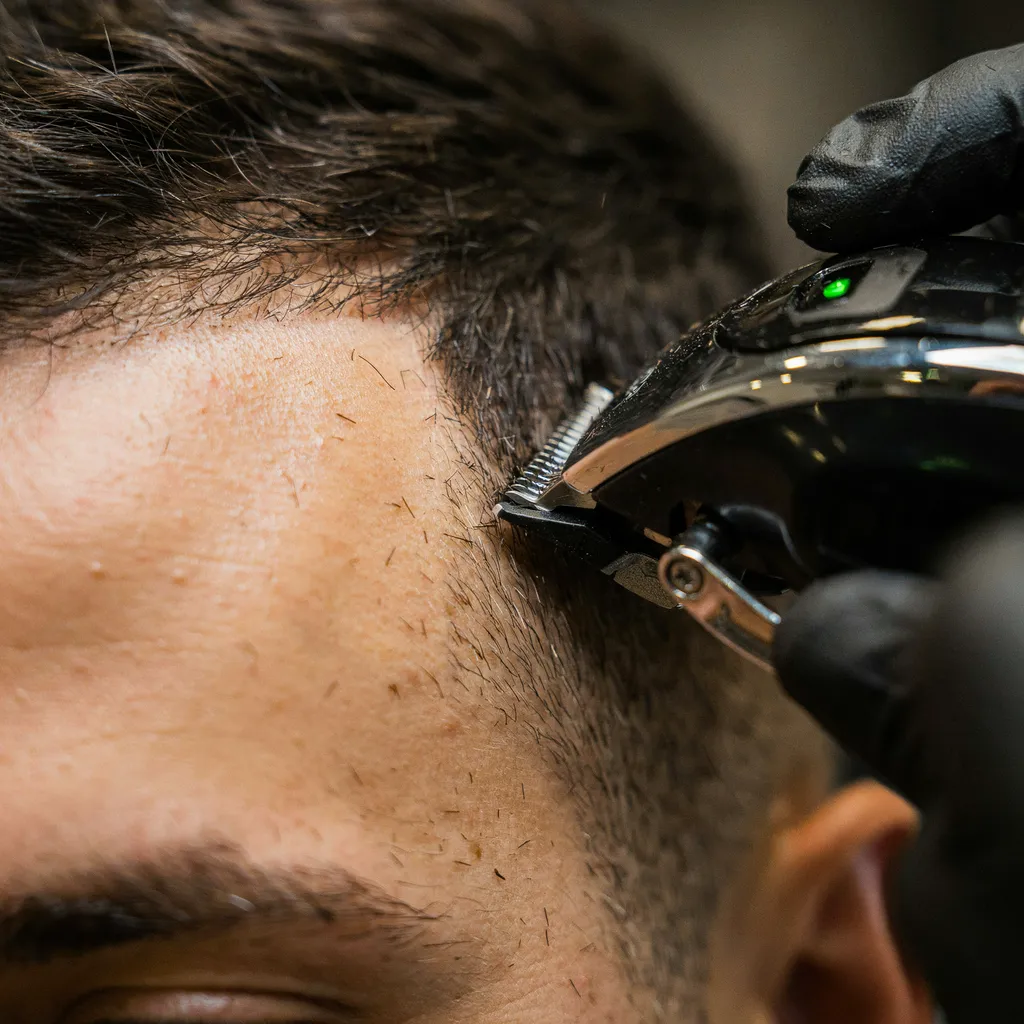
The starting height stays the same across mid fade variations — what changes is how the fade behaves from that point. For example:
- A mid drop fade starts at the mid position but then curves lower behind the ear, “dropping” along the hairline.
- A mid bald (skin) fade starts at the mid position and blends all the way down to bare skin.
- A mid taper fade starts at the mid position but stops before reaching skin, for a softer finish.
In every case the start is the middle of the head — the variation only affects how short the bottom goes or how the line travels around the head.
Why the starting point matters so much

The fade line does two jobs. First, it sets the contrast between your sides and top — a mid start gives a noticeable but wearable contrast that suits most settings. Second, it shapes how the cut frames your face. Because a mid fade begins in the middle, it keeps your facial proportions balanced rather than elongating or widening your face, which is a big reason it flatters round, oval, square, and heart-shaped faces alike.
It also leaves enough length on the upper sides to support volume on top — so styles like a quiff, a textured crop, a comb over, or a mid fade with a beard all sit nicely on this base.
How to make sure your barber starts it in the right place

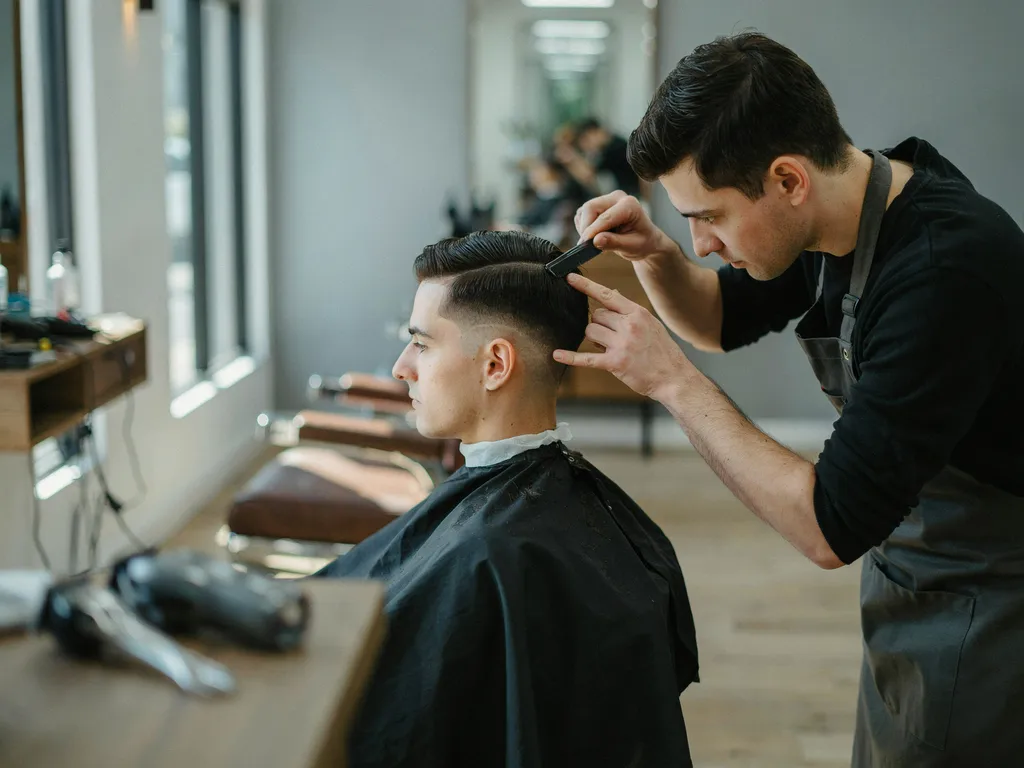
The cleanest way to communicate the starting point is to name it directly:
“I’d like a mid fade — start the fade at temple level, about an inch or two above my ears, and blend it down to [skin / a #1 / a #2].”
If you simply say “fade” without specifying the height, you’re leaving the starting point to chance. Naming “temple level” removes the guesswork, and a reference photo seals it. If you’re between heights, you can also ask for a low-mid (slightly lower) or a mid-high (slightly higher) fade — but a true mid fade always centres on that temple-level line.
The bottom line
A mid fade starts at temple level, about 1 to 2 inches above the ears, in the middle of the head — and that single placement is what gives the cut its balanced, versatile, universally flattering look. Picture the line, name it to your barber, and you’ll get a true mid fade every time.
Frequently asked questions
Where exactly does a mid fade start? A mid fade starts at temple level, roughly 1 to 2 inches above the top of the ears, in the middle of the side of the head. The hair blends shorter below that line and stays full above it.
Is a mid fade higher or lower than a low fade? Higher. A low fade starts just above the ear, while a mid fade starts further up at temple level, giving a bit more contrast between the sides and the top.
How high does a mid fade go? A mid fade reaches up to about temple level. If the fade line climbs higher, toward the crown, it becomes a high fade instead.
Can a mid fade start a little higher or lower? Yes. Slight adjustments are called a low-mid fade (a touch lower) or a mid-high fade (a touch higher), but a standard mid fade centres on the temple-level line.
Does the mid fade starting point change for curly or thick hair? No, the starting height stays the same. Curly or thick hair may be blended differently for volume control, but the fade still begins at temple level.
About the Author
Daniel Reyes got his first mid fade almost by accident. He asked his barber for “just a fade” and got one that started right at temple level. It became the cut he kept going back to, so he built mid-fade.com to cover it properly instead of burying it in generic fade lists.